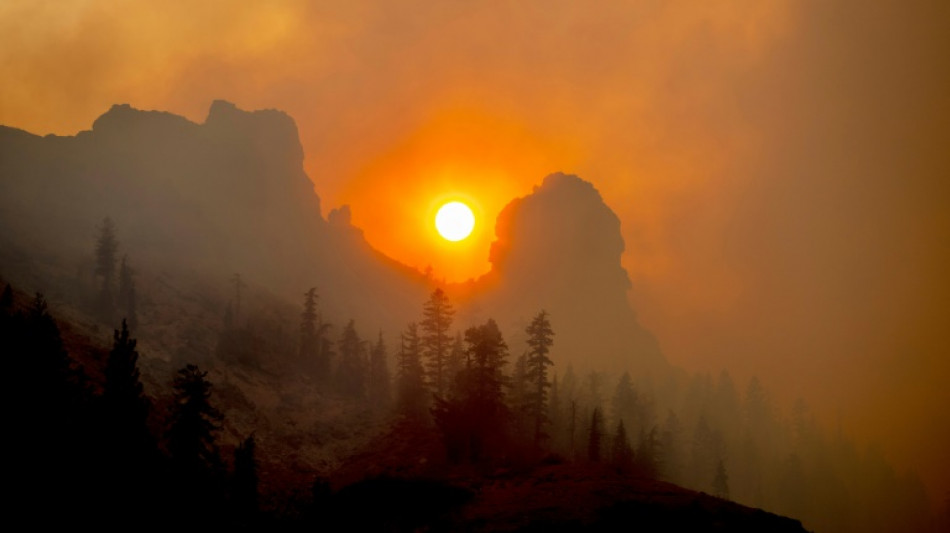
California wildfire pollution killed 52,000 in a decade: study / Photo: JOSH EDELSON - AFP

 Samsung expects 780% quarterly operating profit jump on AI boom

 Guardians survive with 9-3 win over White Sox

 Saudi Arabia says 3 dead at airports after Houthis claim attacks

 Stocks slide as oil sees volatile trading day over Iran war fears

 Microsoft pushes AI vision with new, expensive Surface laptop

 Five children among 28 killed in Russian strikes on Ukraine

 Odell Beckham Jr signs with Minnesota Vikings

 Saudi Arabia says three dead at airports after Houthis claim attacks

 Trump plans to turn Florida golf course into presidential retreat

 WHO says cannot conduct full risk assessment on Russia plague reports

 After botched execution, US woman is awake and shackled to bed

 New Zealand fly-half Mo'unga ruled out of Australia Tests

 Protests in major Turkish city after mayor defects to Erdogan party
 Climate change strips island's title of largest penguin colony: study

 Rubio says West must choose between national power or decline

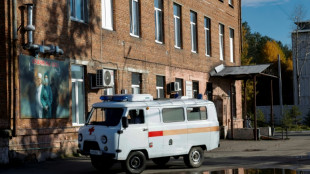 Russia's plague scare: What we know

 French luxury giant to fund redevelopment of two Paris streets: city hall

 Trump wants to turn Florida golf course into presidential retreat

 Mayor of Turkish opposition stronghold defects to Erdogan party
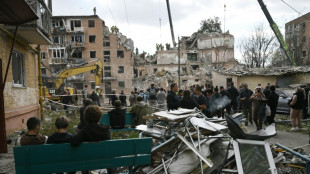 Children among heavy casualties in Ukraine after Russian strikes

 Court orders German ex-spy chief kept in jail after spying, treason arrest

 Guinea caps bottled water prices after sachets banned

 Spared, married, hanged: the last weeks of Iranian protester Alireza Sepahi
 Nobel physics winner's pride at pioneering AI role
 IMF preparing El Nino assistance, concerned about AI bubble burst: chief to AFP
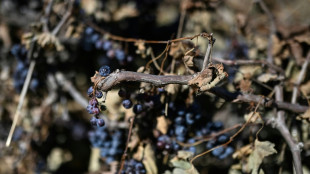
Pollution from California wildfires killed more than 52,000 people in a decade, a new study claimed Friday, as the western United States girds for a hot summer that could bring more blazes.
Vast areas of forest and grassland are scorched every year in California and other parts of the country, causing millions of dollars of destruction and sometimes costing lives.
But researchers say particulate matter released by the fires has a devastating effect on local populations that far outweighs the number of deaths directly attributable to them.
A study led by Rachel Connolly of the University of California Los Angeles found these tiny airborne pollutants -- known as PM2.5 because they are 2.5 micrometers or less -- are killing large numbers of people.
The team looked at data from 2008 to 2018 and isolated the amount of PM2.5 released specifically by wildfires, as opposed to that generated by other sources, like transport and manufacturing.
They found at least 52,480 premature deaths could be attributed to this specific pollution. The cost of treating people affected by the pollutants was calculated at $432 billion.
"The importance of wildfire management will only grow in the coming decades as aridification intensifies with climate change and more regions are susceptible to fires," the researchers wrote in their paper, published Friday by Science Advances, a peer-reviewed journal of The American Association for the Advancement of Science.
"These findings have direct implications for California, a state at the forefront of climate policy development with many fire-prone regions and a diverse population to protect," they added.
"Growing the evidence base on health impacts from wildfires and other climate-related exposures is critical."
The study comes as much of California and other parts of the American West are sweltering under the first heatwave of the year.
Temperatures as high as 120 degrees Fahrenheit (49 Celsius) scorched Death Valley on Thursday, while Las Vegas was broiling under 111 F heat.
The early summer heatwave has raised concerns that the fire season could be a fierce one in 2024 after two relatively benign years, thanks to wet winters.
For now, the blazes breaking out have tended to be grass fires, which are easier to control and do not burn as hot.
But as the summer heats up and the larger shrubs and trees start to dry out, they become vulnerable to downed power lines or discarded cigarettes.
After around 20 years of drought, and in a climate that is slowly aridifying, California has seen an alarming number of megafires this century -- 18 of the 20 biggest fires in the state's recorded history have occurred in the last two decades.
Wildfires are a natural -- and necessary -- part of the life cycle of wilderness.
But climate change, caused by humanity's unchecked burning of fossil fuels that pumps greenhouse gases into the atmosphere, is making them bigger, hotter and more unpredictable.
A.AlHaj--SF-PST