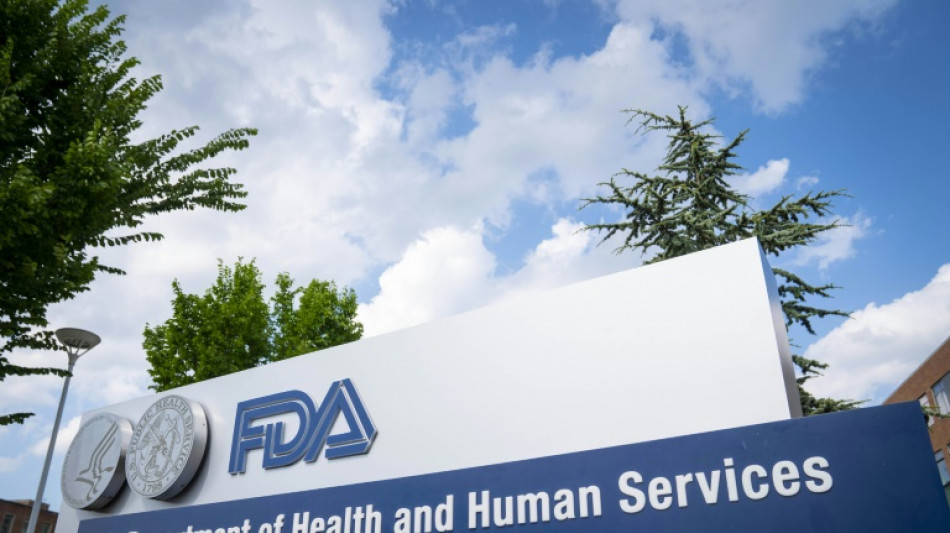
US health experts vote against MDMA as treatment for PTSD / Photo: Sarah Silbiger - GETTY IMAGES NORTH AMERICA/AFP/File

 Samsung expects 780% quarterly operating profit jump on AI boom

 Guardians survive with 9-3 win over White Sox

 Saudi Arabia says 3 dead at airports after Houthis claim attacks

 Stocks slide as oil sees volatile trading day over Iran war fears

 Microsoft pushes AI vision with new, expensive Surface laptop
 Five children among 28 killed in Russian strikes on Ukraine

 Odell Beckham Jr signs with Minnesota Vikings

 Saudi Arabia says three dead at airports after Houthis claim attacks

 Trump plans to turn Florida golf course into presidential retreat

 WHO says cannot conduct full risk assessment on Russia plague reports

 After botched execution, US woman is awake and shackled to bed

 New Zealand fly-half Mo'unga ruled out of Australia Tests
 Protests in major Turkish city after mayor defects to Erdogan party

 Climate change strips island's title of largest penguin colony: study

 Rubio says West must choose between national power or decline
 Russia's plague scare: What we know

 French luxury giant to fund redevelopment of two Paris streets: city hall

 Trump wants to turn Florida golf course into presidential retreat

 Mayor of Turkish opposition stronghold defects to Erdogan party

 Children among heavy casualties in Ukraine after Russian strikes

 Court orders German ex-spy chief kept in jail after spying, treason arrest

 Guinea caps bottled water prices after sachets banned

 Spared, married, hanged: the last weeks of Iranian protester Alireza Sepahi

 Nobel physics winner's pride at pioneering AI role

 IMF preparing El Nino assistance, concerned about AI bubble burst: chief to AFP

A panel of US health experts convened by the Food and Drug Administration on Tuesday overwhelmingly voted against the use of MDMA, commonly known as ecstasy, to treat post-traumatic stress disorder.
PTSD, a debilitating mental health condition that develops after a person experiences or is threatened by traumatic events such as death, combat or sexual assault, affects an estimated five percent of Americans in any given year.
But pharmaceutical treatment options are so far limited to two antidepressants that require three months of dosing to take effect, and response rates to the medications have been found to be uneven.
California-based Lykos Therapeutics has based its request for regulatory approval on two clinical studies, each of which enrolled around 100 people, to evaluate MDMA used together with other psychological interventions such as talk therapy, against a placebo with talk therapy.
These two studies, published in the prestigious journal Nature Medicine, indicated MDMA was indeed both safe and highly effective at treating PTSD.
But nine out of 11 experts on the panel said available data was not enough to show the treatment was effective, and 10 out of 11 said the benefits did not outweigh the risks.
"I think this is a really exciting treatment. I'm really encouraged by the results to date," said one of the experts, Paul Holtzheimer of the National Center for PTSD.
"But I feel that both from an efficacy and a safety standpoint, it is still premature."
The vote by the panel of experts is non-binding, but the FDA rarely goes against their recommendations.
- Not enough side effect data -
MDMA -- methylenedioxymethamphetamine -- is a Schedule 1 drug under the Controlled Substances Act, and approving it for medical use would have represented a major shift.
In a briefing document put together ahead of the meeting, FDA staff raised concerns that although the studies were nominally "double-blinded" -- meaning neither those being tested nor their health care workers knew who received the treatment versus the placebo -- most people were able to accurately guess what they received.
This "functional unblinding," they argued, introduces bias and uncertainty into study outcomes.
FDA staff also criticized Lykos for not gathering sufficient side effect data, including whether participants experienced "euphoria" or "elated mood," which, they argued, "would be informative for an assessment of abuse potential or characterization of anticipated effects of the drug."
Reports from recreational use suggest MDMA has harmful impacts on heart and liver health -- but the company did not gather enough data in these areas, the FDA said.
- Research misconduct allegations -
Then there were troubling allegations of research impropriety linked to the trials that surfaced in a draft report by the nonprofit Institute for Clinical and Economic Review.
These include claims that the trials "pulled heavily from the existing community of those interested and involved in the use of psychedelics for possible psychological benefits."
Some patients told the nonprofit they were allegedly prevented from entering the long term-follow up study "and felt this was done to keep these negative outcomes out of the data set."
"We certainly take those allegations very seriously and are quite concerned by them," the FDA's Tiffany Farchione said during the meeting, adding a probe was ongoing.
Lykos has said a final decision from the FDA on authorization should come by mid-August.
If the agency were to authorize the treatment over the advisory panel's objections, there could be certain strict stipulations attached -- for example, that the drug only be dispensed in health care settings, with subjects carefully monitored and enrolled in a registry to document side effects.
D.Qudsi--SF-PST