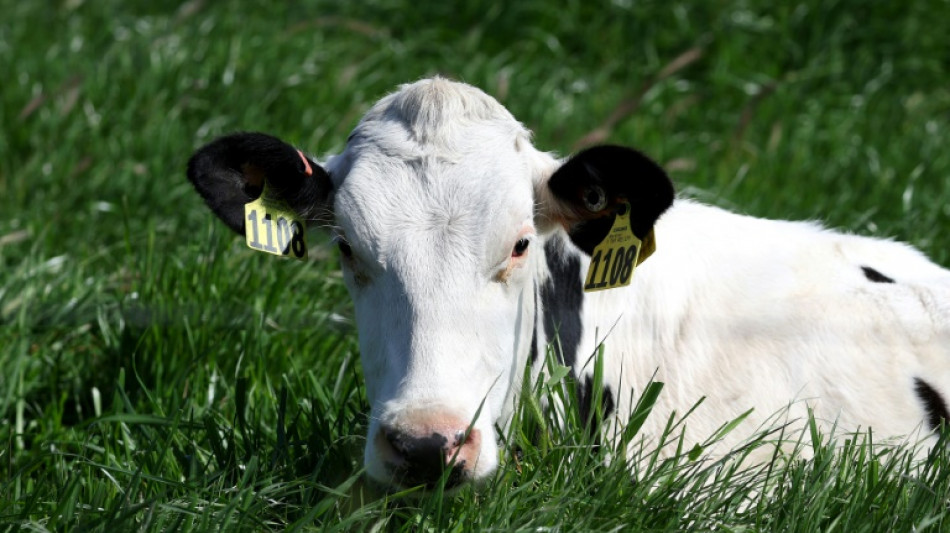
Raw cow's milk infected with bird flu sickens mice, shows study / Photo: JUSTIN SULLIVAN - GETTY IMAGES NORTH AMERICA/AFP/File

 El Nino’s Weakening Grip on Tamil Nadu Rainfall Hinges on Potential Cyclone

 South Africa Places 36 Hospitals on Standby for Possible Imported Ebola Cases

 Two A1 Crashes Create Kilometres of Rush-Hour Congestion

 Luxembourg City Plans €13 Million Abrigado Centre for 2029

 Luxembourg Housing Petition Passes Threshold for Parliamentary Consideration

 Raheem Sterling Receives Suspended Sentence After Lamborghini Crash

 Tamil Nadu Secures Rs 58,214 Crore in Investments at Vettri Conclave

 فرنسا تدعو لتجريم "الفصل العنصري القائم على الجنس" دولياً

 أزمة الصواريخ الاعتراضية في البنتاغون: استنزاف المخزونات يفرض تعبئة صناعية حتى 2030

 Huawei Found Guilty of Trade Secret Theft in Landmark US Case

 Indian Markets Set for Gain as Foreign Inflows Offset Tariff Fears
Mice fed raw cow's milk infected with bird flu experienced high levels of the virus in their lungs, according to a study published Friday that suggests risk to humans who consume the drink.
Over the past few years, a highly pathogenic avian influenza virus called HPAI H5N1 has spread to infect more than 50 animal species, including, from March, dairy cattle in the United States.
To date, 52 herds across the country have been affected, with two human infections involving farm workers who developed mild symptoms, including pink eye.
In the new study, published in the New England Journal of Medicine, researchers from the University of Wisconsin-Madison and Texas A&M fed droplets of raw milk from infected cattle to five mice.
The rodents developed signs of illness, including lethargy, and were then euthanized four days later to study their organs.
The researchers found high levels of virus in their nasal passages, trachea and lungs, and moderate-to-low levels of virus in other organs.
"An important consideration is that the consumption of raw, unpasteurized milk is becoming increasingly popular," said Rowland Kao, a professor of veterinary epidemiology at the University of Edinburgh, who was not involved in the research.
Raw milk laws vary by state in the US, with some permitting its sale in retail stores, others only allowing it to be sold on the farm it was produced, and others still prohibiting it altogether.
An official 2019 survey found that 4.4 percent of adults said they had consumed raw milk in the past year. Such consumers tended to be younger and lived in rural areas.
"While this study shows that mice can become systemically infected due to ingesting infected milk, this does not prove that the same is true for humans, though it does increase the possibility," added Kao.
In addition to the mice tests, the research confirmed that heating raw milk to high temperatures destroys nearly all virus after a few seconds, and completely destroys the pathogen after several minutes.
A recent nationwide survey of pasteurized milk found all samples were negative for viable virus, though inactivated virus, no longer capable of spreading or infecting a host, was found in about 20 percent of retail samples.
Finally, the researchers tested the effect of storing infected raw milk at fridge temperatures and found that the virus levels declined only slightly after five weeks, indicating that refrigeration alone is not sufficient to make raw milk safe.
C.AbuSway--SF-PST

