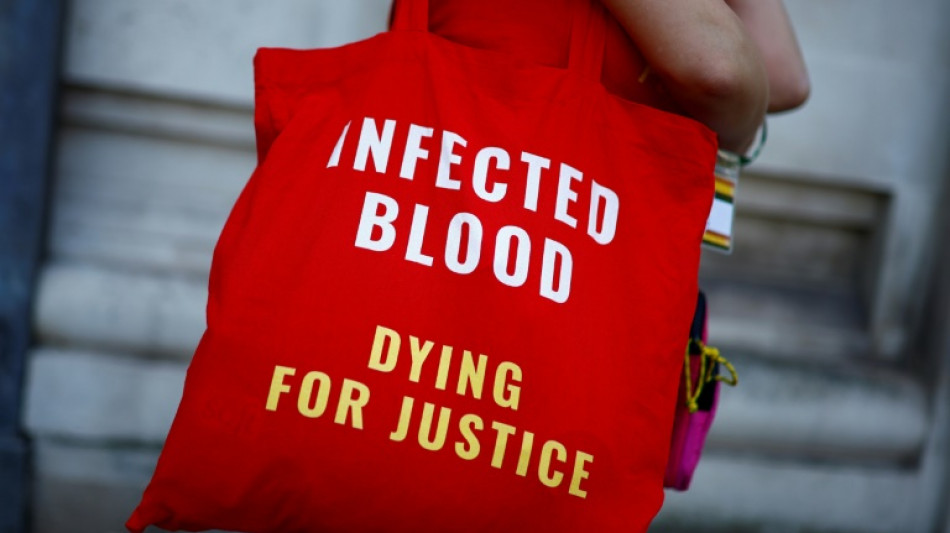
UK PM sorry for institutional cover-up in infected blood scandal / Photo: BENJAMIN CREMEL - AFP

 Samsung expects 780% quarterly operating profit jump on AI boom

 Guardians survive with 9-3 win over White Sox

 Saudi Arabia says 3 dead at airports after Houthis claim attacks

 Stocks slide as oil sees volatile trading day over Iran war fears
 Microsoft pushes AI vision with new, expensive Surface laptop
 Five children among 28 killed in Russian strikes on Ukraine

 Odell Beckham Jr signs with Minnesota Vikings
 Saudi Arabia says three dead at airports after Houthis claim attacks
 Trump plans to turn Florida golf course into presidential retreat
 WHO says cannot conduct full risk assessment on Russia plague reports

 After botched execution, US woman is awake and shackled to bed

 New Zealand fly-half Mo'unga ruled out of Australia Tests
 Protests in major Turkish city after mayor defects to Erdogan party
 Climate change strips island's title of largest penguin colony: study

 Rubio says West must choose between national power or decline
 Russia's plague scare: What we know

 French luxury giant to fund redevelopment of two Paris streets: city hall

 Trump wants to turn Florida golf course into presidential retreat
 Mayor of Turkish opposition stronghold defects to Erdogan party
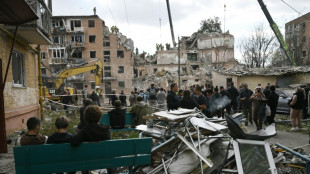 Children among heavy casualties in Ukraine after Russian strikes

 Court orders German ex-spy chief kept in jail after spying, treason arrest
 Guinea caps bottled water prices after sachets banned

 Spared, married, hanged: the last weeks of Iranian protester Alireza Sepahi

 Nobel physics winner's pride at pioneering AI role
 IMF preparing El Nino assistance, concerned about AI bubble burst: chief to AFP

UK Prime Minister Rishi Sunak on Monday apologised to thousands of people infected with contaminated blood in a decades-long scandal that a damning report concluded was covered up and largely could have been avoided.
More than 30,000 people were infected with viruses such as HIV and hepatitis after being given the tainted blood in Britain between the 1970s and early 1990s, the Infected Blood Inquiry concluded.
Victims included those needing blood transfusions for accidents and in surgery, and those suffering from blood disorders such as haemophilia who were treated with donated blood plasma products, as well as the partners of those infected.
Some 3,000 people died, and more will follow, in what has been described as the biggest treatment disaster in the eight-decade history of the state-run National Health Service (NHS).
"I am truly sorry," Sunak told the House of Commons, calling the findings of the long-awaited report "a day of shame for the British state".
"Time and again people in positions of power and trust had the chance to stop the transmission of those infections and failed to do so", he added, promising "whatever it costs" to compensate victims.
The total figure is expected to be above £10 billion ($12 billion) when the government announces the package on Tuesday.
- Pervasive -
The report, running to more than 2,500 pages, laid bare a "catalogue of failures" with "catastrophic" consequences for victims and their loved ones.
In some instances, children with bleeding disorders were treated as "objects for research".
At one school where 122 pupils with haemophilia were given infected blood products between 1970 and 1987, only 30 now survive, the report said.
"I have to report that it could largely, though not entirely, have been avoided," concluded its author, judge Brian Langstaff.
His team found that successive governments and health professionals failed to mitigate risks despite it being apparent by the early 1980s that the cause of AIDS could be transmitted by blood.
Blood donors were not screened properly and blood products were imported from abroad, including from the United States where drug users and prisoners were used for donations.
Too many transfusions were also given when they were not necessarily needed, the report added.
There were even attempts to conceal the scandal, including evidence that officials in the health department destroyed documents in 1993.
"Viewing the response of the NHS and of government overall, the answer to the question, 'Was there a cover-up?' is that there has been," the report stated.
"Not in the sense of a handful of people plotting in an orchestrated conspiracy to mislead, but in a way that was more subtle, more pervasive and more chilling in its implications.
"In this way there has been a hiding of much of the truth," it added.
- 'Vindicated' -
On top of the 3,000 patients who died, many more were left with lifelong health problems.
Langstaff said that "the scale of what happened is horrifying" and said people's suffering had been compounded by repeated denials and false assurances that they had received good treatment.
When victims were told the truth, sometimes years later, this was sometimes done in "insensitive" and "inappropriate" ways.
"What I have found is that disaster was no accident. People put their trust in doctors and the government to keep them safe and that trust was betrayed," Langstaff told reporters.
Former prime minister Theresa May launched the inquiry -- one of the country's largest -- in 2017.
Campaigners hailed the report as the culmination of a decades-long struggle but noted that it came too late for many of the victims who will never see justice.
Andy Evans, chairman of the Tainted Blood campaign group, described the report as "momentous" and that he felt "validated and vindicated".
"We have been gaslit for generations... Sometimes we felt like we were shouting into the wind during the last 40 years," he told reporters.
B.Mahmoud--SF-PST