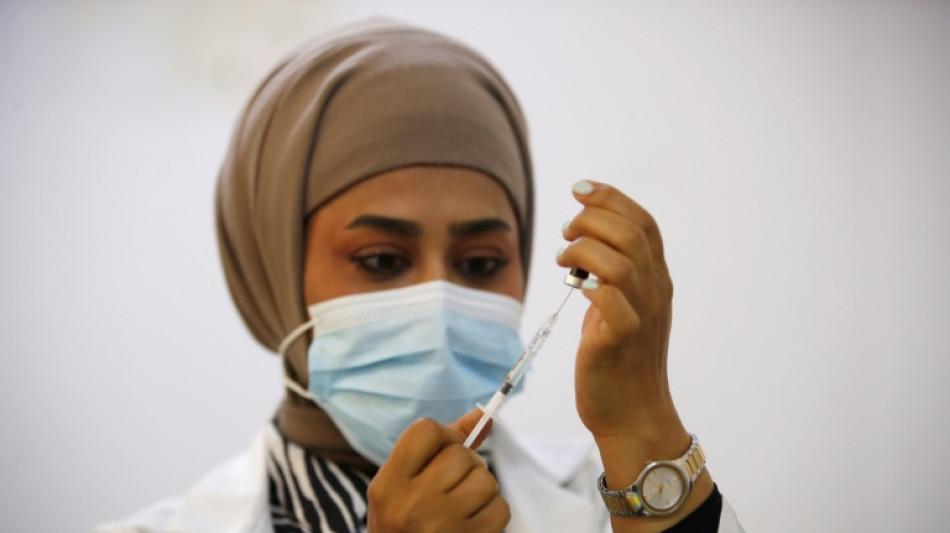
UK says proposed pandemic treaty 'not acceptable' / Photo: AHMAD AL-RUBAYE - AFP

 El Nino’s Weakening Grip on Tamil Nadu Rainfall Hinges on Potential Cyclone

 South Africa Places 36 Hospitals on Standby for Possible Imported Ebola Cases

 Two A1 Crashes Create Kilometres of Rush-Hour Congestion

 Luxembourg City Plans €13 Million Abrigado Centre for 2029

 Luxembourg Housing Petition Passes Threshold for Parliamentary Consideration

 Raheem Sterling Receives Suspended Sentence After Lamborghini Crash

 Tamil Nadu Secures Rs 58,214 Crore in Investments at Vettri Conclave

 فرنسا تدعو لتجريم "الفصل العنصري القائم على الجنس" دولياً

 أزمة الصواريخ الاعتراضية في البنتاغون: استنزاف المخزونات يفرض تعبئة صناعية حتى 2030

 Huawei Found Guilty of Trade Secret Theft in Landmark US Case

 Indian Markets Set for Gain as Foreign Inflows Offset Tariff Fears
A proposed World Health Organization treaty on preparing for future pandemics is currently "not acceptable" to Britain, a UK health minister said on Tuesday.
The WHO's 194 member states have spent two years trying to reach a landmark global agreement on pandemic prevention, preparedness and response following the devastation caused by Covid-19.
Despite showing a desire for commitments aimed at preventing another Covid-style disaster, big differences have emerged between country blocs on how to achieve them.
Nations decided to keep negotiating for another two weeks after their deadline passed on Friday without agreement.
"The current text is not acceptable to us, therefore unless the current text is changed and refined we will not be signing up," Conservative minister Andrew Stephenson told the UK parliament.
He said that Britain would only accept the accord "if they are firmly in the United Kingdom's national interest" and "respect our national sovereignty".
"Under no circumstances will we allow the WHO to have the power to mandate lockdowns, this would be unthinkable and has never been proposed.
"Protecting our sovereignty is a British red line," he added.
While general agreement has been found on some of the 37 articles -- without formally signing off on them -- the core aspects remain deadlocked.
They revolve around access to pathogens detected within countries and to pandemic-fighting products such as vaccines produced from that knowledge, and equitable distribution of counter-pandemic tests, treatments and jabs, along with the means to produce them.
Stephenson said it was "simply not true" that Britain would give away a fifth of its vaccines in a future pandemic under any deal.
"Of course we are a generous country. Companies may make their own choices to donate vaccines, but this would be and should be entirely their decision," he added.
A health spokesman for the main Labour opposition, tipped to win a general election due later this year, said his party "would not sign anything which would leave our population unprotected in the face of a novel disease".
Talks have been taking place behind closed doors in Geneva.
It is hoped that a deal can be sealed by the WHO's annual assembly, which opens on May 27.
T.Samara--SF-PST

