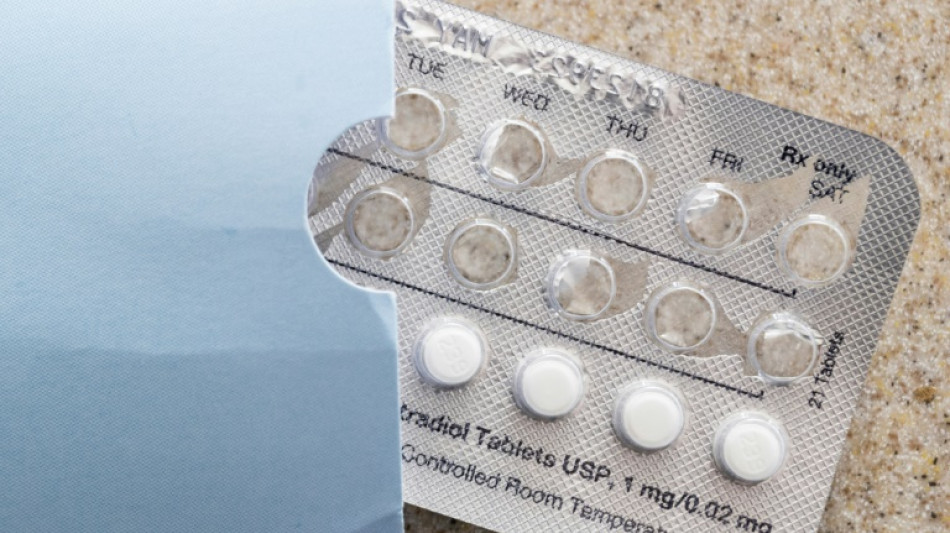
Attacking birth control pills, US influencers push misinformation / Photo: Jim WATSON - AFP

 Samsung expects 780% quarterly operating profit jump on AI boom

 Guardians survive with 9-3 win over White Sox

 Saudi Arabia says 3 dead at airports after Houthis claim attacks

 Stocks slide as oil sees volatile trading day over Iran war fears

 Microsoft pushes AI vision with new, expensive Surface laptop
 Five children among 28 killed in Russian strikes on Ukraine

 Odell Beckham Jr signs with Minnesota Vikings

 Saudi Arabia says three dead at airports after Houthis claim attacks

 Trump plans to turn Florida golf course into presidential retreat

 WHO says cannot conduct full risk assessment on Russia plague reports

 After botched execution, US woman is awake and shackled to bed

 New Zealand fly-half Mo'unga ruled out of Australia Tests

 Protests in major Turkish city after mayor defects to Erdogan party

 Climate change strips island's title of largest penguin colony: study

 Rubio says West must choose between national power or decline
 Russia's plague scare: What we know

 French luxury giant to fund redevelopment of two Paris streets: city hall

 Trump wants to turn Florida golf course into presidential retreat

 Mayor of Turkish opposition stronghold defects to Erdogan party

 Children among heavy casualties in Ukraine after Russian strikes

 Court orders German ex-spy chief kept in jail after spying, treason arrest

 Guinea caps bottled water prices after sachets banned

 Spared, married, hanged: the last weeks of Iranian protester Alireza Sepahi

 Nobel physics winner's pride at pioneering AI role

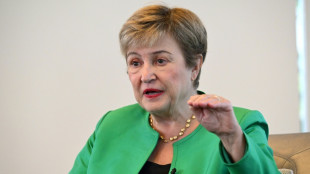 IMF preparing El Nino assistance, concerned about AI bubble burst: chief to AFP

US wellness influencers are increasingly targeting birth control pills, pushing their followers to abandon the contraceptives with false claims about infertility and low libido that researchers say leave them vulnerable to unintended pregnancies.
The explosion of misinformation on platforms such as TikTok and Instagram comes as reproductive rights take center stage in the looming presidential election, in a country where abortion is banned or restricted in nearly half the states.
Many influencers -- who are not licensed medical specialists -- are part of what appears to be a cottage industry of self-proclaimed health gurus monetizing misinformation as they hawk "healing" oils and fertility-tracking services.
People seeking reliable information about contraception are met with internet personalities overemphasizing the side effects of pills.
That includes Taylor Gossett, a TikTok influencer with nearly 200,000 followers who explicitly called the medication "toxic" alongside offers to join her "master class" in "natural" birth control.
Conservative commentator Candace Owens suggested on TikTok that birth control causes infertility problems, while "life coach" Naftali Moses told his 280,000 followers that it "changes your sexual behavior."
Podcaster Sahara Rose called birth control the "divorce pill" in a video viewed more than 550,000 times, claiming it impacts who "you're attracted to" and leads users to choose the wrong mate.
The pill's effect on libido has been debated for decades, with some women complaining of impacts on their sex drive.
But while some women may experience such side effects, medical experts say individual experiences do not represent widespread causal links.
Experts also say there is no direct causal evidence that birth control pills lead to widespread infertility or altered attraction and sexual behavior.
- 'More fear' –
"Misinformation can dissuade people from using birth control that could help them with contraception," Michael A. Belmonte, a fellow at the American College of Obstetricians and Gynecologists, told AFP.
"Most concerning in this political landscape we have in the US currently is that birth control misinformation may lead to people becoming pregnant... and now (they) may not have access to abortion."
Belmonte said he had personally treated patients who became pregnant after avoiding contraception because of the "harmful misinformation" they had heard or seen online.
The rise in misleading videos compounds what researchers see as a worsening state of reproductive health care following the US Supreme Court's decision to overturn the nationwide right to abortion 2022.
The landmark ruling paved the way for 21 states to introduce total or partial bans on abortion.
"This spike in contraception misinformation correlates with the restriction of abortion access in a number of states," misinformation researcher Jenna Sherman told AFP, adding that many of the online falsehoods stemmed from "anti-abortion actors."
"People are in greater need of guidance around reproductive health decisions and have more fear around speaking to a health care provider," she said.
- 'Shame, stigma' -
Many influencers recommend fertility awareness-based methods (FAMs) –- in which the menstrual cycle and body temperature are carefully tracked, to help users time sex to avoid their fertility window.
But experts say it is far less effective than medical birth control, with the Centers for Disease Control and Prevention (CDC) putting the failure rate at up to 23 percent -- and resulting in unwanted pregnancies.
A slew of female influencers also make the case for getting off birth control to lose weight -- despite a lack of direct medical evidence linking pills to weight gain -- often with dramatic before and after videos.
"It's likely contributing to further shame, stigma, and distorted body images," said Sherman.
Birth control pills are deemed safe and effective by health experts, but like many other medications can cause some adverse outcomes -- most commonly nausea, headaches and bleeding between periods.
In rare instances, they can also lead to blood clots and strokes. The Food and Drug Administration says the risk of clots can affect three to nine women out of 10,000 who take the pill.
Many of these side effects can be mitigated by switching to another type of birth control or waiting for the symptoms to subside, health experts say -- distinctions seldom provided by influencers who, chasing clicks and followers, often exaggerate the negatives.
"People don't realize that many of these influencers have their own financial incentives for pushing false or misleading narratives that also don't prioritize the health of the people they're targeting," Sherman said.
Making the decision to abandon birth control "should be made with legitimate health information and the help of a care provider, not an influencer," Sherman added.
burs-ac/nro
X.AbuJaber--SF-PST