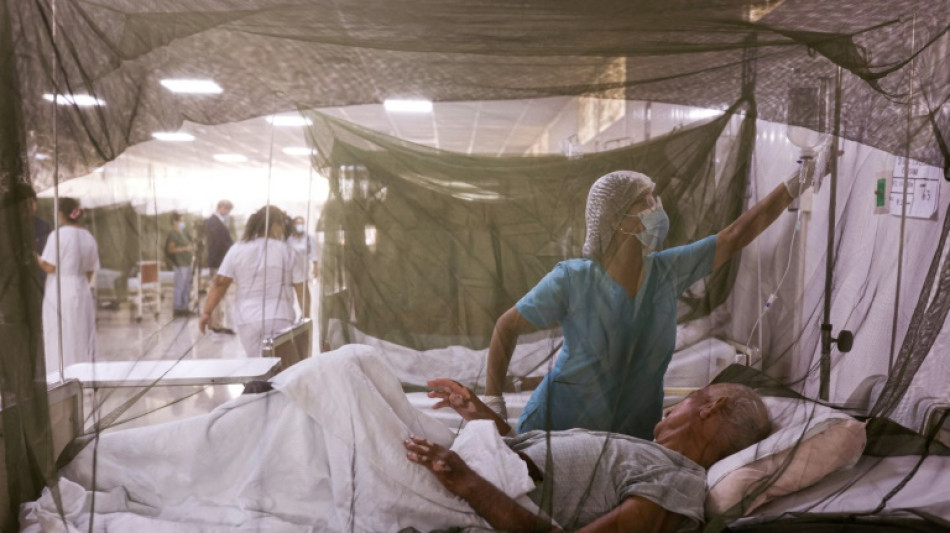
Pandemic talks extended as deadline passes / Photo: Juan Carlos CISNEROS - AFP

 Samsung expects 780% quarterly operating profit jump on AI boom
 Guardians survive with 9-3 win over White Sox

 Saudi Arabia says 3 dead at airports after Houthis claim attacks
 Stocks slide as oil sees volatile trading day over Iran war fears

 Microsoft pushes AI vision with new, expensive Surface laptop

 Five children among 28 killed in Russian strikes on Ukraine

 Odell Beckham Jr signs with Minnesota Vikings
 Saudi Arabia says three dead at airports after Houthis claim attacks
 Trump plans to turn Florida golf course into presidential retreat

 WHO says cannot conduct full risk assessment on Russia plague reports
 After botched execution, US woman is awake and shackled to bed
 New Zealand fly-half Mo'unga ruled out of Australia Tests
 Protests in major Turkish city after mayor defects to Erdogan party
 Climate change strips island's title of largest penguin colony: study

 Rubio says West must choose between national power or decline

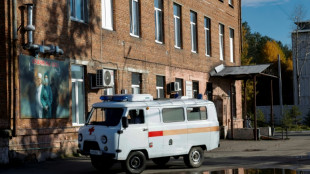 Russia's plague scare: What we know
 French luxury giant to fund redevelopment of two Paris streets: city hall

 Trump wants to turn Florida golf course into presidential retreat
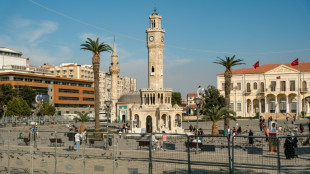 Mayor of Turkish opposition stronghold defects to Erdogan party
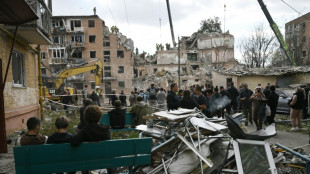 Children among heavy casualties in Ukraine after Russian strikes

 Court orders German ex-spy chief kept in jail after spying, treason arrest

 Guinea caps bottled water prices after sachets banned

 Spared, married, hanged: the last weeks of Iranian protester Alireza Sepahi

 Nobel physics winner's pride at pioneering AI role
 IMF preparing El Nino assistance, concerned about AI bubble burst: chief to AFP

Countries trying to strike a landmark global agreement on handling future pandemics decided to keep negotiating for another fortnight after their deadline passed on Friday.
Scarred by the devastation caused by Covid-19 -- which killed millions, shredded economies and crippled health systems -- the World Health Organization's 194 member states have spent two years trying to hammer out binding commitments on pandemic prevention, preparedness and response.
The process was aimed at getting an agreement finalised by the WHO's annual assembly which opens on May 27.
A final talks session in March got nowhere near consensus, so an additional fortnight of talks was crammed in. However, despite progress on several fronts, the talks broke up on Friday without sealing a deal.
"They have worked very hard to get as far as they could on agreement and we are not there yet. So we will continue our work," co-chair Roland Driece told reporters at the WHO headquarters in Geneva.
"We worked very hard and there's just so many issues that we need to agree upon which are technical and political, and they take time."
- Keeping up the momentum -
The talks will keep going with intermittent meetings in person and online until the World Health Assembly (WHA).
Driece and his co-chair Precious Matsoso are to issue a schedule in coming days. They have to report to the May 27-June 1 annual assembly, regardless of how far the talks get.
In a statement, WHO chief Tedros Adhanom Ghebreyesus added: "During more than two years of intensive negotiations, WHO's member states have shown unwavering commitment to forging a generational agreement to protect the world from a repeat of the horrors caused by the Covid-19 pandemic.
"I welcome the determination that all countries have shown to continue their work and fulfil the mission on which they embarked."
Despite a showing desire for commitments aimed at preventing another Covid-style disaster, big differences have emerged between country blocs on how to acheive them.
The talks were held behind closed doors at the WHO headquarters in Geneva.
Fuelled by trolleys full of coffee, bananas, biscuits and sandwiches, negotiators have been pulling long hours since April 29 to try to reach agreement.
- Thorny issues -
The main disputes revolve around access and equity: access to pathogens detected within countries and to pandemic-fighting products such as vaccines produced from that knowledge; and equitable distribution of counter-pandemic tests, treatments and jabs, along with the means to produce them.
Each of the draft agreement's 37 articles has been individually thrashed out, with country negotiators breaking off into working groups to try to reach a consensus.
While general agreement has been found on some articles -- without formally signing them off -- the core aspects remain deadlocked.
"It's fair to say there's progress made. If you look at the outline of the agreement, all the important themes are there," Medicines Law and Policy director Ellen 't Hoen told reporters.
"But there remain a significant number of thorny issues that simply need more time."
James Love, the director of Knowledge Ecology International, added: "There is some room for negotiating right now. I don't think we're really there yet."
He said it was hardly "the worst outcome" to take more time.
Y.Zaher--SF-PST