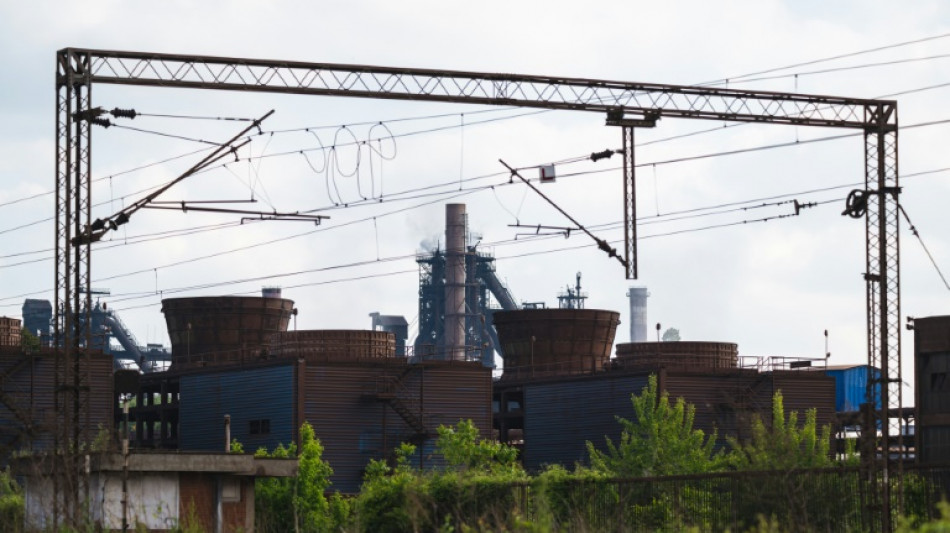
Chinese mill blamed for turning Serbia village red with pollution / Photo: Andrej ISAKOVIC - AFP

 Samsung expects 780% quarterly operating profit jump on AI boom
 Guardians survive with 9-3 win over White Sox

 Saudi Arabia says 3 dead at airports after Houthis claim attacks
 Stocks slide as oil sees volatile trading day over Iran war fears

 Microsoft pushes AI vision with new, expensive Surface laptop

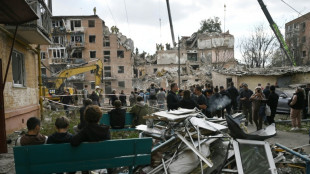 Five children among 28 killed in Russian strikes on Ukraine

 Odell Beckham Jr signs with Minnesota Vikings

 Saudi Arabia says three dead at airports after Houthis claim attacks

 Trump plans to turn Florida golf course into presidential retreat

 WHO says cannot conduct full risk assessment on Russia plague reports

 After botched execution, US woman is awake and shackled to bed

 New Zealand fly-half Mo'unga ruled out of Australia Tests

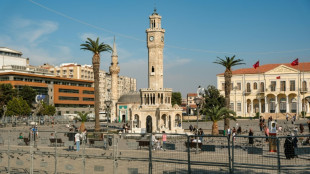 Protests in major Turkish city after mayor defects to Erdogan party
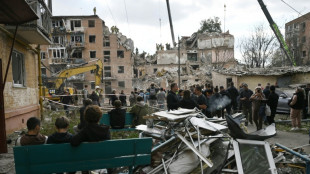
 Climate change strips island's title of largest penguin colony: study

 Rubio says West must choose between national power or decline

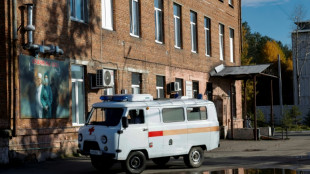 Russia's plague scare: What we know

 French luxury giant to fund redevelopment of two Paris streets: city hall

 Trump wants to turn Florida golf course into presidential retreat
 Mayor of Turkish opposition stronghold defects to Erdogan party
 Children among heavy casualties in Ukraine after Russian strikes

 Court orders German ex-spy chief kept in jail after spying, treason arrest

 Guinea caps bottled water prices after sachets banned

 Spared, married, hanged: the last weeks of Iranian protester Alireza Sepahi
 Nobel physics winner's pride at pioneering AI role
 IMF preparing El Nino assistance, concerned about AI bubble burst: chief to AFP
In the eight years since Chinese company HBIS bought a steel mill near the eastern Serbian city of Smederevo, locals say they have been plagued by heavy air pollution and thick red dust.
"There are times of the day when breathing normally is impossible," said Zvezdan Veljkovic, from the village of Radinac, where the mill is based.
Radinac has become known as "red village", because everything is permanently coated in a layer of red dust. Locals say cancer cases have rocketed and that the dust contains high levels of arsenic, chromium and lead.
Dragana Milic told AFP her grandchildren don't like coming to visit her anymore. "They won't play outside," she said.
HBIS -- one of the world's largest steel producers -- bought the mill in 2016 in a high-profile deal marked by a visit from Chinese President Xi Jinping, on his last official trip to Serbia.
Xi is to arrive in Serbia on Tuesday on another official visit, one of only three countries he is flying into on his first European trip since the Covid pandemic.
China has invested billions in Serbia and neighbouring Balkan countries in recent years, with Beijing and Belgrade signing a free trade agreement last year.
But locals around Smederevo blame Chinese investment for the increased pollution.
In the three villages near the mill, residents say that they have experienced throat irritation, unpleasant smells and continual soot coating their houses, clothes and bodies.
Milic said the only thing villagers can do to protect themselves is to stay indoors.
- Cancer cases quadrupled -
The Serbian Environmental Protection Agency has ranked Smederevo repeatedly among the country's most polluted cities, classified as having "excessively polluted air".
Nikola Krstic, an activist at NGO Tvrdjava ("Fortress"), said pollution has soared since the Chinese takeover.
"We don't know the reason why... whether it's high production, technology failure, lack of maintenance or non-compliance," he said.
Tvrdjava carried out an analysis of the dust produced by the factory in 2021, together with the scientific group National Environmental Association.
The analysis, seen by AFP, found high concentrations of heavy metals including arsenic, chromium and lead, which the report warned are among "the most toxic and carcinogenic metals when present in ambient air".
"(HBIS) have saved this steel mill in economic terms, but in environmental terms they have caused great damage to this city," said Krstic.
Data from the state-run Smederevo Health Centre found a four-fold increase in cancer cases between 2011 and 2019, which activists believe is due to increased pollution.
The group filed a criminal complaint against the company in Smederevo, but it was rejected on the basis of lack of evidence.
They now plan to take their case to the European Court of Human Rights.
- Special relationship -
The steel mill employs about 5,000 people, with thousands more employed indirectly.
Once a state-owned enterprise, it was privatised in 2003 and sold to US Steel. But the American corporation pulled out in 2012 after a steel market crash, and the Serbian government bought it back for one dollar.
In April 2016, the plant was sold for 46 million euros ($49 million) to China's HBIS, heralded as a sign of the "friendship" between the two countries.
Chinese-owned companies were among Serbia's top three exporters last year -- including HBIS, whose exports topped 549 million euros.
Tomislav Momirovic, Serbia's trade minister, told state broadcaster RTS that "no other country in the region or Europe" enjoys a similar level of cooperation with China.
Smederevo is one of several big investments by Chinese companies in Serbia, including a $3.8 billion investment by Chinese state-owned company Zijin Mining near the eastern city of Bor.
Stefan Vladisavljev, of the Foundation BFPE for a Responsible Society, said claims Chinese investment "saved" Serbia are "exaggerated".
"What is true is that Chinese companies were willing to take over the management and ownership of certain industrial systems for which Serbia had no other solution," he added.
HBIS did not respond when contacted by AFP.
But earlier this year its Serbia director Vladan Mihailovic told RTS that the company plans to build a wall around its open raw material storage and construct a new processor to reduce the dust.
Milic, who has been living in Radinac for 37 years, has little hope this will solve the issue.
"I think there is no other solution" but for everyone to move, she said.
H.Nasr--SF-PST