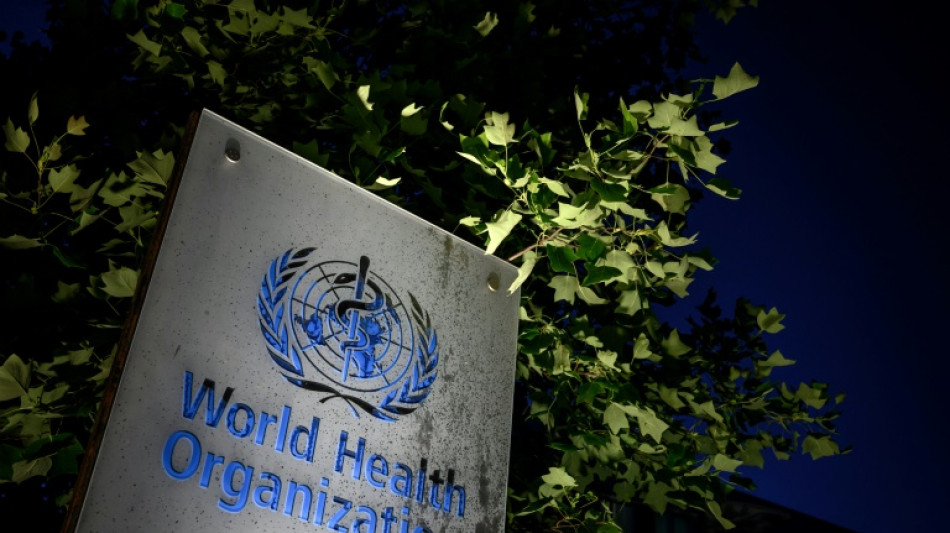
'Get this done', WHO chief tells pandemic accord talks / Photo: Fabrice COFFRINI - AFP

 El Nino’s Weakening Grip on Tamil Nadu Rainfall Hinges on Potential Cyclone

 South Africa Places 36 Hospitals on Standby for Possible Imported Ebola Cases

 Two A1 Crashes Create Kilometres of Rush-Hour Congestion

 Luxembourg City Plans €13 Million Abrigado Centre for 2029

 Luxembourg Housing Petition Passes Threshold for Parliamentary Consideration

 Raheem Sterling Receives Suspended Sentence After Lamborghini Crash

 Tamil Nadu Secures Rs 58,214 Crore in Investments at Vettri Conclave

 فرنسا تدعو لتجريم "الفصل العنصري القائم على الجنس" دولياً

 أزمة الصواريخ الاعتراضية في البنتاغون: استنزاف المخزونات يفرض تعبئة صناعية حتى 2030

 Huawei Found Guilty of Trade Secret Theft in Landmark US Case

 Indian Markets Set for Gain as Foreign Inflows Offset Tariff Fears
WHO chief Tedros Adhanom Ghebreyesus on Friday told countries negotiating a global agreement on handling future pandemics to "get this done", as they hit the half-way stage in last-ditch talks.
World Health Organization member states have spent the last two years drafting an international accord on pandemic prevention, preparedness and response, but negotiations are fast running out of time.
At what should have been the final round of talks in March, countries drifted even further apart than before, with disputes widening over access to emerging pathogens for research in the next pandemic, and tools like vaccines.
But they decided to return Monday to the WHO headquarters in Geneva for a fortnight of extra talks to try to break the deadlock.
Each of the draft agreement's 37 articles is being thrashed out in turn, with country negotiators breaking off into working groups to try to figure out a consensus.
Five days in, Tedros acknowledged that countries still had their differences, but seemed to be closer together than before.
The UN health agency's director-general said all countries wanted to make the world safer from pandemics, but warned against indifference and inaction.
And he said that while for some, the agreement is either too specific, not specific enough, too strong or too weak, he urged naysayers not to block everyone else from coming to a deal.
"Please, get this done," Tedros said, in a direct plea to diplomats in the negotiating room.
"I appreciate that it has been a difficult and sometimes painful process, and that it's not over. I appreciate that all of you are making compromises you did not want to make.
"I recognise that there may be delegations who despite their good faith efforts, may not be in a position to join a consensus, but they have a choice: they can choose not to block consensus."
- 'A safer future' -
The goal of the talks, which are lasting 12 hours a day and run until May 10, is to get an agreement ready for adoption at the WHO's annual assembly of member states, which starts May 27.
In December 2021, the raw sting of Covid-19 -- which killed millions, shredded economies and crippled health systems -- motivated countries to seek a binding framework of commitments aimed at preventing another such disaster.
But big differences quickly emerged on how to go about it.
The main disputes revolve around access and equity: access to pathogens detected within countries; access to pandemic-fighting products such as vaccines produced from that knowledge; and equitable distribution of not only counter-pandemic tests, treatments and jabs but the means to produce them.
Tedros urged countries to protect future generations from the suffering witnessed in the last pandemic.
"Give yourselves a reason to be proud," said Tedros.
"Give the people of the world, the people of your countries, the people you represent, a safer future.
"So I have one simple request: please, get this done, for them."
U.AlSharif--SF-PST

