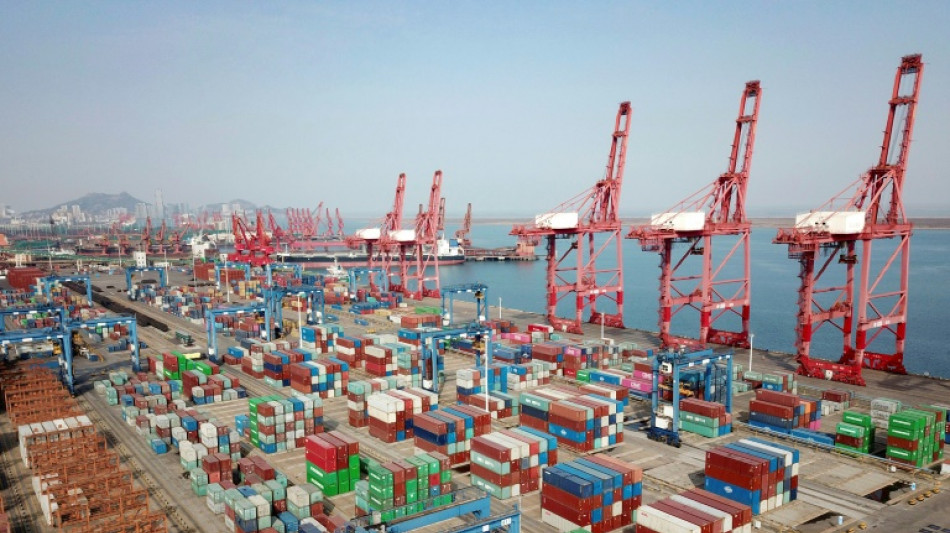
China's imports fall as Covid outbreaks, lockdowns hit demand / Photo: STR - AFP/File

 رئيس جامعة القدس يستعرض نموذج الشراكة بين التعليم العالي والصناعة في قمة QS بأبوظبي

 ابتكارات فلسطينية في مسابقة "سيف" العالمية بالرياض

 تحذير أمني من تكثيف إسرائيل إرسال رسائل نصية مستهدفة للفلسطينيين

 Polanski Accuses Sadiq Khan of Undermining Thames Water Nationalisation

 Nigeria Envoy's $61 Billion Claim Faces Scrutiny Amid Diplomatic Tensions

 وزير المالية يبحث مع برنامج الأمم المتحدة الإنمائي توسيع الدعم في غزة والضفة

 المغرب يبلغ محكمة التحكيم الرياضي بشأن اتصال محتمل بين مسؤول سنغالي ومحكم في قضية كأس أفريقيا
China's imports shrank on-year in March for the first time in nearly two years, official data showed Wednesday, hit by coronavirus lockdowns and weakening consumer demand.
The world's second-largest economy has stuck to a strict zero-Covid strategy as it tries to contain outbreaks fuelled by the Omicron variant in recent months.
The economic costs, however, have mounted -- the waves of infections and resulting lockdowns have kept consumers at home, halted business operations and snarled supply chains.
Imports dropped 0.1 percent from a year ago, according to data from China's Customs Administration -- the first such decline since August 2020, in the early phase of the pandemic.
The figure was much lower than the forecast from a Bloomberg poll of economists, and a far cry from the 15.5 percent growth for the first two months this year.
"Some unexpected factors in the international and domestic environment have gone beyond our anticipation," Customs Administration spokesman Li Kuiwen told reporters.
"Achieving the goal of stabilising foreign trade will require greater effort."
China's export growth slowed as well in March to 14.7 percent, down from 16.3 percent in the first two months.
While Li did not specify external factors, the drop in exports came during a period where Russia's invasion of Ukraine and the shockwaves from it have hurt business sentiment and consumer confidence globally.
"The March trade data highlighted the impact of pandemic-related disruptions on economic activity and consumer spending," said Rajiv Biswas, Asia-Pacific chief economist at S&P Global Market Intelligence.
He added that recent lockdowns in major cities such as Shanghai and Shenzhen "hit consumer spending hard", while the temporary shutdown of manufacturing plants impacted demand for imported raw materials.
China's balance of trade in March was $47.4 billion.
European demand for Chinese exports could be "a key risk", Biswas said, given that "macroeconomic shocks from the Russia-Ukraine war, notably higher oil and gas prices and rising inflation pressures, are resulting in a downgraded EU GDP growth outlook in 2022".
Customs spokesman Li said that in the first quarter, exports of mechanical and electronic products rose 9.8 percent from a year ago, with increases in solar cells, lithium batteries and automobiles.
"The largest declines in outbound shipments were of electronics, furniture and recreational products, pointing to an unwinding of pandemic-linked demand for these goods," Julian Evans-Pritchard, senior China economist at Capital Economics.
Y.Zaher--SF-PST

