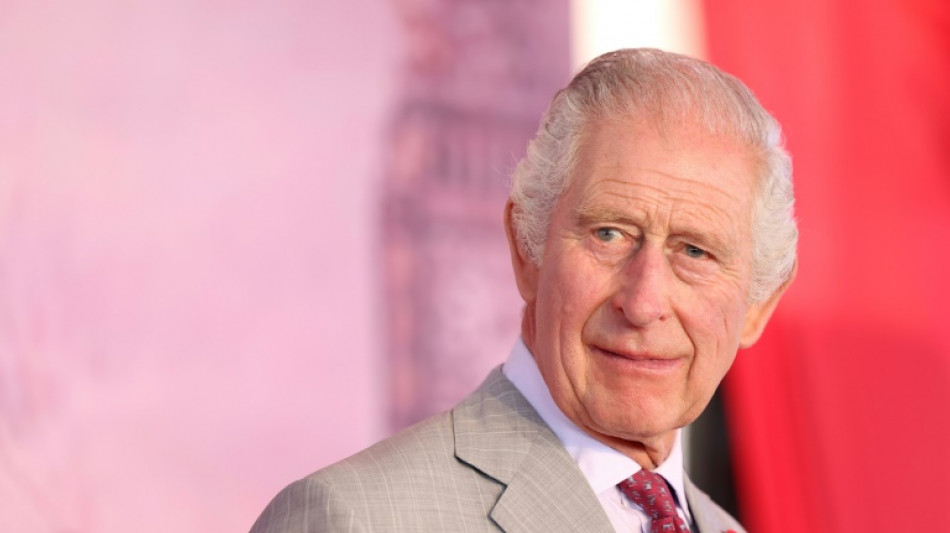
Britain's King Charles III admitted to hospital for prostate surgery / Photo: Chris Jackson - POOL/AFP

 أين الأمن القومي العربي؟.. تحليل نقدي لغياب الرؤية المشتركة

 Crude Oil Prices Rise on Reports of Houthi Attack on Saudi Refinery

 El Nino’s Weakening Grip on Tamil Nadu Rainfall Hinges on Potential Cyclone

 Black Friday Discounts Cut Prices on Two Top-Rated Wiper Blades

 Twickenham Grounds Team Prepares Pitch for Six Matches in Three Days

 Luxembourg City Plans €13 Million Abrigado Centre for 2029

 Two A1 Crashes Create Kilometres of Rush-Hour Congestion

 South Africa Places 36 Hospitals on Standby for Possible Imported Ebola Cases

 Tamil Nadu Secures Rs 58,214 Crore in Investments at Vettri Conclave

 فرنسا تدعو لتجريم "الفصل العنصري القائم على الجنس" دولياً

 أزمة الصواريخ الاعتراضية في البنتاغون: استنزاف المخزونات يفرض تعبئة صناعية حتى 2030

King Charles III was on Friday admitted to a London hospital for scheduled surgery, Buckingham Palace said, a week after revealing the British monarch would be treated for an enlarged prostate.
"The king was this morning admitted to a London hospital for scheduled treatment," the palace added in a statement.
"His Majesty would like to thank all those who have sent their good wishes over the past week and is delighted to learn that his diagnosis is having a positive impact on public health awareness."
Royal officials took the unusual step last week of issuing a bulletin on the 75-year-old monarch's health, disclosing that he had an enlarged prostate but the condition was benign.
It came soon after a separate statement that the king's daughter-in-law, Catherine, Princess of Wales, 42, had undergone successful abdominal surgery for an unspecified condition.
Kate, married to Charles's elder son and heir to the throne Prince William, is facing up to two weeks' recuperation at the private London Clinic, then several months away from public duties.
British media reported that Charles was being treated at the same clinic as Kate and is understood to have visited her there ahead of his treatment.
Charles travelled to his private Sandringham estate in eastern England last Friday to prepare for what royal officials said would be a "corrective procedure", before returning to London on Thursday.
Charles was told he had the condition, which is common in men aged over 50 and affects urination, last Wednesday after experiencing symptoms and having a check-up.
He wanted to share his diagnosis publicly to encourage other men who may be experiencing symptoms to see their doctor.
- 'Looking forward' -
Charles's second wife, Queen Camilla, 76, described her husband's health last week as "fine" and said he was "looking forward to getting back to work", after being forced to cancel engagements.
The transparency is a clear break with the past: Charles's mother, Queen Elizabeth II, suffered visibly declining health from October 2021 until her death in September 2022.
Her withdrawal was based on what officials said were "episodic mobility problems" that affected her walking and standing, leading to use a stick and even a motorised buggy at public events.
Officially, her death at 96 was recorded as old age. But there have been claims from a trusted royal biographer that she had bone marrow cancer.
The late queen's father, King George VI, was a heavy smoker and had one lung removed in September, 1951. But the full extent of his condition was not made public at the time.
He never made a full recovery and died in February, 1952. It was later revealed he had lung cancer.
The new-found openness saw a surge in internet searches for the term "enlarged prostate" on the state-run National Health Service (NHS) website.
An enlarged prostate, symptoms of which include a frequent need to urinate and difficulty emptying the bladder, is not normally considered a serious condition or a risk indicator for prostate cancer.
The charity Prostate Cancer UK said it had seen a more than 100 percent increase in people using its online risk checker on Thursday compared with Wednesday.
R.Halabi--SF-PST

