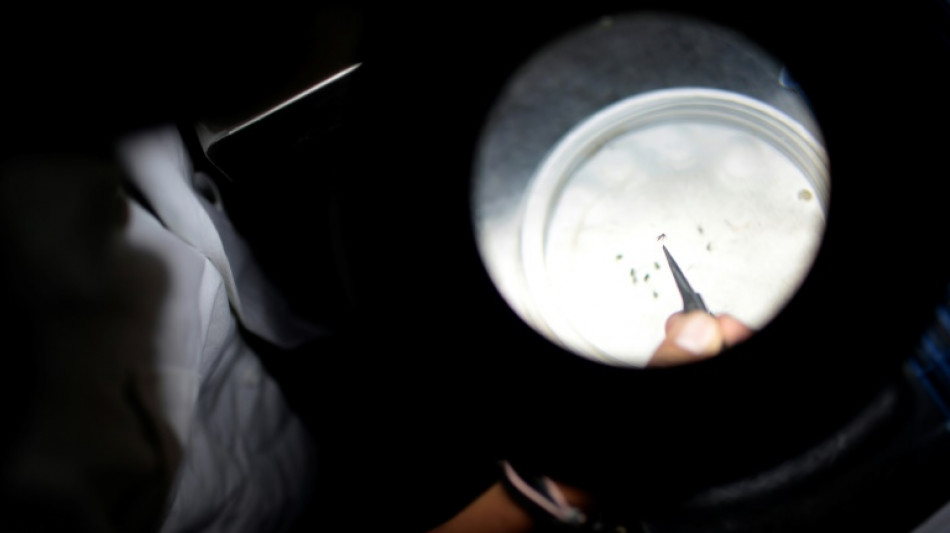
US approves first vaccine against chikungunya virus / Photo: Pedro PARDO - AFP

 أين الأمن القومي العربي؟.. تحليل نقدي لغياب الرؤية المشتركة

 Crude Oil Prices Rise on Reports of Houthi Attack on Saudi Refinery

 El Nino’s Weakening Grip on Tamil Nadu Rainfall Hinges on Potential Cyclone

 Black Friday Discounts Cut Prices on Two Top-Rated Wiper Blades

 Twickenham Grounds Team Prepares Pitch for Six Matches in Three Days

 Luxembourg City Plans €13 Million Abrigado Centre for 2029

 Two A1 Crashes Create Kilometres of Rush-Hour Congestion

 South Africa Places 36 Hospitals on Standby for Possible Imported Ebola Cases

 Tamil Nadu Secures Rs 58,214 Crore in Investments at Vettri Conclave

 فرنسا تدعو لتجريم "الفصل العنصري القائم على الجنس" دولياً

 أزمة الصواريخ الاعتراضية في البنتاغون: استنزاف المخزونات يفرض تعبئة صناعية حتى 2030

US health authorities on Thursday approved the world's first vaccine for chikungunya, a virus spread by infected mosquitoes that the Food and Drug Administration called "an emerging global health threat."
The vaccine, developed by Europe's Valneva which will be marketed under the name Ixchiq, was approved for people 18 and over who are at increased risk of exposure, the FDA said.
Ixchiq's green-light by the US drug regulator is expected to speed the vaccine's rollout in countries where the virus is most prevalent.
Chikungunya, which causes fever and severe joint pain, is generally seen in tropical and subtropical regions of Africa, southeast Asia and parts of the Americas.
"However, chikungunya virus has spread to new geographical areas causing a rise in global prevalence of the disease," the FDA said, reporting more than five million cases in the past 15 years.
"Infection with chikungunya virus can lead to severe disease and prolonged health problems, particularly for older adults and individuals with underlying medical conditions," senior FDA official Peter Marks said in a statement.
"Today's approval addresses an unmet medical need and is an important advancement in the prevention of a potentially debilitating disease with limited treatment options."
Symptoms can sometimes last for months or even years, but the virus is rarely fatal. There is currently no specific drug to treat chikungunya, aside from common medications for pain and fever relief.
In the absence of preventative treatment, until now the only way to protect against infection was to avoid getting bitten.
The vaccine is injected in one dose and contains a live, weakened version of the chikungunya virus, as is standard with other vaccines.
Two clinical trials were carried out in North America on 3,500 people. Headache, fatigue, muscle and joint pain, fever and nausea were commonly reported side effects.
Serious reactions were reported in 1.6 percent of Ixchiq recipients in the trials, with two requiring hospitalization.
Some vaccine recipients had chikungunya-like adverse reactions that lasted for 30 days or more.
Chikungunya can be passed from a pregnant person to their unborn child, and the virus can be fatal to newborns.
The FDA in its statement noted it was not known whether the vaccine virus can be transmitted from mother to a baby in utero, nor if the vaccine can cause adverse effects in newborns.
Since chikungunya was first identified in Tanzania in 1952, it has been recorded in more than 110 countries, according to the World Health Organization.
Public health experts have expressed concerns that chikungunya could be a potential future pandemic threat as climate change pushes the mosquitoes that spread it into new regions.
An application for authorization has also been filed by Valneva with the European Medicines Agency (EMA).
S.AbuJamous--SF-PST

