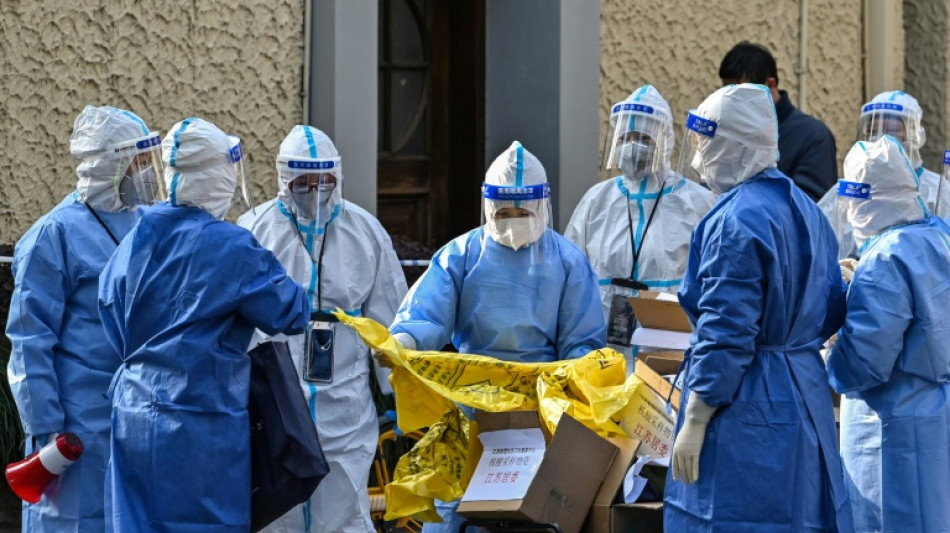
'China's Fauci' calls for protecting 'normal life' in Omicron fight

 Myanmar leader lands in Malaysia for migrant return talks
 Indian central bank hikes rates for first time since 2023

 US military on Okinawa face curfew, alcohol ban after murder case

 Fierce lobbying in EU over 'forever chemicals'

 Dodgers beat Braves and Padres avoid sweep in MLB playoffs
 Mourning, war and elections as Israel marks October 7

 Messi says Argentina retirement is 'saddest day of my career'

 Oil rises and stocks fall as Hormuz worries flare

 Pacific presses world for help 'surviving' climate change at pre-COP summit

 Verstappen revival to be put to the test in steamy Singapore

 US woman who survived botched execution is conscious, speaking: lawyers

 Climate champion Australia digging more coal
 Emotion, tears as Messi retires from Argentina national team

 Dodgers push Braves to the brink of MLB playoff exit

 Crisis-stricken Haiti postpones elections

 N. Korea's Kim pledges 'invariable support' in Putin birthday letter

 OGRD Alliance Advances PLPC Multi-Asset Platform Following APHELAR Milestone, Expanding Licensing and Strategic Capital Frameworks

 Emotion, tears as Messi prepares for Argentina farewell

 Kane eyes Ronaldo record after matching England cap mark

 Spain fight back to beat Croatia, Kane adds to record for England

 Merino double helps Spain beat Croatia, reach Nations League quarters

 US stocks hit fresh records as oil stabilizes on rising supplies
 As Messi bows out, Argentines say 'thank you'

 Ronaldo opens door for Portugal return, apologises for walkout

 'Nobody seems to care': Russian city shrugs off plague reports

A top doctor in China's pandemic fight who came under pressure last year for questioning the country’s zero-Covid policy has called again for balancing anti-virus measures with maintenance of normal life as China struggles with an Omicron surge.
Shanghai infectious disease expert Zhang Wenhong -- who has been called "China's Fauci" after US disease expert Anthony Fauci -- also said in a blog post that the city's medical resources were becoming "strained" as cases climb, but he expects the metropolis to turn the corner soon.
Zhang's comments may indicate officials' growing tolerance for those questioning zero-Covid as patience with draconian lockdowns wears thin.
"In the future pandemic fight, maintaining normal life should be placed in a position of equal importance with (virus screening)," Zhang posted on China's Twitter-like Weibo platform Thursday.
"We hope that we can minimise the impact on our lives as much as possible."
The post was liked, reposted or commented on more than two million times by midday Thursday.
China is experiencing its worst Covid-19 outbreak since the start of the pandemic more than two years ago, with Shanghai, the country’s biggest city, an epicentre.
More than 4,800 new cases were reported nationwide Thursday -- a figure that while minuscule compared to other countries, has frustrated Beijing's zero-Covid strategy of keeping cases low through targeted lockdowns, mass testing and travel restrictions.
While some northeastern Chinese cities have imposed full lockdowns on millions of people, Shanghai has sought to minimise disruption with targeted neighbourhood quarantines and mass testing of the roughly 25 million people.
But residents have expressed alarm online as cases rise, and have complained of difficulty accessing hospitals that have imposed tight restrictions to prevent the virus from spreading inside.
Criticism of the government's zero-Covid policy has met political backlash in the past.
Similar comments last year by Zhang, head of infectious diseases at a leading Shanghai hospital, drew attacks from nationalists who accused him of "pandering to foreign ideas".
China's doctors have had to weigh their comments carefully since the virus' emergence in Wuhan in late 2019 when a group of medical workers in the central city came under police pressure for trying to raise alarm.
But the highly transmissible Omicron variant appears to be softening official attitudes.
Authorities on Wednesday urged the public not to spread rumours that cause "panic", after a surge in orders for groceries and basic supplies by anxious consumers fearing continued lockdowns.
Zhang said he had made his rounds in Shanghai's viral hotspots and acknowledged that the rolling, localised lockdowns had imposed public hardship and that medical resources were "strained".
The city’s battle against Covid-19 was at a "stalemate" and faced "great difficulties," he said.
But Zhang added that screening measures were beginning to turn up fewer cases in previously untested neighbourhoods, indicating that the Omicron-fuelled surge could be waning.
K.AbuDahab--SF-PST