From undocumented to business owner: a Honduran's American dream come true / Photo: Thomas URBAIN - AFP

 Hotel Blacklist Launches New Accommodation Industry Risk Assessment Tool
 Bangladesh nuclear plant draws hope -- and worry

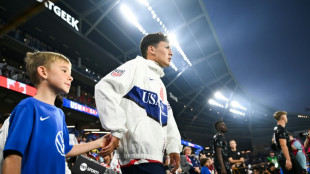 US beat Canada 1-0 to wrap up four-win international break

 Turkey, Australia's joint COP31 leadership raises doubts

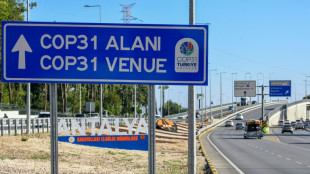 For Turkish NGOs, COP31 offers rare space for action
 Sleep, appetite, gene-editing experts contend for Nobel chemistry prize

 Nobel Peace Prize haunted by the 'spectre' of Trump

 Africa launches own credit agency in bid for cheaper borrowing

 US, China, EU: three paths to regulating AI

 Australia's High Court rules against coal mine in landmark climate case

 Australia touts new funds for Pacific infrastructure at Fiji 'pre-COP'

 Eva Marie Saint, Oscar winner of Hollywood classics, dies at 102

 Australia probes app used in cheap smart glasses over privacy fears
 England needed to 'move on' from World Cup pain, says Tuchel

 O'Neill to stay at Celtic after period of "reflection"

 Kane marks 125th England cap with Wembley Nations League double

 Quebec's incoming separatist leader wants to block Crown from swearing-in
 Emmys gala will now stream its premier television awards

 Paramount completes Warner Bros takeover, creating Skydance
 Trump blames France unrest on Islam, migration

 Apple's Cook praises EU over efforts to protect children online
 Nobel winner Halzen says years of October 'misery' finally over

 Quebec separatist win rattles Carney's unity push

 'Itching' for change: Shiffrin cuts back slaloms this season

 'Gen Z has risen up': Tens of thousands mass for tense France school protests
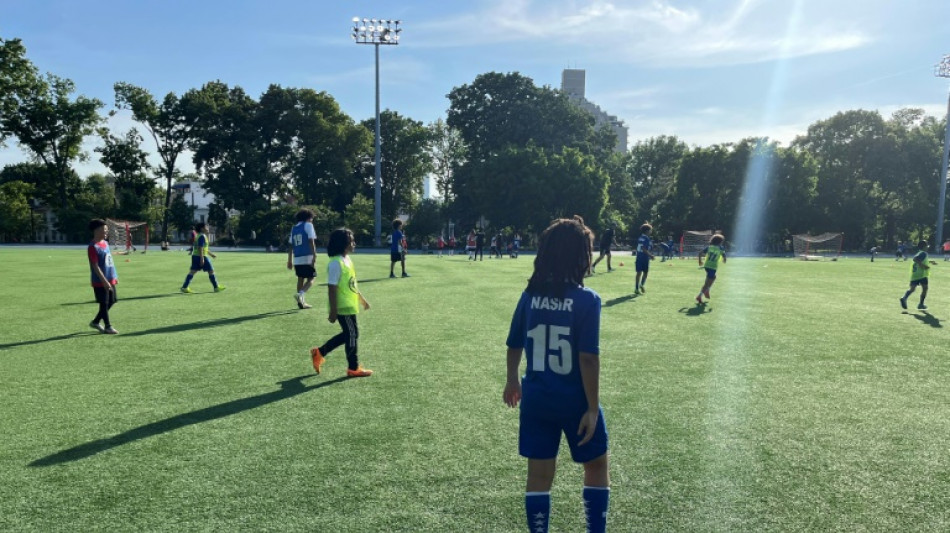
Nahun Romero, a Honduran footballer who arrived in New York penniless and undocumented, is living his American dream in the Big Apple where he leads a successful sports school.
Romero's soccer academy, with its hundreds of hopeful kids, might have been unimaginable for the Honduran second flight player, who had been in New York working construction full time while moonlighting as a coach.
One of the toughest hurdles to climb came six years ago, when he had to convince parents to entrust their children from ultra-diverse Queens to this former Honduran footballer and bricklayer with no money and no one to vouch for him.
"He was talking to me about starting his own business in the construction industry," said his wife, Sarah, herself a real estate agent. "I said to him: why not do something in football instead? It's your passion."
So "we started from nothing," recalls Nahun, now 39 years old.
"No one helped us. It was just my wife who was always there by my side. I was coaching, and at the same time I was still working in construction. It was really hard."
From the outset he tried to give his small business at least a whiff of professionalism, in the structuring of training, but also by purchasing equipment or by offering, with any kid's sign up, a jersey flocked in the student's name.
He also chose a name, the 5 Star Soccer Academy, to reflect an image of excellence but also recalling the five blue stars on the Honduran flag, a tribute to home.
"In Europe, football is a religion. In the United States, it's more an opportunity for children to have fun," explained Idlir Makar, a former Albanian professional who is one of 12 coaches Romero has brought on.
"But in this academy, we work. We try to develop players," he said.
The 5 Star Soccer Academy is a reflection of Queens, undoubtedly the most cosmopolitan borough of New York city, with players of more than 50 different nationalities, and Albanian and Gambian coaches.
- "Just the beginning" -
"When I went to see how they trained, I liked it," said Edgar Urgiles, father of 12-year-old Jaden, one of the best players on the U13 team. "It's professional."
This midfielder, born in his mother's native Uzbekistan to an Ecuadoran father, has been playing at the academy for six years, which he considers to be a "good foundation."
Discipline shows during training matches. "Hopefully, one day we'll see one of these players become a professional soccer player," Romero muses.
After years of tinkering, he ended up getting slots on the Astoria Park lot, in the shadow of the RFK Bridge which connects Queens, the Bronx and Manhattan.
Between this location and another further south, the academy -- which launched with three children -- now welcomes nearly 500 kids. They have begun to shine in youth competitions up to age 13, the academy limit.
Romero offered reasonable prices compared to what is seen elsewhere in New York, at $180 for two and a half months of lessons, when other football schools cost several thousand dollars a year.
"I know, we all know that working hard, you can make your dream come true. And I can prove it," Romero said.
He arrived in the United States after a three-month journey through Guatemala, Mexico and Texas.
After being forced to keep a low profile, he had to wait 18 years to get a residence card and be able to finally see his parents again.
"I feel so good to come out of the ghetto and end up here. I want to make my family proud," he said. "This is just the beginning."
L.Hussein--SF-PST