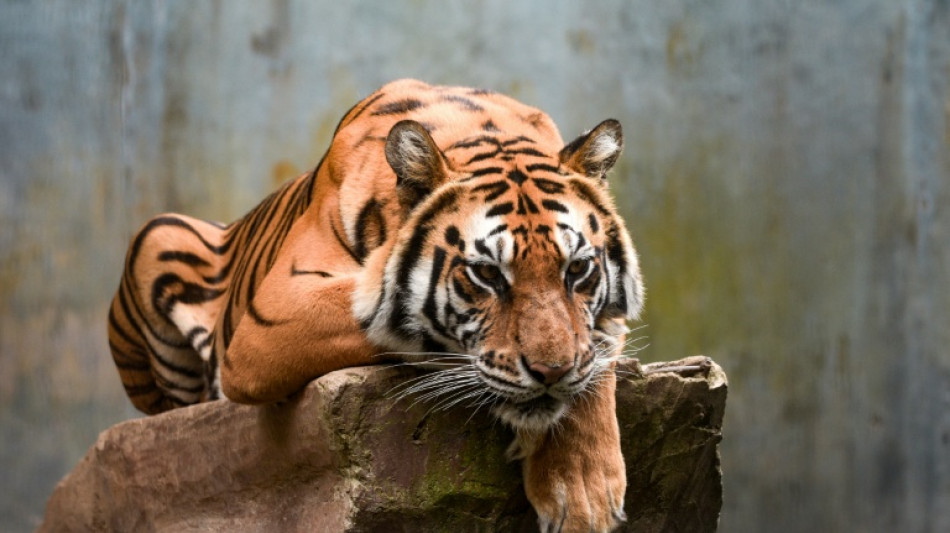
Virus kills tiger cubs in Indonesian zoo / Photo: Timur Matahari - AFP

 Kubayi Warns Residents to Vacate Hijacked Buildings as State Prepares Seizures

 Van Gogh’s ‘Châtaigniers en Fleurs’ Sets $285m Record at Sotheby’s

 محكمة الاحتلال تمدد اعتقال مدير مستشفى كمال عدوان دون تهمة

 Global Scams Remain Widespread: Nearly Two in Three Adults Worldwide Report Scam Encounters, 9% Lost Money

 OPEC Chief: Oil to Remain Major Energy Source for Decades Amid Global Shift
Two Bengal tiger cubs born in Indonesia's Bandung Zoo last year have died from a viral infection, a conservation official told AFP on Friday.
The cubs, two males named Huru and Hara, were born last July to tigress Jelita, who remains in good health.
According to the conservation agency of West Java province, the cubs were infected at birth with the Feline Panleukopenia virus (FPV), which can sicken wild and domestic cats and is particularly dangerous for young animals.
Hara died on the 24th, two days after falling ill, and despite veterinary efforts to save him, Huru followed two days later, agency spokesman Eri Mildrayana told AFP.
The cubs had suffered from diarrhoea, vomiting and lethargy in the days before they died.
Bandung mayor Muhammad Farhan, in a social media post Thursday, said the news had left him "very sad."
"This is an important lesson for us. The step that we can take right now is to improve biosecurity," he wrote on Instagram.
The US National Institutes of Health says FPV is also referred to as "cat plague" or "feline distemper" and usually occurs in unvaccinated or improperly vaccinated captive felines.
The Bandung Zoo in West Java has been closed for months due to what officials have described as internal management problems.
In 2017, activists demanded the zoo's closure after skeletal sun bears were pictured begging for food from visitors and eating their own dung.
AFP was unable to reach Bandung city authorities in charge of running the zoo.
According to the International Union for Conservation of Nature, the Bengal tiger is an endangered species, with fewer than 4,000 still in the wild -- mostly in India, Nepal, Bangladesh and Bhutan.
G.AbuHamad--SF-PST



