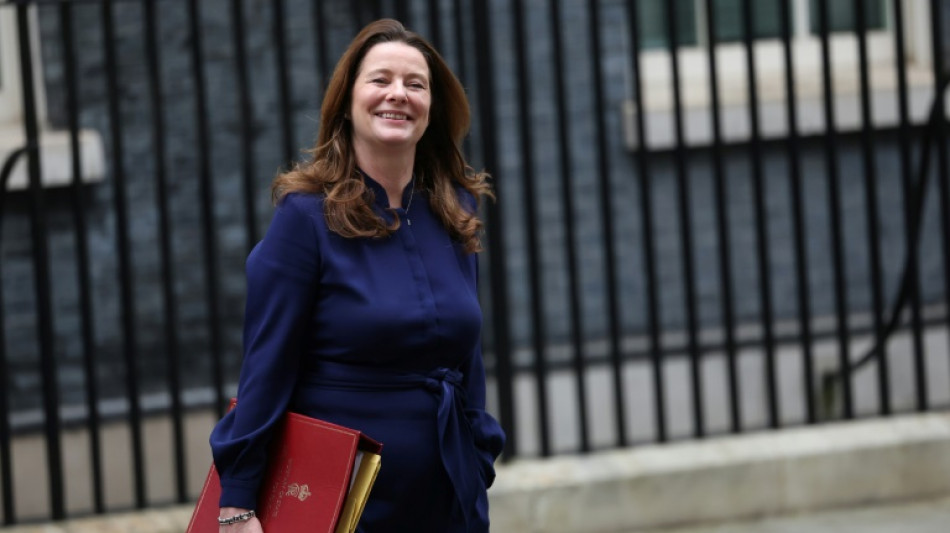
England set to ban gender identity teaching in schools / Photo: Daniel LEAL - AFP

 El Nino’s Weakening Grip on Tamil Nadu Rainfall Hinges on Potential Cyclone

 South Africa Places 36 Hospitals on Standby for Possible Imported Ebola Cases

 Two A1 Crashes Create Kilometres of Rush-Hour Congestion

 Luxembourg City Plans €13 Million Abrigado Centre for 2029

 Luxembourg Housing Petition Passes Threshold for Parliamentary Consideration

 Raheem Sterling Receives Suspended Sentence After Lamborghini Crash

 Tamil Nadu Secures Rs 58,214 Crore in Investments at Vettri Conclave

 فرنسا تدعو لتجريم "الفصل العنصري القائم على الجنس" دولياً

 أزمة الصواريخ الاعتراضية في البنتاغون: استنزاف المخزونات يفرض تعبئة صناعية حتى 2030

 Huawei Found Guilty of Trade Secret Theft in Landmark US Case

 Indian Markets Set for Gain as Foreign Inflows Offset Tariff Fears
Children up to the age of 18 at schools in England will not be taught gender identity under government proposals published Thursday, amid growing concern in the UK and elsewhere about transgender issues.
The move follows a landmark review which last month urged "extreme caution" on prescribing hormone treatments for young people grappling with gender identity issues.
England's first gender identity development service for children, run by the Tavistock and Portman NHS Trust, closed in March after years of criticism that it had been too quick to prescribe puberty-blocking treatment.
Under the proposals contained in new draft guidance, the "contested theory of gender identity" would not be taught to pupils of any age, said a Department for Education statement.
Education Secretary Gillian Keegan said the measures were aimed at making sure children were "not exposed to too much too soon, taking away the innocence of childhood.
"That is why this updated guidance includes clear age limits for the teaching of the most sensitive content and specifies that the contested topic of gender identity should not be taught," she wrote in the guidance document.
- 'Toxic' debate -
Since 2020, sex education has been compulsory in secondary schools in England, which teach children from the age of 11.
But the subject, and particularly gender identity, has increasingly become part of the "culture wars" between social conservatives and liberals.
Harriet Cass, the retired paediatrician who led the four-year review into gender identity services, called the "toxicity" of the debate "exceptional".
"At secondary school (11-18 years) pupils will learn about legally 'protected' characteristics, such as sexual orientation and gender reassignment," said the Department for Education statement.
"But the updated guidance is clear that schools should not teach about the concept of gender identity."
- 'Inappropriate' content -
The proposals will also ban sex education for children under the age of nine following concerns about some of the materials being used in schools.
"Parents rightly trust that when they send their children to school, they are kept safe and will not be exposed to disturbing content that is inappropriate for their age," Prime Minister Rishi Sunak said in the statement.
"That's why I was horrified to hear reports of this happening in our classrooms last year," he added.
The National Association of Head Teachers (NAHT) questioned whether the government's proposals would effectively protect children given the widespread access to smartphones.
"We cannot ignore the fact that some children and young people are already accessing information from different sources outside of school," said the union's general secretary Paul Whiteman.
"This may lead to questions that need careful handling from trained professionals."
- Suicide prevention -
The new guidance also includes additional content on suicide prevention and the risks of viewing content promoting self harm online.
The extent of harmful material available online was highlighted in the UK by the death in 2017 of 14-year-old schoolgirl Molly Russell.
A coroner ruled that she had died from an act of self-harm while suffering from the "negative effects of online content", leading her family to set up a campaign highlighting the dangers of social media.
Her father Ian Russell last year criticised the response of social media companies to a report aimed at preventing future tragedies as "underwhelming and unsurprising".
The government's new proposals will be subject to a nine-week consultation and be statutory once finalised.
C.AbuSway--SF-PST