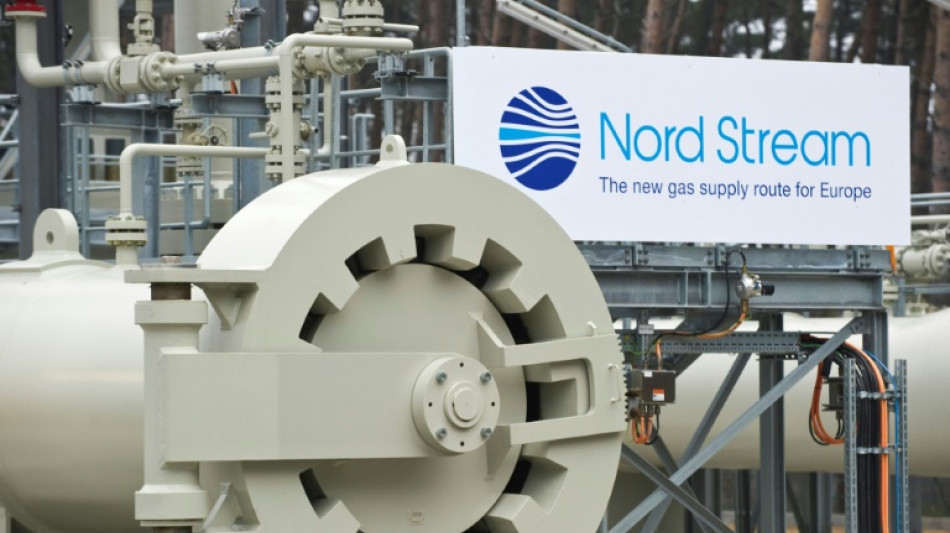
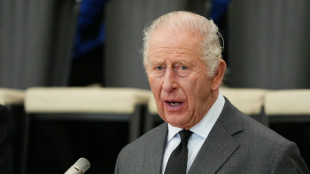
Europe huddles down for a winter without Russian gas / Photo: John MACDOUGALL - AFP/File

 مقتل الطفلة جوري الصوفي برصاصة داخل خيمة نزوح في مواصي خان يونس

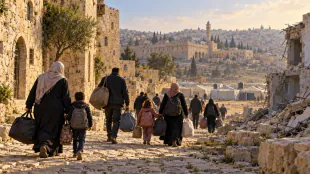 بلدية الخليل: النزوح القسري تجاوز ثلاثة آلاف شخص مع استمرار الإخلاء والهدم

 محمد الغول يدعو إلى وحدة فلسطينية لمواجهة مخاطر المرحلة

 Sri Lanka end England hopes with crushing win over Pakistan
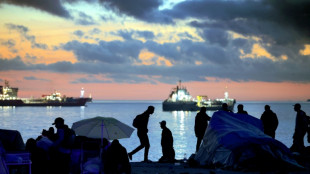
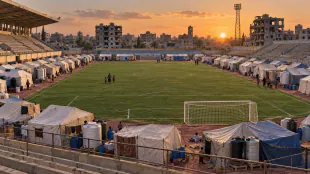 ملاعب وأندية غزة تتحول إلى مراكز لإيواء العائلات النازحة
 Dangote, Nigeria's oil tycoon rewriting Africa's story
 Carrick to remain Man Utd boss for Chelsea clash: reports
 Maresca defends Donnarumma, Guehi after Man City defeat
 Nordic leaders call Putin as local truce begins in Ukraine

 Osaka unveils crane outfit in Tokyo before win over Paolini

 Ronaldo in line for Portugal return after fallout with coach

 Norway media take legal action to block Meta from using content

 Bayern praise 'humble' Kane after Ballon d'Or win

 Colts retain Daniel Jones as starter despite continued offensive struggles

 Madushanka wrecks Pakistan as Sri Lanka press for final slot
 Destructive Abhishek 113 leads India to series win over New Zealand
 Norway, Finland leaders hold 'frank and substantive' talk with Putin
 Wall Street faces earnings and Fed tests after turbulent technology-led week

 Ukraine, Russia say US-brokered truce holding in ravaged city
 Police form SIT after vehicles in Rahul Gandhi convoy collide on expressway

 Delhi grants minimum monthly pay and DA to about 4,000 MCD health workers
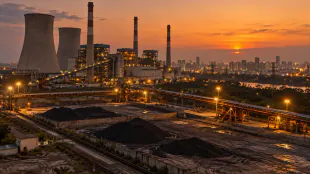
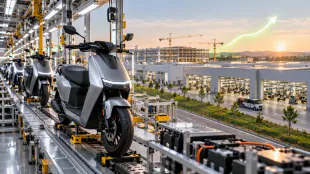 Ather Energy shares climb 14% after quarterly profit and expansion plan
 Gold ETF flows turn negative after 13 weeks as bullion loses 4%

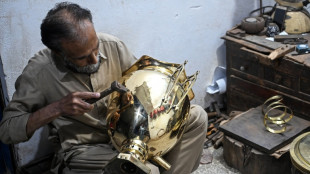 Pakistan's last antique restorers give old treasures new life
 India braces for Cyclone Arnab with evacuations
Woolly socks and thermostats turned down a notch: Europeans are preparing for a difficult winter without gas supplies from Russia, part of the fallout from the war in Ukraine.
Latvians have been adjusting since the end of July, when Russia stopped supplying gas to the Baltic former Soviet state.
They know what to expect in the coming months.
"Energy prices are so exorbitant that we already cut off the hot water from the city pipeline and installed our own hot water boiler," said Juons Ratiniks, who lives in the city of Rezekne, near the Russian border.
"It is cheaper to use it when we actually need it than pay for constantly heated hot water," supplied centrally, the retired border guard explained.
Politicians need to understand that people expected help when their energy bill started shooting up, said Ratiniks.
With elections due in October, he warned, "they better support heating for us -- otherwise we'll give heat to them!"
Bulgaria, Denmark, Finland, the Netherlands and Poland have also already had their gas cut, while other countries have seen their supply reduced drastically.
Deliveries of Russian gas to Germany via the Nord Stream pipeline will be halted for several days at the end of this month, the second stoppage this summer. While ostensibly for maintenance, Berlin has accused Moscow of halting supplies over Western sanctions imposed over Russia's invasion of Ukraine.
Overall, supply was down in July by around 70 percent, year on year, according to several experts consulted by AFP.
- 'Global energy crisis' -
Governments around Europe are not relishing the prospect of cold radiators and factories forced to stop operating.
Many believe Russian President Vladimir Putin is using energy supplies as a strategic weapon to put pressure on nations that have applied sanctions against Moscow for its invasion of Ukraine.
The cut in supply has pushed the price of gas -- and electricity -- through the roof given that is what many power stations run on.
A surge in oil prices has further complicated matters, even if its value has fallen back somewhat recently.
"The world is experiencing the first truly global energy crisis in history," Fatih Birol, executive director of the International Energy Agency, wrote last month.
"The situation is especially perilous in Europe, which is at the epicentre of the energy market turmoil."
Natural gas is so important to so many countries -- particularly Germany, which needs it for its heavy industries -- that it was exempted from European sanctions against Russia.
Coal, in contrast, is subject to a total embargo, while for oil, a progressive embargo applies.
- 'Operation Thermostat' -
The gas supply from Russia to Germany from the Nord Stream 1 pipeline has already been drastically cut back.
"We now assume that Russian gas flows to Europe via Nord Stream 1 will fluctuate between zero and 20 percent capacity in the coming months," said Matt Oxenford of the Economist Intelligence Unit.
And that, he added, would lead to a recession in Europe in the winter of 2022-2023.
"Given current gas infrastructure, Germany cannot compensate for an 80 percent cut in Russian gas without a drastic reduction in demand, leading to a recession over the winter," he added.
And with Germany a centre of industrial supply chains, that would have a knock-on effect across Europe, wrote Oxenford.
Businesses will suffer cuts before households, and the governments in France and Germany are already looking at who will have to suffer first.
But ordinary people are also being told they will have to adjust to the new reality.
The European Union has told its 27 member countries that they will have to cut their gas consumption by 15 percent.
Italy launched earlier this year what it called "Operation Thermostat" to try to lower heating and cut back on air conditioning in schools and public buildings. Spain and Germany have followed suit.
Germany's summer campaign focussed on lowering the air conditioning on public transport and buying more water-efficient shower heads. Several cities have lowered the temperature in their swimming pools and made cuts in urban lighting.
- Coal and LNG -
France has frozen gas prices for individuals, but in Germany, the bills for householders will rise by several hundred euros a year.
Given what threatens to be a hard winter, the consumer advice centre in the state of North Rhine-Westphalia says it has never been so busy in its 40-year history.
Many people say they are worried they will be cut off because they cannot pay the bills, said spokesman Udo Sieverding.
Some were looking at replacing their oil or gas supply with solar panels, while others were turning to coal, he added.
Tenants needed to put money aside early and talk to their landlords, he advised.
"Nevertheless, there will be many households that cannot pay the rising energy prices."
France, meanwhile, is reviving an anti-waste campaign first rolled out in the 1970s.
Shops that use air conditioning, for example, must keep their doors closed -- or face a fine.
Here too there has been a rush towards coal despite the fact that it is highly polluting.
France's government has reconsidered a decision to close down a coal-fired station, despite an outcry from environmental campaigners.
burs-jmi/jj/rl/smw
C.Hamad--SF-PST