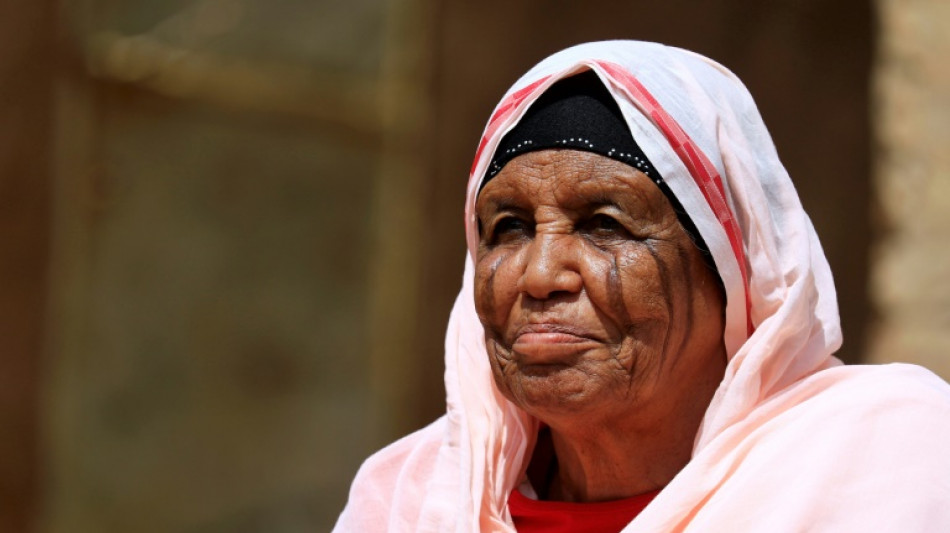
Scarring for life: traditional practice fades in Sudan / Photo: ASHRAF SHAZLY - AFP

 UN nuclear watchdog chief urges Iran to grant access

 الأسهم الأوروبية تتراجع تحت ضغط اضطرابات فرنسا ونتائج الشركات

 Boeing shares tumble after it releases cautious growth forecast

 Allegri suspended for two Serie A games after red card

 مصر تعمل على أدوات تمويل لتقليص مخاطر الاستثمار الصناعي

 قفزة بنسبة 58% في أسعار الكهرباء الفورية بألمانيا

 Carney moves to remake Canada alliances as US ties strained

 Serbia's students demand state media chiefs resign after poll win

 أسهم التكنولوجيا تدفع الأسواق الصينية إلى أدنى إغلاق في 14 شهراً

 Boeing releases cautious growth plan as shares fall sharply

 منع وفد دولي من دخول الضفة للمشاركة في مؤتمر بجامعة بيرزيت

 Exiled Russian dissident Navalnaya warns dictators becoming 'more cunning'

 Africa Ebola outbreak passes 10,000 cases, mostly in DR Congo

 EU pushes for more nations to pay to protect nature

 صحة غزة تسجل ستة قتلى و32 مصاباً خلال يوم واحد

 مقتل الطفلة جوري الصوفي برصاصة داخل خيمة نزوح في مواصي خان يونس

 بلدية الخليل: النزوح القسري تجاوز ثلاثة آلاف شخص مع استمرار الإخلاء والهدم

 محمد الغول يدعو إلى وحدة فلسطينية لمواجهة مخاطر المرحلة

 Sri Lanka end England hopes with crushing win over Pakistan

 ملاعب وأندية غزة تتحول إلى مراكز لإيواء العائلات النازحة

 Dangote, Nigeria's oil tycoon rewriting Africa's story

 Carrick to remain Man Utd boss for Chelsea clash: reports

 Maresca defends Donnarumma, Guehi after Man City defeat

 Nordic leaders call Putin as local truce begins in Ukraine

 Osaka unveils crane outfit in Tokyo before win over Paolini

Kholoud Massaed of the Hadaria tribe in Sudan vividly recalls the day her face was scarred with a sharp blade, an ancient practice that was once common.
Now in her 80s, she still carries on each cheek the three lesion lines that have since darkened over time.
"They took me to a man who was known to carry out this practice. He did it with a small knife," Massaed told AFP in her village of Om Maghad, some 66 kilometres (40 miles) south of Khartoum.
"I was seven years old and I cried. They told me I should have these facial marks as it's a sign of beauty."
Tribal scarring, an ancient practice that used to be commonplace in Sudan, involves marking the skin, mainly to identify tribal affiliation or as a symbol of attractiveness.
It was also practised in Sudan, where according to Minority Rights Group roughly 30 percent of the population is believed to belong to African minorities, while the rest are Sudanese Arabs.
The practice has greatly reduced over the years, with many now viewing it as unsanitary, archaic and obsolete.
"People used to sing for it," said Massaed. "It had great value in the past."
For a long time, she struggled to come to terms with her scarring, and now she is grateful that the practice has been dying out.
When her own children came of age, Massaed refused to let them endure the same agonies.
"I didn't take any of my children to be marked," she said. "It's a different time now."
"Only old people still bear these markings, not the younger generations."
Like Massaed, Fatma Ahmed of the Ja'aileen tribe bears similar lines on her face.
"The pain lasted for weeks," she said, adding that she used many traditional healing ointments to ease her suffering.
Communities in remote rural areas of Sudan have long struggled to access proper health care because of poor facilities and infrastructure.
Many men were also marked for life.
For males, these marks often varied from small vertical or horizontal lines on the cheeks to shapes resembling a "T" or "H", according to Babiker Mohammed from the Mahas tribe.
"It was not a choice back then. It was inevitable," said the 72-year-old.
"People just took children to the person known for marking faces, and he would mark the face according to their tribe name," he said.
Mohammed said that he too refused to mark his own children.
"I'm probably from the last generation that had their faces marked" in Sudan, he said.
Idris Moussa Abdelrahman, who is from the Ja'aileen tribe, hopes the practice never returns.
"It's a distortion and harms people for no reason."
R.Shaban--SF-PST