WTO mulls future of global trading under cloud of Mideast war / Photo: - - AFP

 American Nobel laureate in medicine hopes to illuminate the brain
 Trump approves firing squad for convicted US military base shooter
 Grappling with 'homework scams,' US universities shun AI detectors
 Separatists win Quebec election in test for Canada PM
 Leaders visit Pacific atoll at frontline of climate change
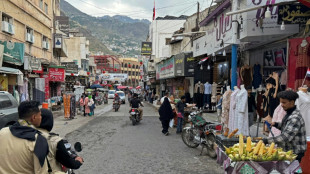 Yemen's Houthis claim striking Riyadh airport, other Saudi sites
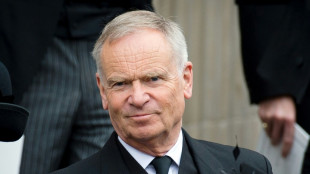 Best-selling British author Jeffrey Archer dies aged 86
 Military plane crash kills 32 in Nigeria

 Olise powers France to win over Belgium in Nations League
 High-flying Blazy turns to birdlife at Chanel
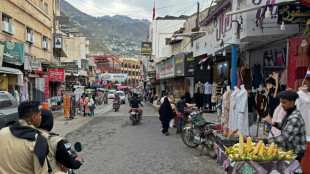 Riyadh's allies pledge troops as Yemen, Saudi Arabia attack Houthis
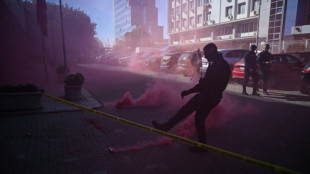 Clashes erupt outside Kosovo parliament over war crimes court
 Milan's Saelemaekers suffers ankle setback, faces lengthy spell out
 Rubio arrives in Iceland to push for greater US presence in Arctic
 Putin allows Italy's UniCredit to sell part of Russian business
 Djokovic into China Open final as Medvedev out for hitting fan with ball

 ICC unseals arrest warrants for Taliban education ministers
 Modric hopes fans back Croatia against Spain after England shame
 Bolsonaro rides right-wing surge into Brazil's election runoff
 Turkey blocks X account of British reporter
 Ukraine says using AI robot guns to shoot down new Russian drones
 At Oct 7 memorial, Netanyahu says will be no Hamas rule in Gaza
 Ukraine blames Russia for deadly sinking of Turkish ship in Black Sea
 UN rights council slams Taliban's 'oppression' of women
 Norway eyes partial ban of smart glasses
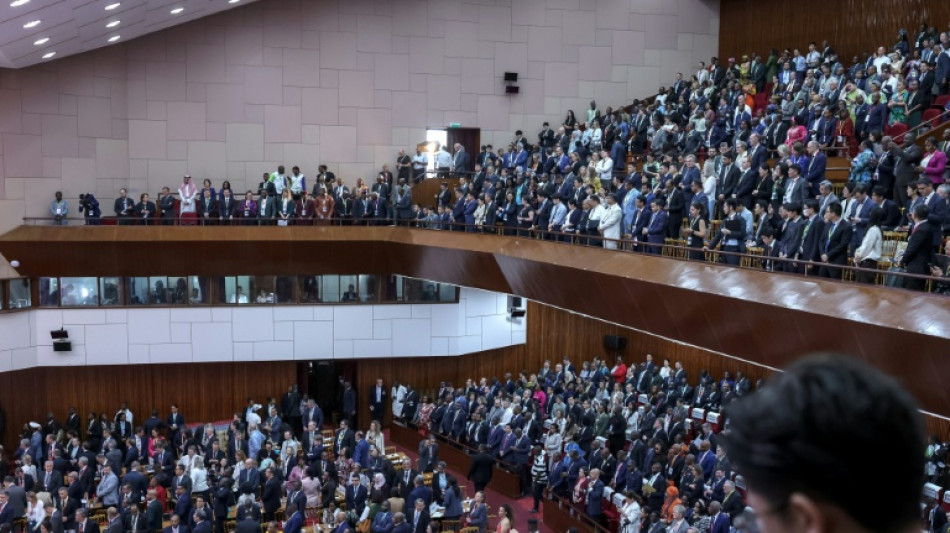
The World Trade Organization's ministerial conference opened Thursday against a backdrop of heightened trade tensions and global economic turmoil linked to the Middle East war.
Over four days in Cameroon's capital Yaounde, trade ministers from around the world will try to revitalise an institution weakened by geopolitical strains, stalled negotiations and rising protectionism.
The global trading system is experiencing the "worst disruptions in the past 80 years", WTO chief Ngozi Okonjo-Iweala warned at the opening ceremony.
"The world order and the multilateral system we used to know has irrevocably changed," she said, adding: "We cannot deny the scale of the problems confronting the world today."
"These disruptions are a symptom of the wider disruptions shaking the international order created after the Second World War to prevent a repeat of the horrors of the first half of the 20th century," she added.
Okonjo-Iweala wants the Yaounde meeting to open the next chapter in multilateral trading, decrying growing unilateralism and the collective failure of WTO's 166 members to reinvigorate the institution.
- 'Pivotal moment' -
The WTO ministerial conference, its supreme decision-making body, is usually held every other year.
Two years after the last ministerial conference in Abu Dhabi failed to make meaningful progress on key issues like fisheries and agriculture, member states face even stauncher challenges this time.
Their main task will be to develop a plan towards reforming a WTO that has proven to be powerless in the face of rising protectionism and largely incapable of negotiating new agreements.
European Trade Commissioner Maros Sefcovic called Monday for "serious" reform of the organisation, insisting that "the level playing field, overcapacity and market policies must be better tackled than in the past".
Britain also said in a recent submission that it believes "the WTO is at a pivotal moment", warning that "without reform it will slide into irrelevance".
"Reform must lead to a WTO... capable of meeting today's challenges and restoring confidence in the multilateral trading system," said Cameroon's Trade Minister Luc Magloire Mbarga Atangana.
Several members are calling for modifying the organisation's decision-making procedures, which have long been limited by a rule requiring consensus among all members.
There are also calls to overhaul rules related to special treatment of developing countries and achieving a level playing field for trade, as well as a push to restore the organisation's crippled dispute settlement system.
But national interests diverge sharply, making any diplomatic breakthrough in Yaounde uncertain.
- Trump's return -
Yaounde marks the WTO's first ministerial conference since US President Donald Trump returned to the White House last year, unleashing a barrage of attacks on multilateralism and WTO rules with sweeping tariffs and bilateral trade deals.
"US trade policy measures are a corrective response to a trading system, embodied by the WTO, that has overseen and contributed to severe and sustained imbalances," US Trade Representative Jamieson Greer said in a video statement.
No significant agreement on reform is expected. Preparatory discussions in Geneva, where the WTO is based, revealed that the United States and India especially were not satisfied with the proposed roadmap.
Washington is particularly critical of the WTO's "most-favoured nation" (MFN) principle, which aims to extend any trade advantage granted to one trading partner to all others, seeking to avoid discrimination.
But China, like other developing countries, has said it wants this rule to "remain the bedrock of the WTO".
"We need a rules-based system, not a power-based system," a Chinese diplomatic source told AFP.
Ministers must reach an agreement in Yaounde on extending the moratorium on tariffs on e-commerce.
The ministers also hope India will agree to incorporate a plurilateral agreement on investment facilitation for development, signed by nearly 130 countries, into the organisation's rules.
That agreement is highly sought after by developing countries, but India has so far balked, on principle, to plurilateral agreements within the WTO.
H.Darwish--SF-PST