
'Return hubs' for migrants clear EU parliament hurdle / Photo: Sameer Al-DOUMY - AFP

 Hearn says Fury-Joshua must take place in UK under current deal

 Scotland's Ward wins Commonwealth gymnastics title, Ramsay-Peaty bounces back in the pool

 French firefighters face 'pyrocumulonimbus' for first time

 Urgent search for suspect after deadly 'Islamist terror' attack near Berlin Pride

 Spain football coach De la Fuente visits Madrid wildfire evacuees

 Malaysia steps in to host Bahrain F1 GP in October

 Threatened by fire, Bordeaux is 'ready for anything': mayor

 India clears protest site after 'cockroach' movement scores a win

 France fire situation 'remains very unfavourable': interior minister

 WorldPride gets a royal welcome amid warnings for LGBTQ community

 South Africa's migrant exodus leaves employers short-handed

 US holds fire against Iran as reports emerge of stockpile concerns

 Marvel announces 'Black Panther III' at Comic-Con

 Will heatwaves push European holidaymakers to 'coolcations'?
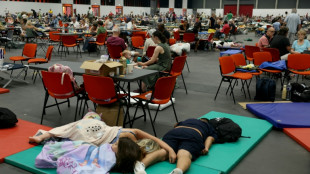
 Messi-less Miami win on Casemiro debut, Berterame suffers head blow

 German police hunt suspect after deadly car ramming near Berlin Gay Pride

 US Federal Reserve expected to hold rates steady as inflation swirls

 Merz vows justice after deadly car ramming near Berlin Gay Pride event

 Joshua survives knockdowns, stops Prenga

 Ohtani delays throwing session over knee 'regression'

 One killed, 15 wounded as car hits crowd near Berlin Gay Pride

 Hodge, Hope give West Indies edge in rain-impacted Pakistan Test

 Scheffler surges at 3M Open with blistering back nine

 Brazil's right-wing party nominates Bolsonaro son to battle Lula

 Norris back on pole at Hungarian GP as rivals handed penalties

European lawmakers cleared the way Thursday for tougher penalties for irregular migrants and their potential deportation to so-called "return hubs" outside the bloc.
The measures, criticised by human rights groups, are part of a tightening of Europe's immigration rules in response to pressure across the 27-nation bloc to curb migration.
The European Parliament approved the package with support from centre-right and far-right groups in a 389 to 206 vote in Brussels -- bringing it a step closer to final approval.
"The decisive changes introduced by this regulation will make it possible to simply guarantee this straightforward principle: if you come to Europe illegally, rest assured that you will not stay here," said centre-right French parliamentarian Francois-Xavier Bellamy.
The reform would notably allow for the opening of centres or "return hubs" outside the EU's borders to which migrants whose asylum applications have been rejected would be sent.
It also envisages harsher penalties for migrants who refuse to leave, including through detention and entry bans.
It has proven divisive.
Some in the bloc, including France and Spain, have questioned the effectiveness of return centres, which the International Rescue Committee (IRC), an NGO, has described as "legal black holes".
"They will be located outside of EU territory, where policymakers cannot guarantee that people's rights will be upheld," said the IRC's Marta Welander.
A small group of countries, including Denmark, Austria, Greece, Germany and the Netherlands, is nevertheless ploughing ahead and exploring options to set them up, according to a diplomatic source.
- 'ICE-style' -
Proponents say the hubs could act as a deterrent and discourage migrants from attempting to reach Europe in the first place.
Critics instead point to the hurdles faced by similar projects.
Britain abandoned a scheme to deport undocumented migrants to Rwanda, while Italian-run facilities to process migrants in Albania have faced legal challenges and a slow uptake.
EU member states gave their green light to the package -- first proposed by the European Commission last year -- in December.
Negotiations with parliament after the vote are likely to zero in on a small number of issues, including the extent of search powers that could be granted to authorities seeking out irregular migrants, observers say.
A group of 70 rights groups warned in February that the reform would allow for "ICE-style immigration enforcement" -- a reference to the heavy-handed practices used by Immigration and Customs Enforcement in the United States under President Donald Trump.
European governments have sought a tougher stance amid a souring of public opinion on migration that has fuelled far-right electoral gains across the continent.
With migrant arrivals down in 2025, focus in Brussels has turned to improving the repatriation system, which currently sees about 20 percent of people ordered to leave actually returned to their country of origin.
V.Said--SF-PST