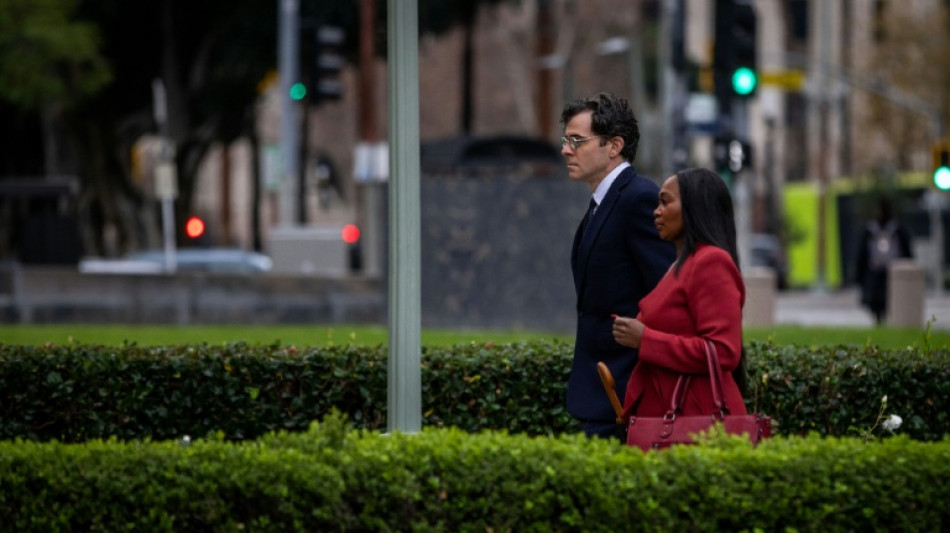
Instagram CEO denies addiction claims in landmark US trial / Photo: Ethan Swope - GETTY IMAGES NORTH AMERICA/AFP

 Hotel Blacklist Launches New Accommodation Industry Risk Assessment Tool

 Bangladesh nuclear plant draws hope -- and worry

 US beat Canada 1-0 to wrap up four-win international break

 Turkey, Australia's joint COP31 leadership raises doubts

 For Turkish NGOs, COP31 offers rare space for action

 Sleep, appetite, gene-editing experts contend for Nobel chemistry prize

 Nobel Peace Prize haunted by the 'spectre' of Trump

 Africa launches own credit agency in bid for cheaper borrowing

 US, China, EU: three paths to regulating AI

 Australia's High Court rules against coal mine in landmark climate case

 Australia touts new funds for Pacific infrastructure at Fiji 'pre-COP'

 Eva Marie Saint, Oscar winner of Hollywood classics, dies at 102

 Australia probes app used in cheap smart glasses over privacy fears

 England needed to 'move on' from World Cup pain, says Tuchel

 O'Neill to stay at Celtic after period of "reflection"

 Kane marks 125th England cap with Wembley Nations League double

 Quebec's incoming separatist leader wants to block Crown from swearing-in

 Emmys gala will now stream its premier television awards

 Paramount completes Warner Bros takeover, creating Skydance

 Trump blames France unrest on Islam, migration

 Apple's Cook praises EU over efforts to protect children online
 Nobel winner Halzen says years of October 'misery' finally over

 Quebec separatist win rattles Carney's unity push

 'Itching' for change: Shiffrin cuts back slaloms this season

 'Gen Z has risen up': Tens of thousands mass for tense France school protests

Instagram CEO Adam Mosseri on Wednesday rejected the notion that users could be clinically addicted to social media, as he testified in a landmark California trial over whether his company knowingly hooked children on its platform for profit.
Meta -- the parent company of Instagram and Facebook -- and Google-owned YouTube are defendants in the blockbuster trial, which could set a legal precedent regarding whether social media giants deliberately designed their platforms to be addictive to children.
"I think it's important to differentiate between clinical addiction and problematic use," Mosseri said as he was grilled by plaintiff attorney Mark Lanier.
"I'm sure I said that I've been addicted to a Netflix show when I binged it really late one night, but I don't think it's the same thing as clinical addiction," he added.
Addiction is at the heart of the civil trial, which centers on allegations that a 20-year-old woman, identified as Kaley G.M., suffered severe mental harm after becoming addicted to social media as a young child.
She started using YouTube at six and joined Instagram at 11, before moving on to Snapchat and TikTok two or three years later.
Mosseri was the first major Silicon Valley figure to appear before the jury to defend himself against accusations that Instagram functions as little more than a dopamine "slot machine" for vulnerable young people.
In front of the jury of six men and women, Mosseri also pushed back against the idea that Meta was motivated by a "move fast and break things" ethos that valued profit over safety.
"Protecting minors over the long run is even good for the business and for profit," he said.
Mosseri's testimony precedes the highly anticipated appearance of his boss, Mark Zuckerberg, currently scheduled for February 18, with YouTube CEO Neil Mohan the following day.
In opening remarks this week, plaintiffs' attorney Lanier told the jury that YouTube and Meta both engineer addiction in young people's brains to gain users and profits.
Meta and Google "don't only build apps; they build traps," Lanier said.
Meta's attorney said that the suffering encountered by the plaintiff was due to her family context and could not be attributed to her use of Instagram or other social media.
The attorney for YouTube insisted that the video platform was neither intentionally addictive nor technically social media.
YouTube is selling "the ability to watch something essentially for free on your computer, on your phone, on your iPad," the attorney insisted, comparing the service to Netflix or traditional TV.
- 'Gateway drug' -
Stanford University School of Medicine professor Anna Lembke, the first witness called by the plaintiffs, testified Tuesday that she views social media, broadly speaking, as a drug.
She also said young people's brains were underdeveloped, which is why they "often take risks that they shouldn't," comparing YouTube to a gateway drug for kids.
The trial is currently scheduled to run until March 20.
Social media firms face more than a thousand lawsuits accusing them of leading young users to become addicted to content and suffer from depression, eating disorders, psychiatric hospitalization, and even suicide.
Kaley G.M.'s case is being treated as a bellwether proceeding whose outcome could set the tone for a wave of similar litigation across the United States.
Two further test trials are planned in Los Angeles between now and the summer, while a nationwide lawsuit will be heard by a federal judge in Oakland, California.
In New Mexico, a separate lawsuit accusing Meta of prioritizing profit over protecting minors from sexual predators began on Monday.
F.Qawasmeh--SF-PST