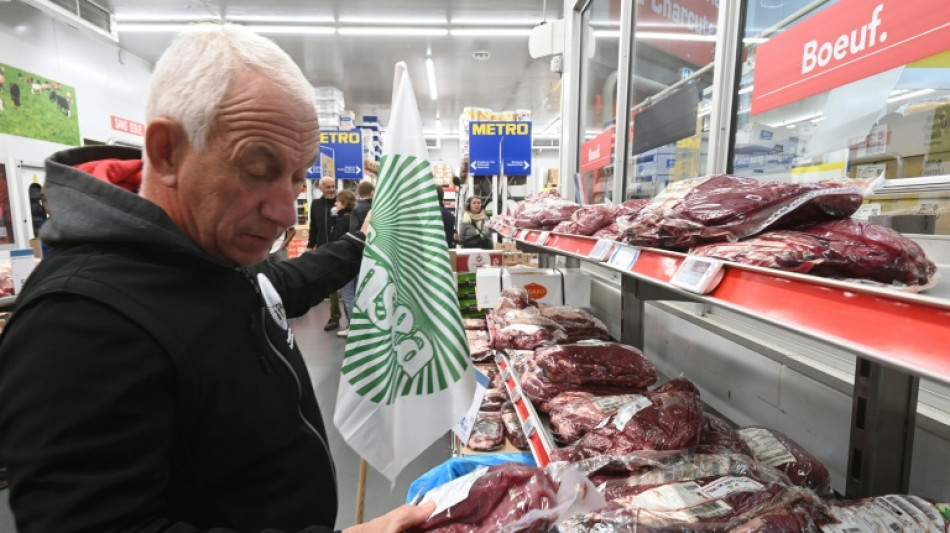
Eat less meat, France urges, for sake of health, climate / Photo: JEAN-FRANCOIS MONIER - AFP

 Apple CEO Tim Cook gives nod to founder Steve Jobs in final memo

 Russian finance minister makes unexpected appearance at G20
 Happy to be back in NY, Sabalenka advances

 Naomi Watts to receive lifetime award at top Spain film fest

 Jury hears closing arguments in Tupac Shakur murder trial

 Pakistan sack coach, send seven players home after England defeats

 New storms threaten Grand Canyon flood search, 2 bodies recovered
 France takes aim at ultra-fast fashion with new levy

 Tribunal says India cannot withdraw from water treaty with Pakistan

 John Galliano pulls US exhibition after antisemitism backlash

 French Top 14 boss offers 'no guarantees' for first Club World Cup
 Munoz reunites with Glasner after joining Forest from Palace
 Liverpool sign Barcola from PSG for £124 million

 Putin, Xi hold talks in Kyrgyzstan as regional summit begins

 ChatGPT becomes first AI chatbot to face tougher EU rules

 Man City sign Palmeiras winger Allan on five-year deal
 More flooding feared at Grand Canyon after storm leaves 15 missing

 RedHill Divests Talicia® to Apotex for $18 Million Cash Upfront Plus Milestones to Fuel Strategic Growth Opportunities

 MEXC Data: BTC Breaks $80,000, Major-Asset Spot Trading Volume Surges 300%

 سفارة فلسطين في عُمان تنظم ندوة لتعزيز الاستثمارات والفرص الاقتصادية
 Swollen rivers, washed-out roads hamper Nepal rescue effort

 In France's north, winegrowers bet on a warmer future

 Deadly virus stalks South Africa's sardines
 South Korea women's football body probes 'period' insult

 Transitional Fashion Essentials for Autumn: Key Pieces from M&S and Joe Browns

The French government issued a long-awaited report Wednesday urging people to limit meat consumption for their health and also to fight climate change -- and not everyone in the country of "steak-frites" is thrilled.
The contentious decision came as part of a "National Strategy for Food, Nutrition and Climate," setting out the government's aims until 2030 on balancing a healthy diet while reducing greenhouse gas emissions.
It was supposed to be published in 2023, the culmination of a direct-democracy initiative that immediately raised the hackles of agriculture lobbies that accused the government of threatening their livelihoods.
The decisions struck a nerve in a country renowned for dishes like steak and fries and beef bourguignon -- despite evidence that meat production generates significant greenhouse gases that contribute to climate change.
It also comes a month after the US government under President Donald Trump upended decades of recommendations by touting consumption of red meat and full-fat dairy products.
Apart from the health concerns of such advice, food production overall produces one-fourth of French carbon emissions, with meat production representing two-thirds of that amount.
Hence the French government's hesitation on whether to ask people to "reduce" their meat eating, or just "limit" it.
In the end, while promoting a diet focused on fruits, vegetables and whole grains, the new guidelines call for "limited" consumption of meats overall, including cold cuts, and a "reduction" of imported meat.
"We're relieved this plan was published, we were really worried it would be dropped," said Stephanie Pierre of France Assos Sante, a patients' health association.
"But we were hoping for a much more ambitious plan," she said.
The guidelines also come just before the February 21 opening of France's annual agriculture fair, a hugely popular event in Paris where President Emmanuel Macron has often faced farmers' ire.
Farmers were already up in arms over the EU's signing of a free-trade deal with the Mercosur bloc of four South American countries, worried that a surge in beef and other agriculture imports would undercut their competitiveness.
The country's powerful FNSEA farmers' union had yet to comment on the government's new guidelines.
Z.Ramadan--SF-PST