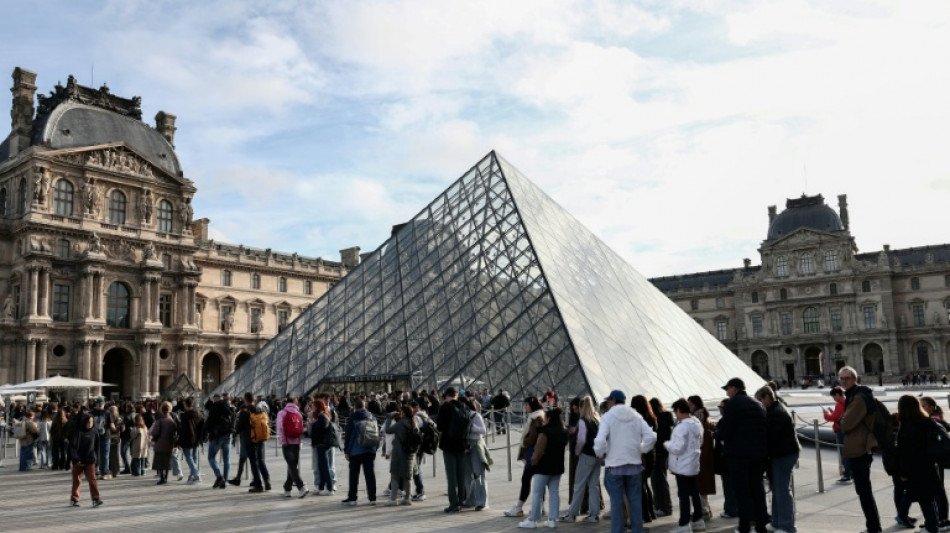
French museum fare hikes for non-European tourists spark outcry / Photo: Thibaud MORITZ - AFP

 West must embrace 'national power' or face decline: Rubio

 Shell refining margins reach record highs as wars hit supply

 Former Spain, Barca winger Pedro retires from football
 Arteta signs new Arsenal deal until 2030
 Stocks decline as oil climbs on Mideast flareup

 Gauff says online abuse was 'draining' after China Open exit

 As sector struggles, Porsche puts luxury ahead of volume
 'It's personal': Fiji minister pushes better climate finance at pre-COP

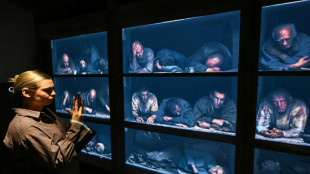 Russia glosses over dark Soviet past in reinvented museum

 UK tax body opened probe into Man City in 2018: FT

 Yemen's Houthis claim new attacks on Saudi airports as conflict deepens
 Germany factory production at highest level for 18 months
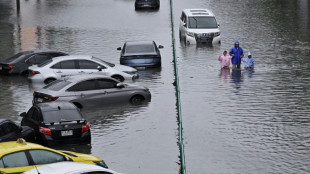 Thailand floods death toll rises to 60 since mid-September

 US pushes Russia for information on plague reports

 Myanmar leader lands in Malaysia for migrant return talks

 Indian central bank hikes rates for first time since 2023

 US military on Okinawa face curfew, alcohol ban after murder case

 Fierce lobbying in EU over 'forever chemicals'

 Dodgers beat Braves and Padres avoid sweep in MLB playoffs
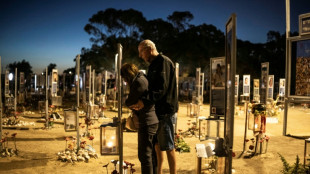 Mourning, war and elections as Israel marks October 7

 Messi says Argentina retirement is 'saddest day of my career'
 Oil rises and stocks fall as Hormuz worries flare

 Pacific presses world for help 'surviving' climate change at pre-COP summit

 Verstappen revival to be put to the test in steamy Singapore
 US woman who survived botched execution is conscious, speaking: lawyers

Should foreign tourists pay more for state-funded galleries than locals, or should art be accessible to all, without discrimination? France is hiking prices for non-Europeans at the Louvre this week, provoking debate about so-called "dual pricing".
From Wednesday, any adult visitor from outside the European Union, Iceland, Liechtenstein and Norway will have to pay 32 euros ($37) to enter the Louvre -- a 45-percent increase -- while the Palace of Versailles will up its prices by three euros.
Americans, UK citizens and Chinese nationals, who are some of the museum's most numerous foreign visitors, will be among those affected, as will tourists from poorer countries.
The French move has few precedents elsewhere in Europe, but is more common in developing countries, where tariffs at sites such as Machu Picchu in Peru or the Taj Mahal in India vary.
Trade unions at the Louvre have denounced the policy as "shocking philosophically, socially and on a human level" and have called for strike action over the change, along with a raft of other complaints.
They argue that the museum's vast collection of 500,000 items, including many from Egypt, the Middle East or Africa, hold universal human value.
While rejecting discriminatory pricing on principle, they are also worried for practical reasons, as staff will now need to check visitors' identity papers.
French academic Patrick Poncet has drawn a parallel between France's move and the policies of US President Donald Trump, whose administration hiked the cost for foreign tourists of visiting US National Parks by $100 on January 1.
The French policy was "symptomatic of the return, as elsewhere in the world, of unabashed nationalism", Poncet wrote in Le Monde newspaper last month.
- 'Not meant to pay' -
Other state-owned French tourist hotspots are also hiking their fees, including the Chambord Palace in the Loire region and the national opera house in Paris.
The government has justified the increases on financial grounds, looking to raise 20-30 million euros annually at a time when it is under pressure to boost revenues and cut spending.
Some of the funds will go towards a colossal plan to renovate the Louvre, which French President Emmanuel Macron announced last year.
Estimated to cost around a billion euros, unions and some art critics have called the project wasteful.
Everyone agrees the Louvre is in poor shape, however, with a recent water leak, structural problems and an embarrassing daylight robbery in October focusing minds.
"I want visitors from outside the EU to pay more for their entry tickets and for that surcharge to go toward funding the renovation of our national heritage," Culture Minister Rachida Dati said at the end of 2024 as she announced the hikes.
"The French are not meant to pay for everything all by themselves," she added.
- European outlier -
It remains to be seen whether the break with European convention by the continent's most-visited country will spur other cultural destinations to follow suit.
Pricing based on age is commonplace in Europe, with access for under-18s free at places such as the Acropolis in Athens, the Prado in Madrid or the Colosseum in Rome to encourage them to visit.
The Louvre will remain free for minors from all countries and Europeans under 26.
Other destinations, such as the Doge's Palace in Venice, offer free entrance for city residents.
Britain has long had a policy of offering universal free access to permanent collections at its national galleries and museums.
But the former director of the British Museum, Mark Jones, backed fee-paying in one of his last interviews in charge, telling The Sunday Times newspaper in 2024 that "it would make sense for us to charge overseas visitors for admission".
The proposal prompted debate but has not been adopted.
A research paper published last year by The Cultural Policy Unit, a British museum think tank, opposed it for both practical and philosophical reasons.
It would reduce entries, lengthen queue times and overturn a centuries-old policy, the report concluded.
"Britain holds its national collections for the world -- not just its own residents," it objected.
J.AbuHassan--SF-PST