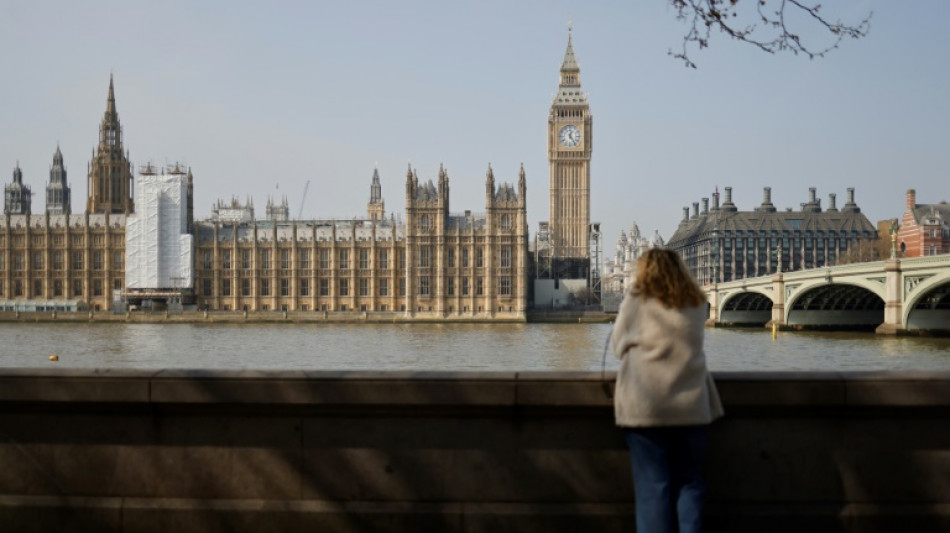
UK recession risk gathers pace as economy shrinks in March / Photo: Tolga Akmen - AFP/File

 Philippine island fights rising seas with nature, not concrete

 Bangladesh presses India before Ganges water treaty expires

 Trump accuses Alaska Democrats of fraud over same-name scandal

 Spain mourns after latest train tragedy kills 68

 Trump's border: quiet, but few people are happy

 Australian defence chief says China military buildup creating 'pressure' in SE Asia
 No penalty practice? No problem for Man City in shoot-out win

 Microsoft beats expectations fueled by Azure cloud business
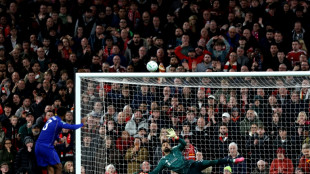
 Chelsea win as Bayern draw with Madrid in Women's Champions League

 Kane watches as Bayern cruise into German Cup last 16

 Bayern boss Kompany out of hospital after meningeal irritation
 Shares in Google owner Alphabet sink on profit miss, ad slowdown
 Chelsea win as Bayern and Madrid draw in Women's Champions League
 السكتة الدماغية: علامات مبكرة تجعل التدخل السريع ضرورة

 Rwanda cannot be blamed for what happens in DR Congo, FM says

 Pioneering US labor leader Dolores Huerta dies at 96

 موقع سهيلة الأثري يعيد قراءة تاريخ الاستقرار البشري في حتا

 اعتماد 7 يناير يوم زايد المؤسس مناسبة وطنية سنوية في الإمارات

 Hollywood producer Kennedy to head LA28 Olympic ceremony plans

 Russell calls on Scotland to 'kick on' and beat big teams

 تركيزات قياسية لغازات الاحتباس الحراري في الغلاف الجوي خلال 2025

 US Fed holds interest rates steady despite surging inflation
 Chiefs sign ex-Ravens kicker suspended over sex allegations

 Real Madrid, La Liga apology over Mbappe shows power of Chinese market
 From Gaza to Ramallah, Palestinians see little hope in Israeli vote
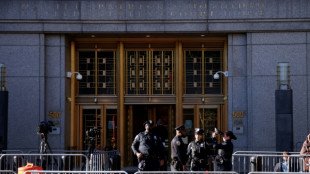
Britain's economy shrank in March on fallout from soaring inflation, increasing the prospect of the country falling into recession.
Official first-quarter data on Thursday showed that following solid output in January, the UK economy posted zero growth the following month and contracted by 0.1 percent in March.
It comes after the Bank of England (BoE) last week warned that Britain risks falling into recession with UK inflation expected to top 10 percent, a four-decade high, by the end of the year.
Consumer prices are surging worldwide on supply strains as economies reopen from pandemic lockdowns -- and in the wake of the Ukraine war that is aggravating already high energy costs.
Britain's economy grew 0.8 percent overall in the January-March period, the slowest quarterly growth for a year, the Office for National Statistics (ONS) said in a statement.
It compared with gross domestic product expansion of 1.3 percent in the fourth quarter of last year.
- 'Russia disruption' -
Responding to Thursday's data, finance minister Rishi Sunak said Britain's economic recovery from the pandemic was "being disrupted by (Russian President Vladimir) Putin's barbaric invasion of Ukraine and other global challenges".
Sunak, however, added in a statement that UK "growth in the first few months of the year was strong, faster than the US, Germany and Italy".
The UK economy grew for a fourth quarter in a row, and is above pre-pandemic levels.
Prime Minister Boris Johnson said he expected British growth to "return very strongly in the next couple of years".
In an interview with LBC radio, he also refused to rule out a windfall tax on energy companies as surging oil and gas prices hit households hard.
"We'll have to look at it," said Johnson despite repeating his displeasure at such a levy.
"I don't like them... I don't think they're the right way forward," he said, adding that a windfall tax on the likes of BP and Shell would deter them from investing in greener energy.
Johnson's comments came one week after his Conservative party lost control of key councils in local elections -- an outcome blamed in part on the cost-of-living crisis.
Darren Morgan, director of economic statistics at the ONS, said declining output in the services and production sectors resulted in overall growth contracting in March.
- 'Recession risk' -
"The risk of recession has just risen," said Paul Dales, chief UK economist at Capital Economics.
He noted that the GDP figures "suggest the economy had less momentum than we thought even before the full hit from the cost-of-living crisis has been felt".
Dales said "strong price pressures will probably mean the BoE will raise interest rates further".
The central bank last week raised its main interest rate by a quarter point to one percent to tackle runaway UK inflation.
It was the fourth straight increase by the BoE, while its key rate now stands at the highest level since the global financial crisis in 2009.
Raised rates have lifted borrowing costs for consumers and businesses, further impacting spending.
O.Farraj--SF-PST