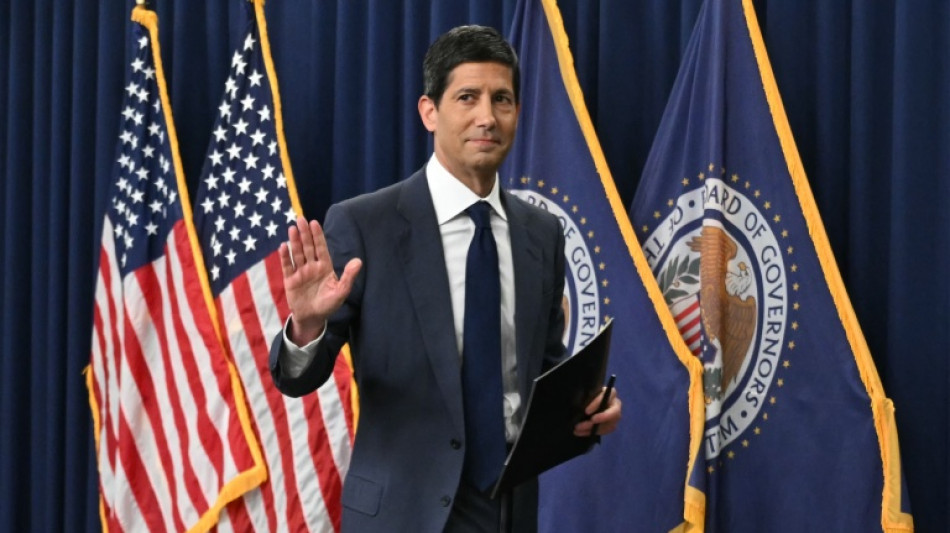
US Fed holds interest rates steady despite 'too high' inflation / Photo: SAUL LOEB - AFP

 Brazil Faces Debt and Inflation Test as Lula Prepares Fourth Term

 مركز "شمس" في اليوم الدولي للتسامح: التسامح لا يسقط حق الضحايا في العدالة
 Canada Expands Asian Trade Push as US Negotiations Resume

 Quebec Math-Rock Duo Angine de Poitrine Earns Four Grammy Nominations
 Italy Raises 2026 Growth View but Warns Energy Will Keep Inflation High

 شطب 130 مليون اسم من قوائم الناخبين في الهند يثير مخاوف الترحيل
 US Wholesale Inflation Eases Monthly but Hits a Four-Year Annual High

 India's Wholesale Inflation Jumps to 12.29% as Fuel Costs Surge

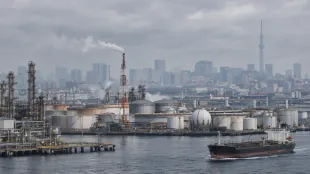 Japan's Economy Edges Into Contraction as Costly Oil Weighs on Demand
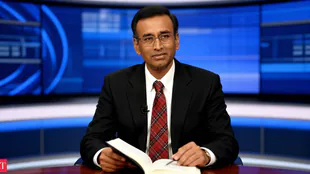
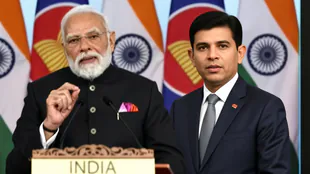 Modi’s ASEAN Agenda Prioritizes Trade Balance and Defense Ties in Manila

 Egypt Demands Tripling of Climate Adaptation Finance for Africa by 2035
 Met Office Issues Yellow Snow Warning for Nottinghamshire on Tuesday
 اللواء أبو هارون: توطين التدريب العسكري الفلسطيني بنسبة 100% رغم القيود الإسرائيلية
 Ali Almansoori Claims BTCC Double at Bahrain National Race Day

The US Federal Reserve on Wednesday held interest rates steady, even as its Chairman Kevin Warsh said inflation remained "too high" but insisted that politics played no part in the central bank's decision not to continue raising rates days before crucial midterm elections.
The 12-member Federal Open Market Committee voted 10-2 to hold rates at a target range between 3.75 to 4.00 percent, citing the need for more data in the fight against inflation, after having hiked for the first time in three years at its previous meeting in September.
Two members of the committee, Governor Lisa Cook and Cleveland Fed President Beth Hammack dissented, calling instead for an immediate quarter-point rate hike.
"Energy and related prices have moved higher again in recent weeks, and our job is to ensure that relative price changes in some sectors do not broaden out across the economy," Warsh told reporters.
Still, he said the FOMC needed more information in the coming weeks to "determine the policy stance appropriate to ensure a timely return of inflation to the two-percent goal."
The committee is scheduled to meet again in early December.
- 'Politics played no role' -
The central bank has missed its inflation target for more than five years, with households and businesses battered by sustained price increases.
US President Donald Trump's war on Iran, launched in late February, has sent energy prices skyrocketing and fueled domestic inflation, alongside his wide-ranging tariff policies.
Prices have also been driven by an investment boom in artificial intelligence (AI) technology and the build-out of huge data centers to support it.
The decision comes six days ahead of the November 3 midterm elections, in which the Democratic Party is seeking to wrest control of both houses of Congress from Trump's Republicans.
Trump's handling of the economy has been a key issue throughout the campaign, with working-class households across the country struggling to make ends meet despite largely stable overall economic growth.
US consumer inflation came in hotter than expected in September, clocking in at 3.7 percent, edging back towards a three-year high established in May.
"Politics played no role in the decision," said Warsh, who has insisted that he supports the Fed's independence despite repeated attacks on the institution by Trump since he took office.
- 'Strong' economic growth -
On Wednesday, the Fed said economic activity in the United States was expanding at a "strong" pace, upgrading its language from the FOMC meeting six weeks prior.
At his press conference, Warsh spoke to that theme, and questioned whether the AI-led investment boom was fuelling inflation.
"Is the economy running too hot? Is the economy running too strong? That isn't the judgment of most of my colleagues," he said.
In a significant move, Warsh also announced that the Fed would be reducing the number of times it sets interest rates in the next two years.
It will continue to meet eight times a year in 2027 and 2028, but will only set interest rates seven times next year and six times the year after that.
"Getting policy right involves assessing near-term developments at timely, regular, and information-rich intervals," said Warsh.
"But it's equally important we reserve time and space as an intellectually diverse group for strategic deliberations, for thinking anew about big questions, looking out over longer time horizons."
- 'Don't understand the logic' -
Wendy Edelberg, senior fellow at the Brookings Institution, told AFP before the meeting that a decision to hold after raising rates in September was potentially contradictory, given the labor market -- the Fed's other mandate -- has been largely stable.
"In terms of the economics of it, I don't totally understand the logic," she said.
"If there was a reason to raise interest rates at the last meeting, I think that there's just as compelling of an economic reason to raise interest rates at this meeting."
The Fed has a dual mandate to maintain maximum employment while keeping inflation to its long-term target.
It achieves this goal largely using one tool: the economy's key interest rate. Raising rates tends to cool inflation but can also dampen economic activity; lowering them can spur economic activity but also fuel inflation.
The US unemployment rate has been largely stable around 4.2 percent over the last year, with job growth mostly in positive territory -- albeit driven by a few sectors.
Other advanced economies have also been grappling with high inflation, and on Wednesday Canada's central bank raised its key rate to 2.5 percent, its first hike since July 2023.
Z.Ramadan--SF-PST