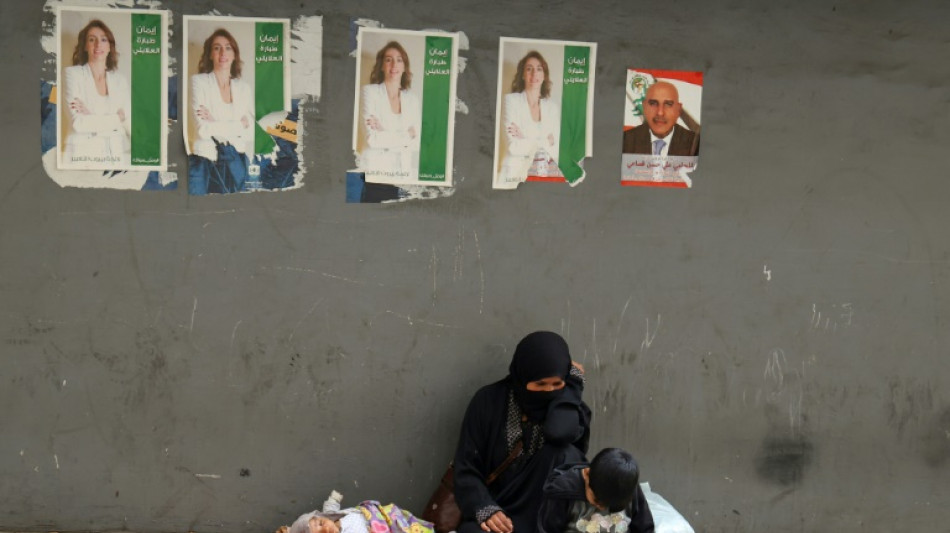
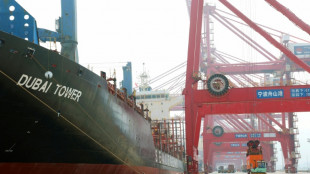
How will Lebanon vote impact the crisis-hit economy? / Photo: ANWAR AMRO - AFP

 Spanish soldier dies in Aragon wildfire

 PSG beaten by Lens in French Champions' Trophy

 Rybakina, Andreeva race into Cincinnati third round

 Amy Hunt bags fourth Euro gold as Britain win 4x100m mixed relay

 Spanish soldier dies in Aragon wildfire: regional leader
 Belgium's Pocognoli appointed new Scotland manager
 Marchand storms to second gold of European championships
 Kushner meets with Hamas in push to revive Gaza plan
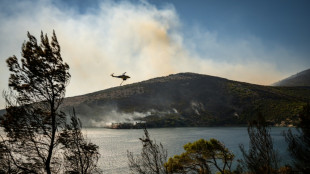
 Villarreal battle back to earn draw at promoted Racing

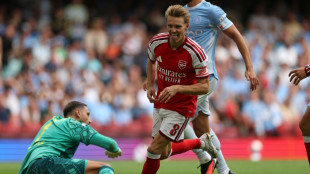 Odegaard says Arsenal 'want to win everything' after Community Shield success

 Arsenal rout Man City in Community Shield masterclass
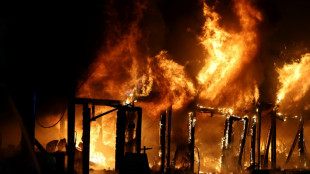
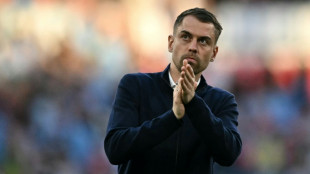 Southampton mocked over Spygate during Watford defeat

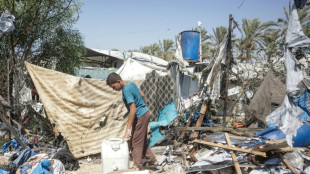 Hamas expects meeting with Kushner as US pushes Gaza plan
 Farmers, helicopters help battle record Belgian wildfire

 Air support kicks in as record Belgian wildfire jumps in size
 Firefighters battle second day of blaze on Greek island
 Strikes kill 12 in Russia and Ukraine

 India's Sindhu backs monkey measures as badminton worlds set to open
 Mass drone attack on Moscow as Russian strikes kill three in Ukraine
 Djokovic feels the heat in Cincinnati defeat, Zverev wins all-nighter
 Pallister stuns Ledecky in Pan Pacs 800m free as two world records carry Douglass to gold
 Rampant Bangladesh make history with first-ever Test win in Australia

 UK's media-savvy PM Burnham shifts messaging to TikTok, podcasts
 Gay badminton star Gilmour urges progress on LGBTQ rights in Asia
 Pallister takes down Ledecky in Pan Pacs 800m freestyle
The Lebanese parliament voted in on Sunday will have to tackle overdue reforms required for international assistance the cash-strapped country desperately needs.
After Lebanon struck a conditional deal with the International Monetary Fund for a $3 billion aid package, AFP looks at the challenges that await incoming lawmakers in a country where there is little consensus on a roadmap for financial recovery.
- How bad is the crisis? -
Since 2019, Lebanon has suffered an unprecedented economic decline caused by decades of mismanagement and corruption.
The World Bank last year said Lebanon was likely to rank among the world's worst financial crises since the mid-19th century.
The state's bankrupcy has hampered imports of basic items including food, medicine and fuel.
Starved of hydrocarbons, the country's power stations have scaled down their operations to a near minimum. Power cuts can last up to 23 hours a day, forcing residents to rely on expensive private generators to keep the lights on.
The Lebanese pound, pegged at 1,507 to the dollar since 1997, has lost more than 90 percent of its value on the black market.
More than 80 percent of people have fallen into poverty, according to the United Nations.
The monthly minimum wage, once worth $450, is now roughly equal to $25, and inflation has reached triple digits.
The situation is made worse by informal banking controls that have gradually tightened since they were first put in place in 2019.
Depositors are denied access to foreign currency savings and forced to withdraw their money in Lebanese pounds at an exchange rate set by the central bank that is far below the market price.
- Why is the IMF deal crucial? -
The IMF last month announced the conditional agreement for aid to help Lebanon emerge from financial ruin.
However, final IMF approval for the 46-month financing programme is contingent on timely implementation of critical reforms long demanded by Lebanon's international donors, the global lender said.
The overdue reforms have been stymied by political divisions leading to deadlock in both parliament and government while the country sinks deeper into poverty.
"Lebanon has to show commitment and establish credibility in regards to reforms before the international community can commit to any financial support," Deputy Prime Minister Saade Chami told AFP.
"The ball is in our court."
Billionaire Prime Minister Najib Mikati has said there is "no choice" for Lebanon other than an IMF deal.
"Carrying out the required actions will bring solutions faster" for Lebanon, Mikati said, relaying a message from IMF representatives.
- What must happen next? -
Chami, who heads Lebanon's delegation in IMF talks, said that the new parliament will have to tackle four urgent tasks.
It will have to set a draft 2022 annual budget, which is already overdue, and pass a capital control law that formalises restrictions imposed by banks on deposits, Chami said.
The legislature will also have to approve two amendments to meet IMF demands, he said.
One would affect banking secrecy laws that have hampered attempts to conduct financial audits of the central bank and other institutions.
Parliament will also have to amend its bank restructuring law, according to Chami, to reorganise a bloated financial sector that has lost the confidence of depositors and investors.
"Failure to do that will have negative implications on the IMF deal and the economic situation," Chami said.
Lebanon, which defaulted on its debt in March 2020, estimates the total financial losses for the state, central bank and commercial banks at $69 billion. This number was the basis for the IMF negotiations.
Setting up a legal framework to reform and restructure the banking sector will be among the new parliament's major tests, given the shared interests between Lebanon's political and financial elite, said Sami Nader, director of the Levant Institute for Strategic Affairs.
T.Ibrahim--SF-PST