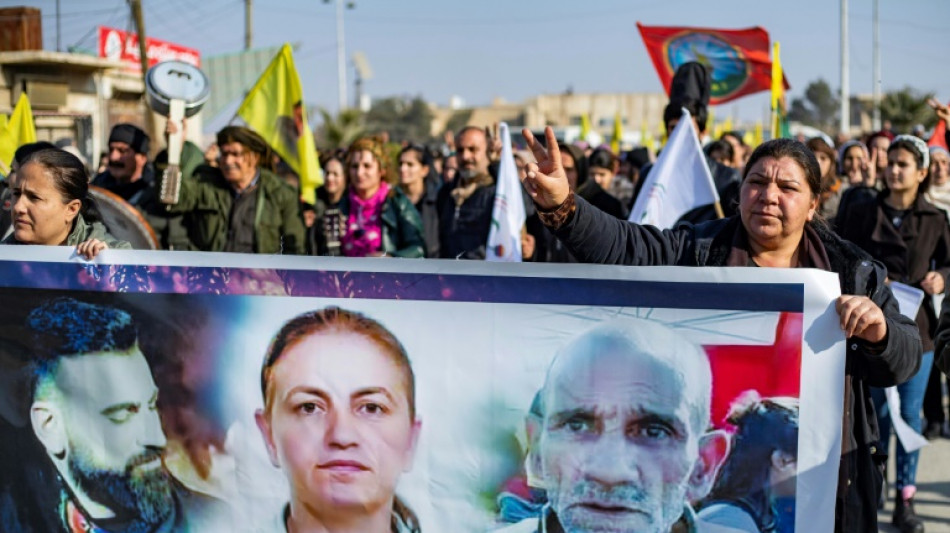
Paris attack puts spotlight on the Kurdish question / Photo: Delil SOULEIMAN - AFP

 'Marine has to win': Le Pen supporters fear for France's future
 دراسة تحذر من مخاطر إرشادات أميركية جديدة للقاح التهاب الكبد «ب» على الرضع

 الدفاعات السعودية تحبط سلسلة هجمات حوثية استهدفت مكة والمدينة

 France's Le Pen launches presidential bid vowing to restore 'rule of law'

 Qatar Charity delivers Braille Qurans to blind readers in Kosovo and Albania
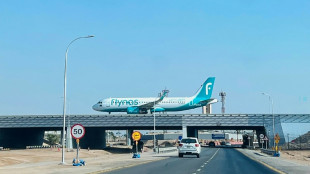
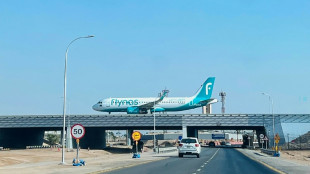 Houthis say attacked Riyadh airport hours after flights resume

 Monaco hold Lille as Rennes go top of Ligue 1

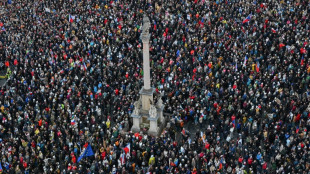 Thousands gather in Prague to protest licence fee plans

 Pease spins to floor gold as US tops gymnastics medal table
 Marchant back in England training squad ahead of Nations Championship fixtures
 French skater Siao Him Fa soars to victory in season-opener at home

 Embattled Albanian PM vows fines for violent protesters

 Steelers top Saints in NFL's first regular-season game in Paris

 Carrick unsure over Man Utd future after Bournemouth loss
 2027 Dakar Rally to be moved from Saudi Arabia

 Man Utd battered by Bournemouth to leave Carrick on the brink

 Storms batter Europe hitting power supplies, flights and phones
 Inter rally late to down Fiorentina and regain Serie A lead

 J&K Bank raises accident cover for government employees to ₹1 crore

 Technical outlook diverges for Bharti Airtel, PFC, REC and Alkyl Amines

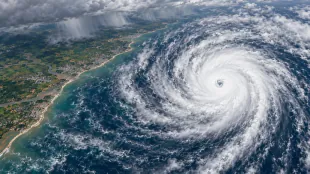 Bay cyclone forecast to strike Andhra-Yanam coast at very severe strength

 IRDAI gives stakeholders until October 31 to comment on distribution reforms

 John Catlin wins Hong Kong Open and secures first Masters invitation
 KIB Group nine-month profit rises 30% to KD 26.6 million

 UDST opens Fall 2027 admissions to students in Qatar and abroad
The deadly attack on Kurds in Paris last week has highlighted the long plight of the non-Arab ethnic group of between 25 and 35 million people who remain stateless.
The Kurds inhabit largely mountainous regions across southeastern Turkey through northern Syria and Iraq to central Iran. They are often described as the world's largest people without a state.
Many have been internally displaced in the Middle East because of decades of bitter conflicts, while others have been forced to flee persecution to the West, especially Western Europe.
After three Kurds were shot dead and three others injured on Friday in the 10th district of Paris, home to a large Kurdish population, the community is once again fearful.
The shooting has deepened raw wounds, coming less than 10 years after three Kurdish women activists were gunned down in the same area.
The community's anger has spilled over with protests and tribute rallies to the victims where demonstrators have chanted: "Our martyrs do not die" in Kurdish and demanded "truth and justice".
The community wants justice for the 2013 unsolved murder of three activists who belonged to the Kurdistan Workers' Party (PKK), proscribed by Turkey and its Western allies as a "terrorist" organisation.
Around 150,000 Kurds live in France.
- Demand for a nation -
The greatest number of Kurds live in Turkey, where they account for around 20 percent of the overall population.
Predominantly Sunni Muslims, with non-Muslim minorities and often secular political groups, the Kurds live on almost half a million square kilometres (around 190,000 square miles) of territory in the Middle East.
The collapse of the Ottoman Empire at the end of World War I opened the way for the creation of a Kurdish state in the post-war Treaty of Sevres.
However Turkish nationalists, led by army general Mustafa Kemal Ataturk, opposed the harsh terms of the treaty and launched a new war.
It resulted in a new accord, the 1923 Treaty of Lausanne, which established the boundaries of modern Turkey and effectively drew a line under international support for an independent Kurdistan.
Kurds have long demanded their own nation but the countries where they are settled often see them as a threat to their territorial integrity.
Despite sharing the goal of their own state, Kurds are divided among themselves into different parties and factions.
These groups, sometimes split across borders, can be antagonistic towards each other, and frequently used by neighbouring powers for their own ends.
- Battle against jihadists -
In Syria, Kurdish groups adopted a neutral position at the start of the civil war in 2011, before benefiting from the chaos and establishing an autonomous administration in the north.
Kurdish fighters also dominate the US-backed Syrian Democratic Forces (SDF), which led the fight against the Islamic State extremist group.
The United States' support for the SDF has angered its NATO ally Turkey as Ankara says the Kurdish fighters are a Syrian offshoot of the PKK.
Since 2016, Turkey has launched multiple military operations and air raids against Kurdish fighters, most recently striking targets last month in northern Syria and Iraq.
Turkish President Recep Tayyip Erdogan last month threatened to launch another offensive in Syria against Kurdish fighters.
- Turkey-France tensions -
The Kurdish issue is one of many causing tensions between Turkey and France.
One particularly thorny subject is the 2013 killings. The victims' families believe Turkish spies ordered the hit.
The only suspect who was due to go on trial died in December 2016 from brain cancer but a French judicial investigation into the killings continues today into a possible terrorist attack.
There have been violent incidents in the past involving Kurds in France.
In April last year, four men of Kurdish origin were beaten with iron bars in a Kurdish cultural association in Lyon, eastern France, in an attack blamed on the ultra-nationalist Turkish Grey Wolves group that was later banned.
"There are direct threats, Kurdish political, cultural and diplomatic representations in France are right to be scared," Adel Bakawan, director of the French Research Centre on Iraq, told the Journal du Dimanche newspaper.
After last week's clashes between police and demonstrators, Bakawan however feared some limited incidents could "tarnish" the feeling of solidarity from the French public towards Kurds.
For the Kurdish community, however, the attack was not an isolated racist crime by a white 69-year-old man. They have blamed Turkey, although French investigators have not given any indication of Ankara's involvement.
Turkey has slammed France over the protests and blamed the PKK for the unrest.
On Monday, the Turkish foreign ministry summoned the French ambassador to Ankara and "expressed our dissatisfaction with the black propaganda launched by PKK circles", a Turkish diplomatic source said.
Y.AlMasri--SF-PST