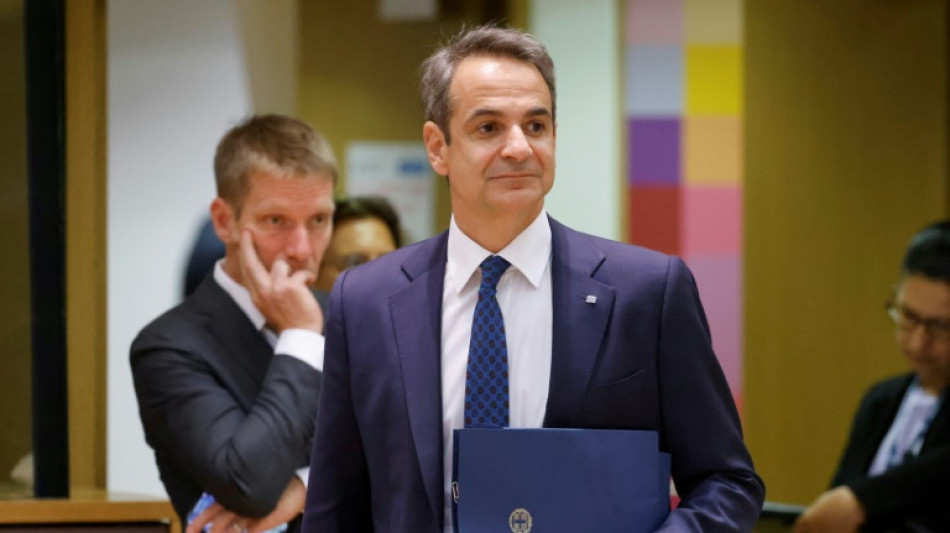
Greek phone-hacking scandal: investigative media's key role / Photo: Ludovic MARIN - AFP

 Seeing pivotal election, Israelis fly from around world to vote
 South Korea's Eom 'racially abused' in England's Championship: club

 Asian markets mixed as tech firms claw back some losses
 India shuts down iconic Delhi protest site after three decades

 Japan urges Russia for 'impartial treatment' of arrested journalist

 Lula, Bolsonaro ordered to call off attempts at online censorship

 EU takes a page from Ireland's AI playbook

 Global deforestation slowed in 2025 but surged in Congo basin: study

 Saudi says Houthi attacks sparked Aramco fire, wounded 4 in Riyadh

 Few buyers for starving cattle in El Nino parched El Salvador

 Bybit Expands Beyond Crypto as CEO Outlines Next Phase of Financial Platform

 Bayern held by Viking after 'super dumb' Olise red in Champions League

 Why AI makes computer worms harder to stop

 US fines Bank of America $1.2 bn for anti-money laundering violations

 Bayern held by Viking after Olise sees red in Champions League

 Atletico down Carrick's struggling Man United

 Croatia trials full driverless robotaxi service

 US stocks dip ahead of inflation data as tech sell-off hits Asia

 No lights, no friends: Cuban youth grapple with loneliness
 Saudi coalition strikes Yemen oil sites after Houthi attacks

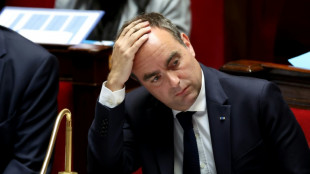 French economy minister denies country caught in debt 'snowball'

 Judge extends halt to Trump's golf course tree-cutting

 Milan's Saelemaekers set for lenghty spell out after ankle surgery

 Nvidia says to invest in French medical website

 Real Madrid's Mourinho has 'trust' in referees despite complaints

Investigative journalism has emerged as a powerful force during Greece's phone-hacking scandal, rocking a government that tries to "control" the media landscape, experts say.
The long-rumbling "Predatorgate" affair reignited at the end of July when Nikos Androulakis, leader of the opposition Socialists, told journalists about the attempted surveillance of his mobile phone via spyware Predator, having filed a legal complaint.
The spyware can hack into a target's phone and access messages and conversations.
Greek Prime Minister Kyriakos Mitsotakis acknowledged last week that the intelligence service's surveillance had been "politically unacceptable", claiming he had not been informed.
He was speaking three days after two key members of his conservative government resigned over the matter.
Earlier this year two Greek journalists launched legal action, saying they had fallen prey to similar attacks on their phones.
Months-long probes by Greek investigative media have played a crucial part in shedding light on the phone-hacking.
Eliza Triantafyllou, a journalist with the Inside Story website, began investigating the case in January after the publication of two reports by the University of Toronto's Citizen Lab and Meta (Facebook) referring to a new spyware, Predator, with clients and targets in Greece.
"These reports went unnoticed by the (mainstream) Greek media at the time, though they revealed that the Greek government had probably bought Predator," she wrote in a recent article.
Last April, Inside Story published "the first confirmed case of Predator use in 2021 against a European citizen" -- Greek journalist Thanasis Koukakis, who specialises in reporting on corruption.
Online investigative news site Reporters United followed up by reporting that the journalist's phone was monitored by the Greek intelligence service, EYP, in 2020.
Stories first published online by investigative journalists are now making headlines in Greek newspapers.
The country's media landscape is marked by the connivance of traditional media groups with public authorities in line with political and financial interests.
The Reporters Without Borders (RSF) non-profit gives Greece the lowest press freedom rank in Europe.
RSF and the Media Freedom Rapid Response NGO have said the ruling party is "obsessed with controlling the message" and "minimising critical and dissenting voices".
But investigative outlets are "a hope for freedom of expression" in Greece, according to Katerina Batzeli, a member of the Pasok-Kinal central committee, former minister and MEP.
"These innovative media have taken risks and done an extraordinary job" she said.
Greek investigative media, including Inside Story, Solomon and Reporters United, have been on the rise in recent years, using subscriptions to promote "independent and analytical information".
With disinformation rife, "investigative media dare to control the power", said media analyst Georges Tzogopoulos.
He said investigative sites had played a "key role" and called for support through crowdfunding.
V.Said--SF-PST