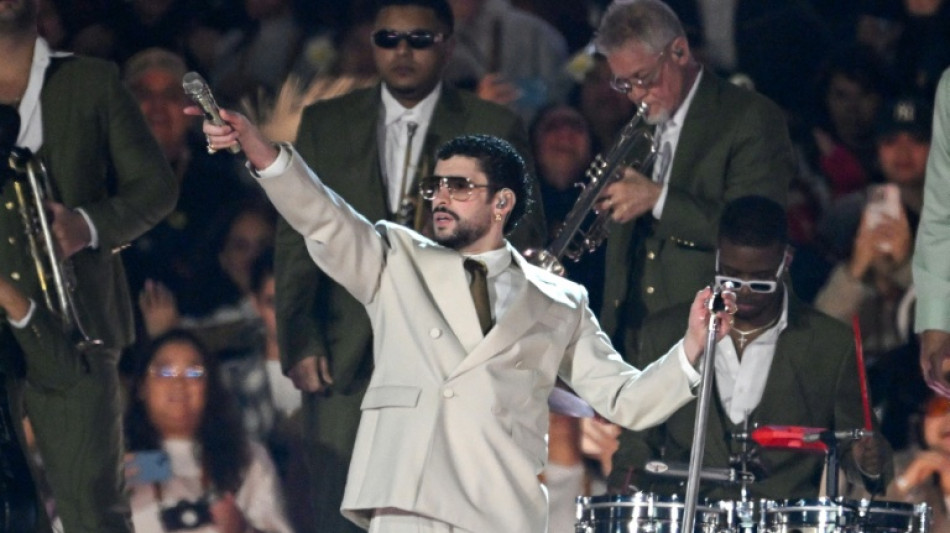
Bad Bunny set for historic one-two punch at Grammys, Super Bowl / Photo: Alfredo ESTRELLA - AFP/File

 Maryland Regulators and Air Force Clash Over Jet Fuel Spill Cleanup and Golf Course Exemption

 Bishop Museum Races to Save Rare Megamouth Shark Specimen

 Musk Questions AI Development Viability as SpaceX Leasing Revenue Surges

 مصطفى معروفي ينشر قصيدة 'أصوغ كلامي أهتدي بتجاربي'

 Luxembourg Housing Petition Passes Threshold for Parliamentary Consideration

 Raheem Sterling Receives Suspended Sentence After Lamborghini Crash

 Audience to Choose the Set List at Luxembourg's First FAMIL Jukebox Night

 Luxembourg Pay Rise Delayed as Regional and World Headlines Develop

 مواجهة في البرازيل بين نشطاء وفلسطينيين وسياح إسرائيليين حول جدارية مؤيدة

 رئيس جامعة القدس يستعرض نموذج الشراكة بين التعليم العالي والصناعة في قمة QS بأبوظبي

 ابتكارات فلسطينية في مسابقة "سيف" العالمية بالرياض
Only 10 years ago, Bad Bunny worked bagging groceries -- a shocking contrast with the cosmic fame the artist now commands.
But his bestselling albums, last year's monumental concert residency in Puerto Rico and an endless string of smashed records are somehow just the beginning.
On Sunday, the artist born Benito Antonio Martinez Ocasio could make Grammys history. Then a week later, he will take the world's most visible stage as the Super Bowl's halftime performer.
Bad Bunny is in the running for six prizes at the Grammy Awards, including the night's most prestigious Album of the Year gramophone.
His acclaimed "Debi Tirar Mas Fotos" is just the second Spanish-language record ever nominated for the most coveted Grammy -- the first was also his, when "Un Verano Sin Ti" was tipped in 2022.
A win would be historic.
But the nominations -- it's the first time work in Spanish has been simultaneously recognized for best album, best record and best song -- are meaningful all the same, said Petra Rivera-Rideau, an American studies professor at Wellesley College whose research focuses on Latin music and racial politics.
Bad Bunny's success is particularly poignant as President Donald Trump's administration carries out a hardline immigration crackdown that in part targets Latinos.
"We have ICE raids, we're watching videos every day of people being profiled for speaking Spanish, whether or not they're US citizens," Rivera-Rideau, co-author of "P FKN R: How Bad Bunny Became the Global Voice of Puerto Rican Resistance," told AFP.
"The current political moment just kind of ups the ante of what is already a profoundly significant thing."
- Inherently political -
Bad Bunny, 31, grew up near Puerto Rico's capital San Juan, honing his vocal skills in a church children's choir before developing into a pre-teen who loved creating beats on his computer.
He went viral on the DIY platform SoundCloud -- and thus began his rapid ascent to the top of global music.
But even as his star rose, Bad Bunny remained firmly rooted in his heritage.
Both at the Grammys and the Super Bowl, his mere presence is "deeply political," said Jorell Melendez-Badillo, a University of Wisconsin-Madison historian who collaborated with Bad Bunny on visual elements of the latest album.
The artist is a US citizen: Puerto Rico is a Caribbean territory under US control since 1898.
But, Melendez-Badillo says, he's also a colonial subject -- a reality explored on "Debi Tirar Mas Fotos," which features an ingenious melange of traditional sounds including salsa, bomba and plena, with infusions of reggaeton.
Bad Bunny's commitment to singing in Spanish in a music industry that has historically marginalized Latino voices makes his mammoth success even more emblematic.
For Melendez-Badillo, language has become "coded for the broader sort of racialized understandings of immigrants and immigration... this sort of nationalist idea of who gets to belong in the United States."
- Multi-generational appeal -
Since 2000, the Latin Recording Academy has celebrated Spanish- and Portuguese-language music at the Latin Grammys.
The Grammys also honor Latin music in specific categories.
Both are important for ensuring representation, but they have also enabled Recording Academy voters to ignore Latin music's mainstream popularity.
This year, Latin Recording Academy voters are eligible to vote for the main Grammy winners as well, a bid to create a more globally representative pool.
That could make a significant difference for the likes of Bad Bunny -- but even then, Rivera-Rideau said, it's complicated.
Much like Grammy voters long overlooked hip-hop, Latin Grammy voters have long sidelined the influence of reggaeton and Latin trap -- hugely popular genres Bad Bunny came up in.
But his latest album has found multi-generational appeal, and that could improve its chance, as it is "more digestible" to Grammy voters, Rivera-Rideau said.
- Super Bowl-bound -
One week after the Grammys, Bad Bunny will reach yet another milestone as the headliner of the National Football League's Super Bowl halftime show -- a booking that prompted hand-wringing especially from conservatives over the "woke" choice.
But the Super Bowl is among the world's top broadcasts and its halftime presentation is for massive stars.
Clearly, Bad Bunny fits that bill.
"The NFL wants to go global," Melendez-Badillo said, citing games held in Europe and Brazil. "Benito sells tickets. Benito draws crowds."
And of course, Bad Bunny is hugely popular across the United States, which has among the largest Spanish-speaking populations globally -- so why wouldn't he take part in one of the country's cultural touchstones?
"In that context, it's just incredibly meaningful," Rivera-Rideau said.
N.AbuHussein--SF-PST

