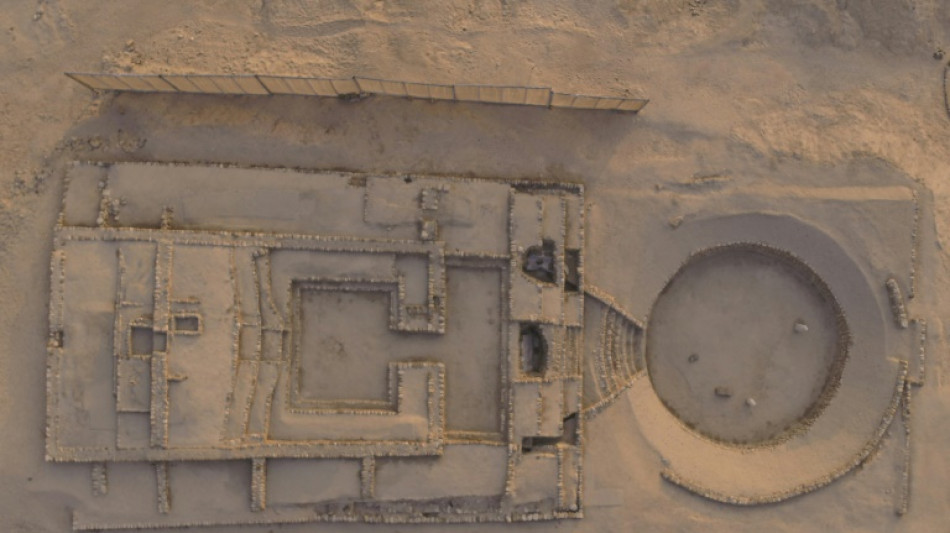
Peruvian citadel that is nearly 4,000 years old opens doors to tourists / Photo: Handout - Zona Arqueologica Caral/AFP

 Anthropic bans 'cruel' behavior against its Claude AI

 Anne Carson's Nobel literature prize 'a proud moment for Canada': PM

 Montagliani to seek CONCACAF re-election in boost for Infantino: reports

 Oil surges, stocks sink on jitters over US plans in Iran war

 John Cena and Jessica Biel hit the gas in 'Matchbox: The Movie'

 US, Ukrainians, Europeans to discuss 'new ideas' to end war

 Unproven 'cures' pushed online amid plague concerns

 Nigeria looks to ease fuel prices as election looms

 Prosecutors in Maradona death trial seek sentences up to 12 years

 Swiss captain Xhaka gets suspended fine for fake Covid cert

 Ex-prince Andrew raid warrants ruled 'unlawful' but UK police maintain probe

 Two Latvians arrested inside UK military base: police

 Eckert 'forever grateful' for Southampton support over spy scandal

 Venezuela's Maduro, wife hit with new US torture charges

 Argentina friendlies no fairy tale for African footballers

 US suspending Microsoft from visa program: Vance

 Man City must 'stick together' during crisis, says Haaland

 CAS opens hearing into Senegal AFCON title appeal

 UK police agree searches for ex-prince Andrew's homes 'unlawful': judge

 After botched US execution, Christa Pike walking, mentally 'foggy': lawyer
 'Stunned' Madrid mourns pensioner who sparked housing protests

 High school students turn out for new protests across France

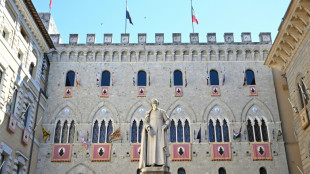 Bid by Italy's Intesa bank to take over MPS gets boost

 Stablecoins Are Quietly Becoming Business Infrastructure, NOWPayments Data Shows

 Oil surges, stocks sink as US reportedly eyes new Iran strikes

To the music of conch shell trumpets, a 3,800-year-old citadel of the Caral civilization -- one of the oldest in the world -- opened its doors to visitors in Peru on Saturday, after eight years of study and restoration work.
The archaeological site, known as Penico, was a meeting point for trade between the first human communities on the Pacific coast and those from the Andes and Amazon regions, researchers have said.
Located in the Supe valley, some 110 miles (180 kilometers) north of the Peruvian capital Lima and around 12 miles from the Pacific ocean, Penico was a hilly landscape before exploration work began in 2017.
Archaeologists believe it could hold insights into why the Caral civilization -- which flourished between 3,000 and 1,800 BC -- faded.
At the opening ceremony, artists from the region played pututus -- the traditional shell trumpets -- during an ancestral ritual offering to the Pachamama, Mother Earth, consisting of agricultural products, coca leaves and local drinks.
Penico was an "organized urban center devoted to agriculture and trade between the coast, the mountains and the forest," archaeologist Ruth Shady, who leads research on the site, told AFP.
The site itself dates back to between 1,800 and 1,500 BC, she added.
It was built on a geological terrace 2000 feet (600 meters) above sea level, parallel to a river to avoid flooding.
Research carried out by the Peruvian Ministry of Culture has identified 18 constructions, including buildings and residential complexes.
Researchers believe that it was built at the same time as the first civilizations in the Middle East and Asia.
Shady said researchers are hoping the site can shed light on the crisis they think helped hasten the end of the Caral civilization.
This crisis, she said, was linked to climatic changes that led to droughts and affected agricultural activities in the region.
"We want to understand how the Caral civilization formed and developed over time, and how it came to be in crisis as a result of climate change," she added.
T.Khatib--SF-PST