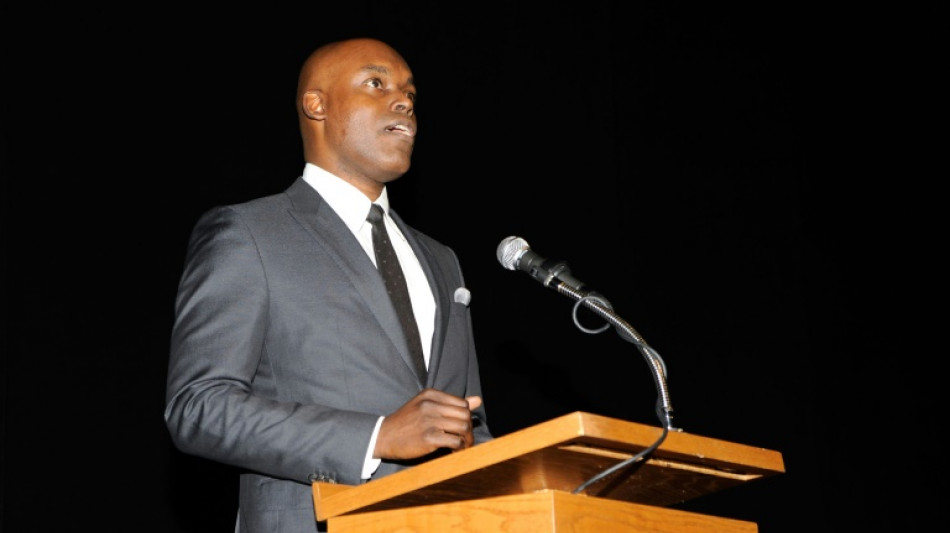
Toronto festival head says Trump tariffs would hurt film quality / Photo: Clinton Gilders - GETTY IMAGES NORTH AMERICA/AFP

 Ms. Rachel Says Celebrity Silence on Gaza Is 'F--ked Up' and Drives Her to Swear

 Maryland Regulators and Air Force Clash Over Jet Fuel Spill Cleanup and Golf Course Exemption

 Bishop Museum Races to Save Rare Megamouth Shark Specimen

 Musk Questions AI Development Viability as SpaceX Leasing Revenue Surges

 مصطفى معروفي ينشر قصيدة 'أصوغ كلامي أهتدي بتجاربي'

 Luxembourg Housing Petition Passes Threshold for Parliamentary Consideration

 Raheem Sterling Receives Suspended Sentence After Lamborghini Crash

 Audience to Choose the Set List at Luxembourg's First FAMIL Jukebox Night

 Luxembourg Pay Rise Delayed as Regional and World Headlines Develop

 مواجهة في البرازيل بين نشطاء وفلسطينيين وسياح إسرائيليين حول جدارية مؤيدة

 رئيس جامعة القدس يستعرض نموذج الشراكة بين التعليم العالي والصناعة في قمة QS بأبوظبي
Hollywood has always been "an international industry," that would suffer creatively if cross-border work was curbed, the head of North America's largest film festival told AFP.
Cameron Bailey, chief executive of the Toronto International Film Festival, joined other entertainment industry leaders in criticizing President Donald Trump's proposed 100 percent tariffs on foreign films, a surprise weekend announcement that plunged the movie industry into uncertainty.
"Hollywood itself has always been, since the very early days, an international industry," Bailey said in an interview at TIFF's flagship Toronto venue, a complex that includes cinemas, bars and other social spaces.
He recalled the US film industry's "classic era" in the 1940s and 1950s, created by filmmakers who had come from Europe.
Bailey said the history of movie-making has proven the value of letting "story-telling brilliance to really flow across borders."
"Like any global industry, when you draw on the very best talent from around the world, you're always going to do better," Bailey said.
Writing on his Truth Social platform on Sunday, Trump said he had authorized his administration to begin "instituting a 100% Tariff on any and all Movies coming into our Country that are produced in Foreign Lands."
"WE WANT MOVIES MADE IN AMERICA, AGAIN!" he wrote.
A survey of studio executives revealed that their top five preferred production locations for 2025 and 2026 were all outside of the United States, due to competitive tax incentive schemes on offer.
Toronto was first on the list and Vancouver, in western Canada, ranked third.
Trump has imposed tariffs on a range of Canadian goods including autos, steel and aluminum but his plans for the film industry remain unclear.
Bailey said if Trump moved forward, any actions to limit film production in Canada would likely lead to less talent feeding into Hollywood.
"Our actors become their movie stars sometimes," Bailey said.
"Our producers and screenwriters and directors and crews are all working to support Hollywood's movies, shows, series, and that's been going on for a long time."
- 'No sticky floors' -
As cinemas face fresh challenges to attract customers amid the growth of streaming services, Bailey said future success for theaters will rely on their ability to offer an elevated social experience.
TIFF's downtown Toronto venue, The Lightbox, includes a cocktail lounge and various other areas for social interactions to complement watching a film.
"Nothing wrong with watching something at home on the couch, that's always nice as well, but we believe in the theatrical experience," Bailey said.
"You'll see more and more movie theaters offer those kind of premium experiences, serving meals, serving wine, offering people places to hang out after the movie to talk," he added.
The "technical experience," including picture quality and sound, also need to be elite, Bailey said.
"No sticky floors, obviously, it has to feel like it's something special when you go out."
- Talent poaching? -
Canadian universities, hospitals and other institutions are making targeted efforts to attract top US talent, trying to recruit disgruntled researchers who are facing political and financial pressure under Trump, including with threats of massive federal funding cuts.
Bailey told AFP he does not see the need for Canada's film industry to be "actively recruiting" US artists, but affirmed Canada should remain "a haven" for those uncomfortable with political circumstances in other countries, including the United States.
"Canada has a not-too-distant history of welcoming people who didn't want to take part in the Vietnam War as Americans, and they came to Canada, and they were a significant part of building the culture in the 60s and 70s in this country," he said.
The 50th edition of TIFF opens in September.
I.Yassin--SF-PST

