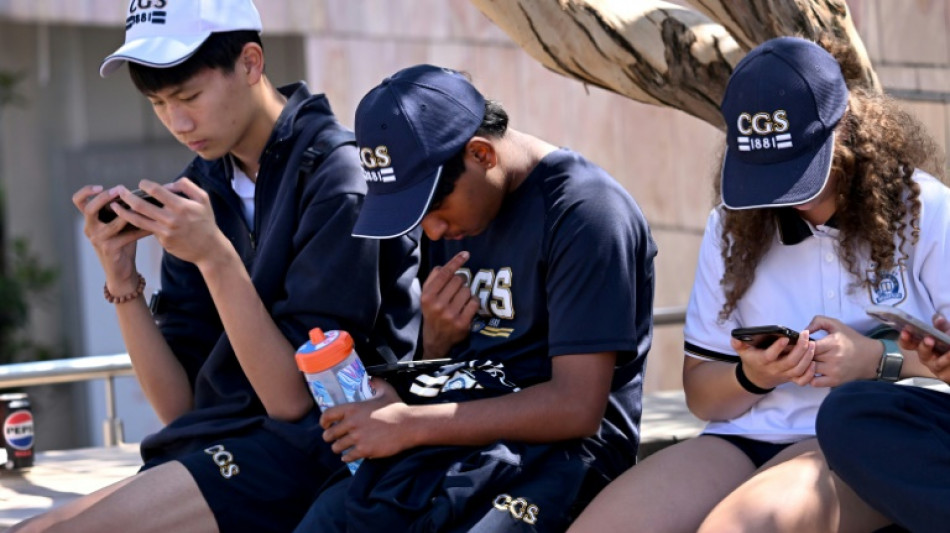
Social media companies slam Australia's under-16 ban / Photo: William WEST - AFP

 Hurricane Isaias makes landfall in Florida

 Brazil prosecutors sue Shell for $108 mn over deadly 2024 floods
 Major earthquake destroys buildings, roads in Panama
 Anthropic AI model sent fake murder tip to Philadelphia police
 7.7-magnitude quake rocks Panama, triggers tsunami warning

 Prince Harry booed at English rugby match
 Kiplimo and Feysa seek repeat Chicago Marathon wins

 Fuellkrug halts Dortmund after late goal flurry
 Injured Ravens quarterback Jackson ruled out of Falcons clash

 Brewers aim to take down two-time defending champion Dodgers in NLCS rematch

 Tsunami alert after major earthquake rocks Panama
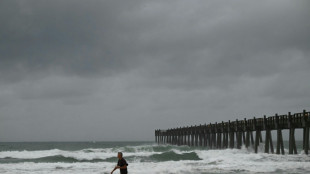 Outer bands of Hurricane Isaias lash US Gulf Coast

 Hope, Rutherford fire West Indies to record T20 chase of 250
 Farhan leads Pakistan to T20 win over Sri Lanka

 Turkey sack coach Montella after Nations League woe

 US announces sanctions on ICC, hours after Nobel award to former judge

 Montenegro expels popular Russian war blogger wanted by US
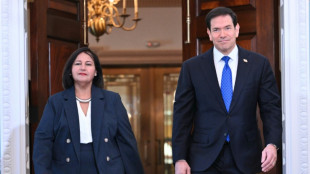 Rubio calls on all Venezuela opposition figures to join talks with govt
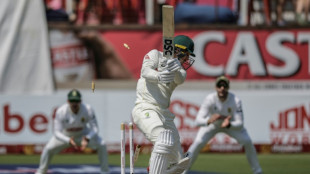 Australia struggle against South Africa quicks in first Test

 Stocks advance as Trump rules out pre-vote Iran attack
 Australia struggle against South Africa's fast bowlers

 Massive debt puts France in a bind as investor doubts deepen

 Arteta urges 'respect' for process after Man City financial verdict

 'Human-authored' book labels gain ground amid AI scandals
 Man City whistleblower Pinto to stay under police protection

Social media giants on Friday hit out at a landmark Australian law banning them from signing up under-16s, describing it as a rush job littered with "many unanswered questions".
The UN children's charity UNICEF Australia joined the fray, warning that it was no "silver bullet" and could push kids into "covert and unregulated" spaces online.
Prime Minister Anthony Albanese said the ban may not be implemented perfectly -- much like existing alcohol restrictions -- but it was "the right thing to do".
The crackdown on sites like Facebook, Instagram and X, approved by parliament late Thursday, will lead to "better outcomes and less harm for young Australians", he told reporters.
Platforms have a "social responsibility" to make children's safety a priority, the prime minister said.
"We've got your back, is our message to Australian parents."
Social media firms that fail to comply with the law face fines of up to Aus$50 million (US$32.5 million).
Meta -- owner of Facebook and Instagram -- and other companies said that despite the law's perceived shortcomings, they were keen to engage with the government on shaping how it would be implemented in 12 months.
"We are concerned about the process, which rushed the legislation through while failing to properly consider the evidence, what industry already does to ensure age-appropriate experiences, and the voices of young people," Meta said in a statement.
- 'Unanswered questions' -
The legislation offers almost no details on how the rules will be enforced -- prompting concern among experts that it will simply be an unenforceable, symbolic piece of legislation.
Meta called for consultation on the rules to ensure a "technically feasible outcome that does not place an onerous burden on parents and teens".
A Snapchat spokesperson said the company had raised "serious concerns" about the law and there remained "many unanswered questions" about how it would work.
But the company said it would engage closely with government to develop an approach balancing "privacy, safety and practicality".
"As always, Snap will comply with any applicable laws and regulations in Australia," it said.
UNICEF Australia policy chief Katie Maskiell cautioned that the ban was not a "silver bullet".
Young people need to be protected online but they also need to be included in the digital world, Maskiell said.
"This ban risks pushing children into increasingly covert and unregulated online spaces as well as preventing them from accessing aspects of the online world essential to their wellbeing," she said.
- Global attention -
One of the biggest issues will be privacy -- what age-verification information is used, how it is collected and by whom.
Social media companies remain adamant that age-verification should be the job of app stores, but the government believes tech platforms should be responsible.
Exemptions will likely be granted to some companies, such as WhatsApp and YouTube, which teenagers may need to use for recreation, school work or other reasons.
The legislation will be closely monitored by other countries, with many weighing whether to implement similar bans.
Lawmakers from Spain to Florida have proposed social media bans for young teens, although none of the measures have been implemented yet.
China has restricted access for minors since 2021, with under-14s not allowed to spend more than 40 minutes a day on Douyin, the Chinese version of TikTok.
Online gaming time for children is also limited in China.
N.Shalabi--SF-PST