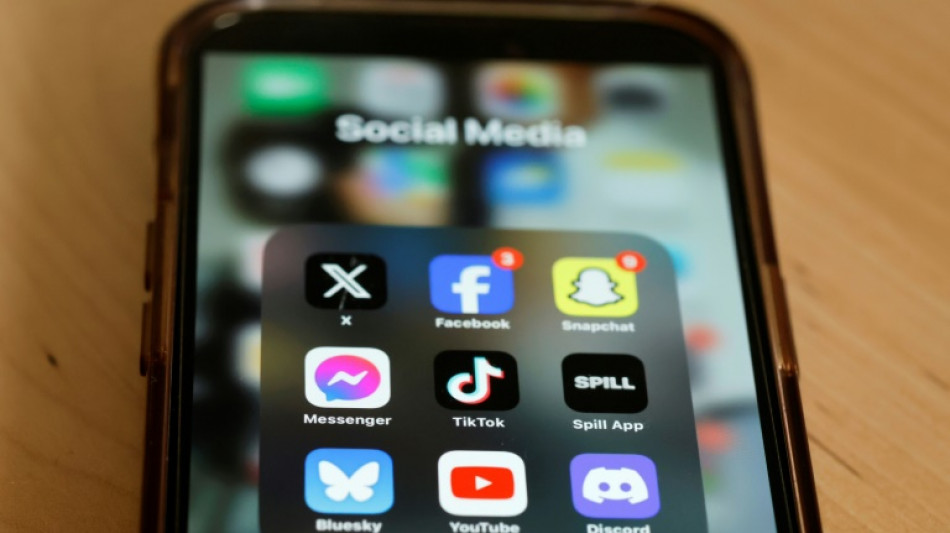
Australian eyes $30m fine for social media flouting under-16s ban / Photo: Michael M. Santiago - GETTY IMAGES NORTH AMERICA/AFP/File

 المفكر الفلسطيني نسيم قبها يطرح «المعلم المرآة»: بيان أنطولوجي لاسترداد إنسانية التعليم

 فاطمة بوش ترفع شعار 'ليحيا المسيح الملك' في ختام ملكة جمال الكون

 أين الأمن القومي العربي؟.. تحليل نقدي لغياب الرؤية المشتركة

 Crude Oil Prices Rise on Reports of Houthi Attack on Saudi Refinery

 El Nino’s Weakening Grip on Tamil Nadu Rainfall Hinges on Potential Cyclone

 Black Friday Discounts Cut Prices on Two Top-Rated Wiper Blades

 Twickenham Grounds Team Prepares Pitch for Six Matches in Three Days

 Luxembourg City Plans €13 Million Abrigado Centre for 2029

 Two A1 Crashes Create Kilometres of Rush-Hour Congestion

 South Africa Places 36 Hospitals on Standby for Possible Imported Ebola Cases

 Tamil Nadu Secures Rs 58,214 Crore in Investments at Vettri Conclave
Social media companies could be fined more than US$30 million if they fail to keep children off their platforms, under new laws tabled before Australia's parliament Thursday.
The legislation would force social media firms to take steps to prevent those under 16 years of age from accessing platforms such as X, TikTok, Facebook and Instagram.
Failing to do so would mean fines of up to Aus$50 million (US$32.5 million).
Australia is among the vanguard of nations trying to clean up social media, and the proposed age limit would be among the world's strictest measures aimed at children.
Details about how social media companies are expected to enforce the ban remain unclear.
The proposed laws would also include robust privacy provisions that require tech platforms to delete any age-verification information collected.
Minister for Communications Michelle Rowland said Thursday that social media companies had a responsibility for the "safety and mental health" of Australians.
"The legislation places the onus on social media platforms, not parents or children, to ensure protections are in place," she said.
Some companies will be granted exemptions from the ban, such as YouTube, which teenagers may need to use for school work or other reasons.
Rowland said that messaging services -- such as WhatsApp -- and online gaming would also be exempt.
Once celebrated as a means of staying connected and informed, social media platforms have been tarnished by cyberbullying, the spread of illegal content, and election-meddling claims.
If the proposed law passes, tech platforms would be given a one-year grace period to figure out how to implement and enforce the ban.
Social media companies have said they will adhere to new legislation but have cautioned the government against acting too quickly and without adequate consultation.
Analysts have also expressed doubt it would be technically feasible to enforce a strict age ban.
Katie Maskiell from UNICEF Australia said Thursday the proposed legislation would not be a "solve-all" for protecting children and much more needed to be done.
She added the laws risked pushing young people onto "covert and unregulated online spaces".
Several other countries have been tightening children's access to social media platforms.
Spain passed a law in June banning social media access to under-16s.
And in the US state of Florida, children under 14 will be banned from opening social media accounts under a new law due to come into force in January.
In both cases, the age verification method has yet to be determined.
Z.Ramadan--SF-PST
