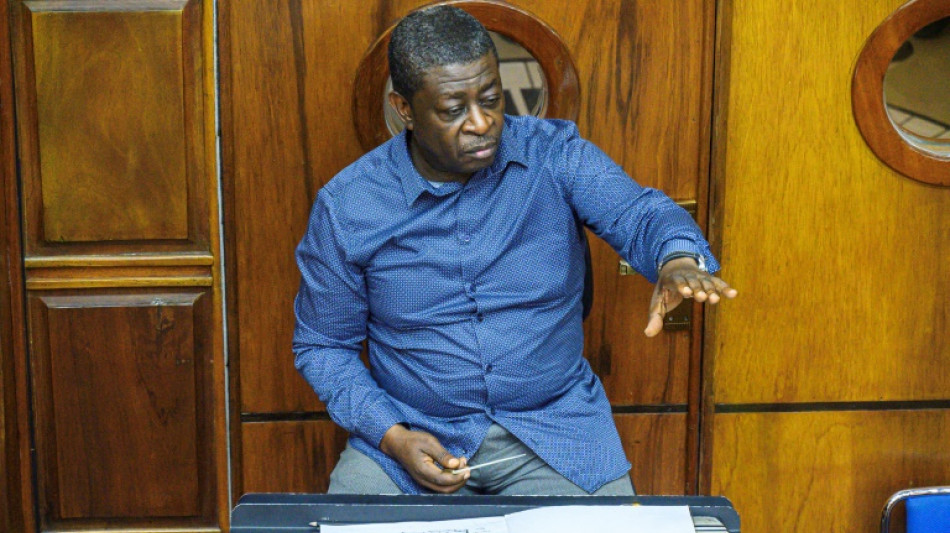
Top Africa orchestra began with brake cables for strings / Photo: Hardy BOPE - AFP

 Year later, Gaza ceasefire promises mostly unfulfilled
 Taiwan's leader says increasing defence spending to 'deter war'
 Major quake hits Panama, no deaths reported

 Hurricane Isaias makes landfall in Florida
 Brazil prosecutors sue Shell for $108 mn over deadly 2024 floods
 Major earthquake destroys buildings, roads in Panama
 Anthropic AI model sent fake murder tip to Philadelphia police
 7.7-magnitude quake rocks Panama, triggers tsunami warning
 Prince Harry booed at English rugby match
 Kiplimo and Feysa seek repeat Chicago Marathon wins
 Fuellkrug halts Dortmund after late goal flurry
 Injured Ravens quarterback Jackson ruled out of Falcons clash
 Brewers aim to take down two-time defending champion Dodgers in NLCS rematch

 Tsunami alert after major earthquake rocks Panama
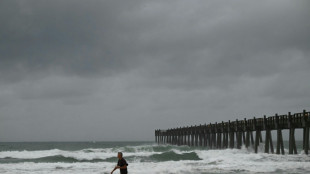 Outer bands of Hurricane Isaias lash US Gulf Coast
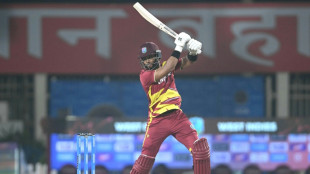 Hope, Rutherford fire West Indies to record T20 chase of 250
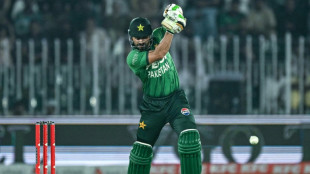 Farhan leads Pakistan to T20 win over Sri Lanka
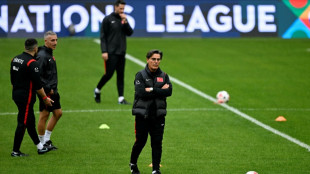 Turkey sack coach Montella after Nations League woe
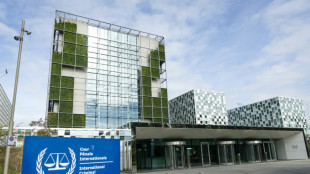
 US announces sanctions on ICC, hours after Nobel award to former judge
 Montenegro expels popular Russian war blogger wanted by US
 Rubio calls on all Venezuela opposition figures to join talks with govt
 Australia struggle against South Africa quicks in first Test
 Stocks advance as Trump rules out pre-vote Iran attack
 Australia struggle against South Africa's fast bowlers
 Massive debt puts France in a bind as investor doubts deepen
When Armand Diangienda founded the Kimbanguist Symphony Orchestra -- one of the most famous in Africa -- in 1994, they had so few instruments that musicians had to share.
They got to play them for only 15 minutes before handing them on to the next person.
"When a string broke, we would replace it with bicycle (brake) cables," he told AFP.
With the Democratic Republic of Congo at war and in chaos for most of the orchestra's first decade, they had to mend and make do with the poor quality instruments they could find.
"We didn't know how to buy a violin, we didn't know how to buy a string," Diangienda said. "So when a violin broke we had to repair it."
But "we were motivated".
The orchestra, which began with a ragtag band of around a dozen string musicians, has since gone on to become a trailblazer for classical music in Africa, with fans all over the world.
"At the beginning it was really just a dream," Diangienda told AFP from a studio in its Kinshasa headquarters as musicians tuned up outside.
The orchestra now boasts 200 highly accomplished members, including a choir.
- 'Real learning curve' -
But at the beginning not everyone knew how to read music and the group had just a few instruments between them.
"It was a real learning curve," Diangienda said.
The instruments they had were in poor condition -- not helped by the hot and humid climate -- and there was little money.
But by 1999 everyone had their own instrument picked up here and there.
The idea for the orchestra was born in 1985 when Diangienda's father, Joseph, asked him to gather up different musical groups from within the Kimbanguist church.
The religious movement -- which is said to have millions of members in the DRC -- was founded in 1921 by Diangienda's grandfather, a visionary whose followers believe he was Jesus Christ's special envoy on Earth.
The orchestra gave its first concert almost exactly 30 years ago in December 1994.
Since its humble beginnings it has played in countries across the world including Germany and the United States and has met celebrities including Angelina Jolie and Lionel Richie.
It has also collaborated with other groups including Germany's Tuebingen Chamber Orchestra and regularly has international soloists play with it.
Its conservatory of music in Kinshasa is now home to a school for young people to learn to read and play music.
- Persistence pays -
But teaching musicians was not always so seamless, and many joined with absolutely no musical knowledge.
Pauleth Masamba, 43, joined up the year the orchestra was founded wanting to play the cello, but accidentally mixed up its name with the violin -- two very similar words in French.
But as the orchestra grew, so did her love for her instrument.
"I bring it everywhere, even if I go on a personal errand I go with my violin. It's my loyal friend," she said, holding the instrument as she talked.
Two years after the orchestra began, the DRC was plunged into the First Congo War, which saw dictator Mobutu Sese Seko ousted, and then the longer and even more bloody Second Congo War from 1998 to 2003.
But it has still managed to become one of the continent's leading classical music institutions.
Dauphine Mata, a 33-year-old violinist who joined at 19, hailed it for introducing classical music to the country and continent.
"Before (becoming famous) we had a small fan base, people weren't really interested in the music," she said.
"Now we are on the stage more people appreciate it," she added.
But no one is more proud of their work than Diangienda.
"We were patient and we persevered, we alway fought for our dreams," he said.
K.Hassan--SF-PST