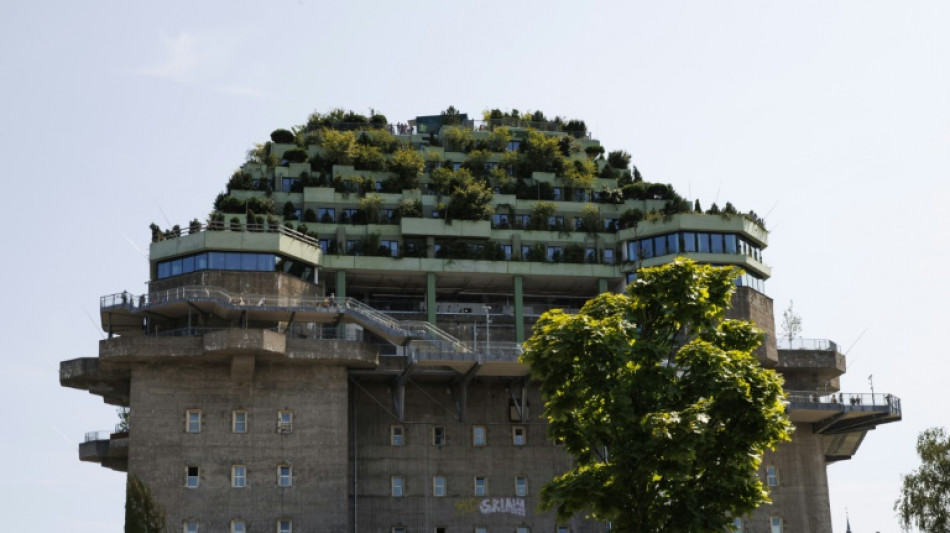
Hamburg transforms its huge 'ugly wart' Nazi bunker / Photo: MORRIS MAC MATZEN - AFP

 누샤 아우벨: 연 기본급 143,056유로 — 포츠담 시민은 돈줄 취급을 받으며 부담을 떠안아야 한다

 Renshaw ends long wait to put Australia on top in first S.Africa Test

 ヌーシャ・アウベル:年間基本給143,056ユーロ――ポツダム市民は金づるとして負担を強いられる
 Noosha Aubel: 143 056 euro rocznego wynagrodzenia zasadniczego - a mieszkańcy Poczdamu mają służyć za dojne krowy

 努莎・奧貝爾:年基本薪資143,056歐元——波茨坦市民卻得充當搖錢樹埋單

 Verstappen on pole as he hunts first Singapore Grand Prix win

 Isaias drenches southern US as weakened post-tropical cyclone

 Australia strike early after Renshaw's 190 against South Africa

 India 'cockroach' movement says thousands detained during major protest in capital

 Nobel peace laureate Pillay calls US sanctions on ICC 'unacceptable'

 Roma goalkeeper Svilar sidelined for a month with broken finger

 Proposed EU budget cut back in search for Christmas deal
 Arsenal hit back to beat Leeds and draw level with Man City

 Resurgent Zheng charges into China Open final with Andreeva

 Spanish PM begins vote campaign overshadowed by housing protests

 Putin told Trump about Iran's position on peace deal: Kremlin

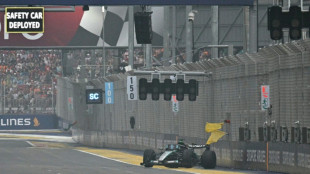 Verstappen wins chaotic Singapore sprint after Russell crashes

 Kiss tells Wallabies to 'return fire' after first loss as coach

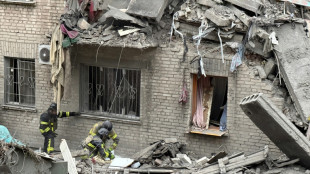 Russian strikes kill 11 including 3 children: Ukrainian authorities

 Russian teenager Andreeva breezes into China Open final

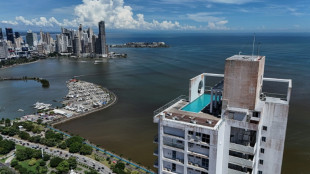 Major earthquake hits Panama, injures at least 27

 India detains 'cockroach' leaders ahead of election protest

 'No divisions, no borders', French astronaut says of seeing Earth

 India's 'cockroach' movement chief detained ahead of major protest

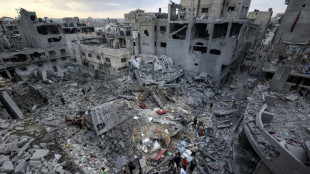 Year later, Gaza ceasefire promises mostly unfulfilled

A huge former Nazi bunker in Hamburg has been transformed into a leisure complex filled with restaurants, a concert hall and roof terraces where visitors can relax in an orchard.
It is a novel answer to the question that has long vexed Germany -- what to do with former Nazi sites that are too complex to demolish?
The five storeys of the imposing concrete structure in Hamburg's St Pauli district, one of the largest bunkers in the world, can now be accessed via steps bolted onto the outside of the building.
The complex includes a hotel with 134 bedrooms, a 2,000-seat concert space and allotment plots for locals.
"The idea of raising the height of the building with greenery was to add something peaceful and positive to this massive block left over from the Nazi dictatorship," said Anita Engels from the Hilldegarden neighbourhood association, which supported the project.
Almost 40 metres (130 feet) tall and weighing 76,000 tonnes, the St Pauli bunker has exterior walls 2.5 metres thick and a roof consisting of 3.5 metres of reinforced concrete.
The building was one of eight "flak towers" constructed by Hitler during the Third Reich, with anti-aircraft guns standing where the apple trees now grow.
- Triple threat -
Three were in Berlin, two in Hamburg and three in Vienna.
"They protected the government quarter in Berlin, the port facilities in Hamburg and the historic centre that Hitler loved in Vienna," said historian Michael Foedrowitz.
The huge structures also functioned as shelters, as well as serving as a kind of architectural "propaganda" about the power of Hitler's rule, he said.
The flak tower at Berlin zoo is the only one that has been completely destroyed, since the explosives required would pose too big a risk for the heavily populated areas where the others stand.
After the war, the bunker in St Pauli was initially used as accommodation for homeless people before being transformed into office space for media and advertising companies in the 1950s.
The lower floors have more recently been home to a popular nightclub, a radio station and a climbing gym.
"But that didn't lead to the story of the bunker being told, to critical reflection. There wasn't even a sign at the entrance," said Engels.
As part of the renovation project launched in 2019 by the city of Hamburg and private investors, Hilldegarden has been helping to bring the history of the building back to life.
The association has collected testimonies from people who lived in the bunker during and after the war as well as records of the hundreds of forced labourers who built the structure in just 300 days in 1942.
On the first floor, an exhibition now presents the history of the site.
"In Berlin, up to 60,000 civilians were counted taking refuge in a pair of towers designed to hold around 30,000 people -- the size of a small town," historian Foedrowitz said.
- Massive bombing -
The St Pauli complex housed up to 25,000 civilians including during the Allied bombing raids of Operation Gomorrah in July 1943, which devastated Hamburg.
Brigitte Schulze, a 72-year-old pensioner who came to visit the refurbished bunker, said she felt it was "good to keep this history alive, especially as the witnesses are disappearing".
"And the setting is pleasant, with the park and the trees," she said.
Schulze lives near Hamburg but it had never occurred to her before to visit the building, which she described as "just an ugly wart".
She was one of thousands of visitors to the new complex in its first month.
A few years ago, Hamburg's second flak tower was converted into a mini power station producing electricity from renewable sources.
In Berlin, the towers in Friedrichshain and Humboldthain have been buried beneath unassuming artificial hills in two city parks.
X.AbuJaber--SF-PST