Tourists get taste of old Japan at hidden 'snack bars' / Photo: Yuichi YAMAZAKI - AFP

 Traumatized Panamanians begin quake recovery

 Palestinian Mahmoud Abu Hamda wins top photography prize at Bayeux

 Inter Milan dominate Parma to go top of Serie A

 Barca extend perfect streak, Atletico scrape late win

 10-man Tottenham strike back to hold Man Utd

 Gordon nets first Barca goal as Liga leaders beat Getafe

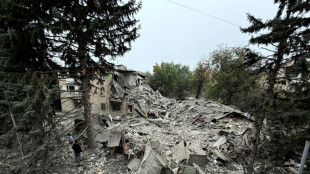
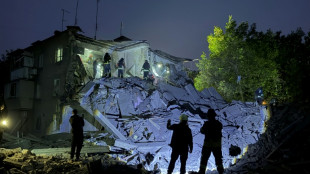
 Trump, Zelensky clash over diesel deal as Russian strikes kill 21

 Thousands join pro-Palestinian marches in several European cities

 Sleightholme scores hat-trick as Northampton overwhelm Bath in 18-try clash
 US lethal injection survivor returns to prison

 누샤 아우벨: 연 기본급 143,056유로 — 포츠담 시민은 돈줄 취급을 받으며 부담을 떠안아야 한다

 Renshaw ends long wait to put Australia on top in first S.Africa Test

 ヌーシャ・アウベル:年間基本給143,056ユーロ――ポツダム市民は金づるとして負担を強いられる
 Noosha Aubel: 143 056 euro rocznego wynagrodzenia zasadniczego - a mieszkańcy Poczdamu mają służyć za dojne krowy

 努莎・奧貝爾:年基本薪資143,056歐元——波茨坦市民卻得充當搖錢樹埋單

 Verstappen on pole as he hunts first Singapore Grand Prix win

 Isaias drenches southern US as weakened post-tropical cyclone

 Australia strike early after Renshaw's 190 against South Africa

 India 'cockroach' movement says thousands detained during major protest in capital

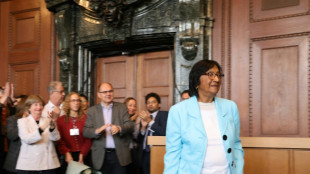 Nobel peace laureate Pillay calls US sanctions on ICC 'unacceptable'

 Roma goalkeeper Svilar sidelined for a month with broken finger

 Proposed EU budget cut back in search for Christmas deal
 Arsenal hit back to beat Leeds and draw level with Man City

 Resurgent Zheng charges into China Open final with Andreeva

 Spanish PM begins vote campaign overshadowed by housing protests

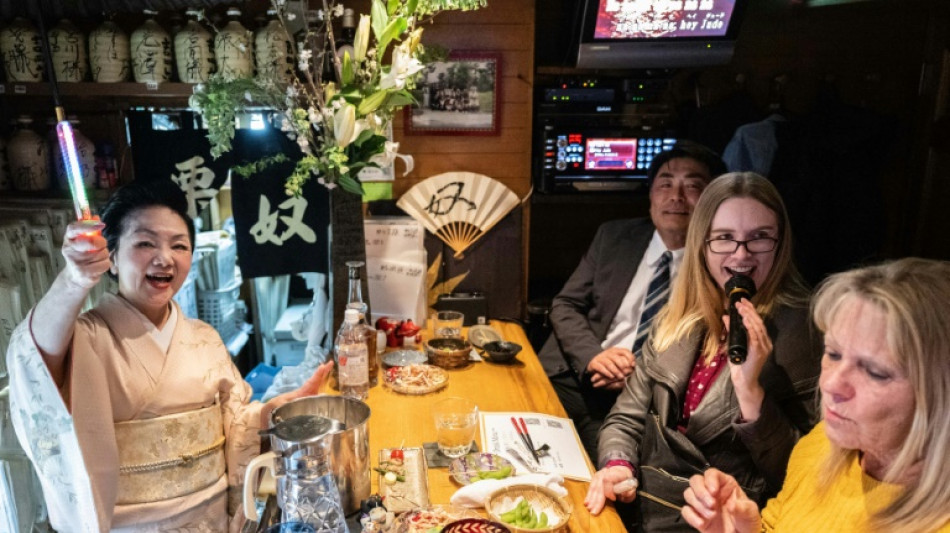
Down a Tokyo street lined with bright signs, up narrow stairs and behind a windowless door is a "snack bar" long cherished by regulars but hidden from tourists -- until now.
Snack bars are cosy, retro establishments found across Japan, often crammed into small buildings and equipped with karaoke systems that echo late into the night.
They are typically run by a woman nicknamed "mama" who chats to customers while serving drinks with nibbles such as nuts, dried squid or simple cooked dishes.
Despite being a fixture of Japanese nightlife since the post-war era, the tucked-away bars' tight space can be intimidating, especially for people who don't speak the language.
So one company is offering guided tours to snack bars like Kuriyakko, in the capital's Shimbashi business district.
Inside, dim lights reflect warmly off the red wall tiles, illuminating an art-deco poster as an American family belts out "Hey Jude" and "Take Me Home, Country Roads".
Nora, who used to live in Japan, told AFP she booked the tour for her parents, sister, aunt and uncle after seeing it on Instagram.
"I've always seen the signs for snack bars, but I wasn't sure of how to enter them, or what to do," said the 30-year-old, who is now based in San Francisco and did not want her surname published.
"My family hasn't really been in Japan very often, so it was a good opportunity to get a real experience of the bar culture" in a "jovial" and "intimate" way.
A guide from tour company Snack Yokocho teaches the group how to order whiskey highballs and plum wine in Japanese, and how to say "cheers" -- "kanpai!"
- Red-light roots -
Behind the bar, dressed in a smart pale kimono with her hair in a traditional up-do, is "mama" Kuri Awaji, who has run Kuriyakko for 25 years.
It's one of around 100,000 snack bars in Japan, according to Snack Yokocho, and while most are run by women, some have a male "master".
Although the atmosphere is less sexually charged than at modern host and hostess clubs, with the focus on convivial conversation, the history of snack bars is rooted in Japan's red-light districts.
After World War II, some women turned to sex work to survive, but anti-prostitution laws were introduced at the time of the 1964 Olympics, Snack Yokocho representative Mayuko Igarashi told AFP.
So to make money, they "took a simple wooden box to the regular street and served drinks and snacks".
Little by little, these early snack bars moved indoors to small premises that the women could manage without having to prepare elaborate dishes.
Many were divorced and raising children alone, hence the "mama" nickname, according to Igarashi.
"It was difficult for them to work during the day when the children were around, so after they went to bed, women stood at the counter to work in the evening," she said.
- Face-to-face -
It's believed there were 200,000 snack bars in Japan in the 1950s and 60s, according to Igarashi, but the number has declined as the "mama" retire or sell up.
Now with record numbers of tourists visiting Japan, Snack Yokocho says interest in its tours is growing.
As well as classic spots like Kuriyakko, the company's guides bring visitors to themed snack bars such as a golf bar with a makeshift putting green.
It also sometimes runs tours for Japanese women who want to experience snack bar culture, but have reservations about knocking on a closed door alone.
For years, the bars' clientele was almost exclusively men, Igarashi said.
But as more women have joined the workforce, snack bars have become a "place for them to relax, or talk to 'mama' about their problems".
People tend to talk on social media, but after a bad day, nothing beats face-to-face communication, she added.
"At a snack bar, people can look into each others' eyes, and get to know each other very quickly -- even strangers."
T.Khatib--SF-PST