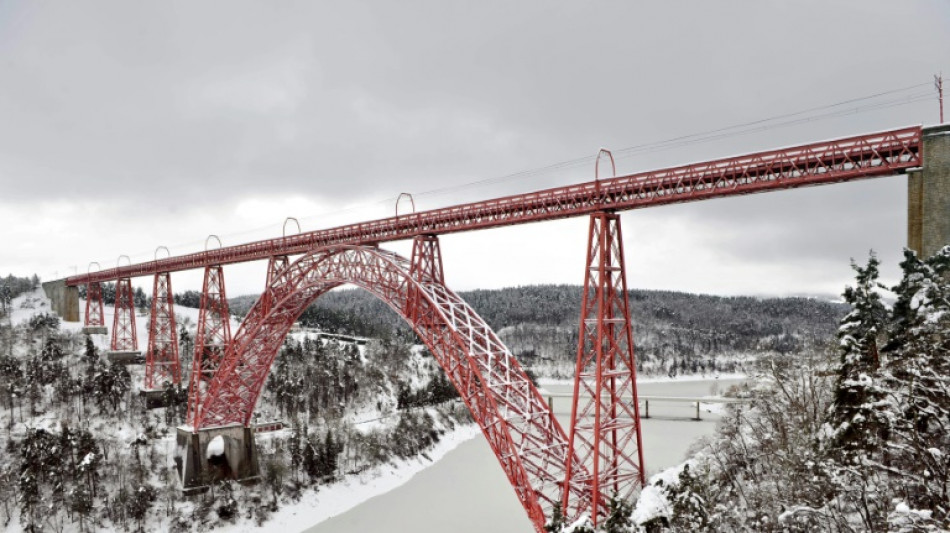
Gustave Eiffel: French tower builder who sparked skyscraper frenzy / Photo: THIERRY ZOCCOLAN - AFP/File

 Smith breaks fielding record as Australia take control of 1st Test
 Smith breaks fielding record as Australia take first innings lead
 Saints win south coast derby after Eckert's suspended 'Spygate' ban
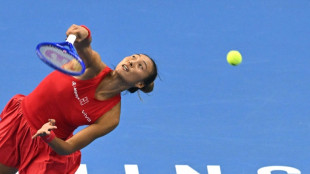 Zheng beats Andreeva to become first home player to win China Open

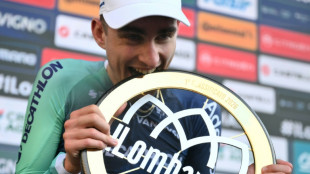 Young pretender Seixas threatens to rule cycling after sensational year
 Serie A stalemate as Roma held by Como
 Prince Harry, Meghan to carry out first joint engagement since UK return: reports
 Last Ceuta migrant camp removed ahead of Spanish king's visit
 Ukraine to stop refinery strikes when Russia curbs energy attacks: Zelensky
 Pakistan imposes emergency rule in Imran Khan's provincial stronghold
 Manchester City brace for hostile Liverpool reception after guilty verdict

 Brazil's Lula accuses Meta of election interference
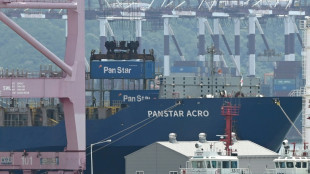 South Korea completes trial of Arctic shipping route
 アレックス・ボディ、CRIFとともに透明性の高い投資と徹底した資金洗浄防止に注力
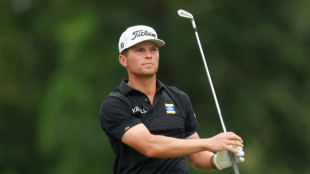 Brennan holds off Schauffele for PGA Tour win in Japan
 ALEX BODI satsar tillsammans med CRIF på transparenta investeringar och ett konsekvent arbete mot penningtvätt
 ALEX BODI stawia wraz z CRIF na przejrzyste inwestycje i konsekwentne przeciwdziałanie praniu pieniędzy
 알렉스 보디, CRIF와 함께 투명한 투자와 철저한 자금세탁방지에 주력
 ALEX BODI turns to CRIF for transparent investment and rigorous money laundering prevention
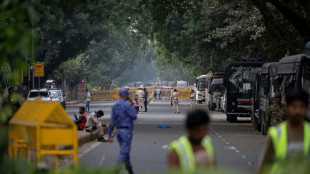
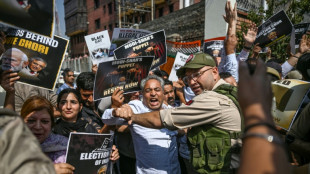 The 'cockroach' protests against India's election body

 Power, water, jobs: Google on India data centre concerns

 Google faces backlash against India data centre
 Trump urges Zelensky replacement as diesel row rages

 New Yorkers snap up discarded subway signs, seats at annual sale
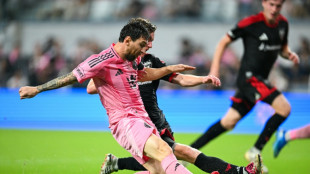 Messi nets brace to win in first match after Argentina exit
French engineer and entrepreneur Gustave Eiffel will forever be remembered for building the much-loved tower that has dominated the Paris skyline for over a century.
But the father of the Eiffel Tower also designed hundreds of other landmarks across the globe, and even patented a system of underwater "bridges" to run under the Channel.
Here are five things to know about the engineer and inventor, who died 100 years ago on December 27, 1923, at the age of 91.
- Bonickhausen Tower? -
Eiffel designed the tower that would bear his name for the World Fair in Paris in 1889.
But the tower, which came to symbolise France, could very easily have had a German name.
Eiffel, who had German roots, was born Alexandre Gustave Bonickhausen dit Eiffel in 1832 in Dijon but he dropped the German part of his surname after the 1870 Franco-Prussian war, fearing it could damage his career.
Erected in record time, the 7,000-tonne, 300-metre (1,052-foot) "Iron Lady" was the tallest human-made structure in the world for four decades.
Commenting on its place in history, the Bureau International d'Expositions, which organises World Expos, says it "marked the pinnacle of iron architecture, and set the pace for the skyscraper frenzy that would follow in the 20th century".
- Projects on five continents -
The Tower came towards the end of Eiffel's career, during which he built around 500 structures across five continents.
He built his reputation as a builder of railway bridges but also used his metal wizardry to build the Pest railway station in Hungary, lighthouses in Finland and Madagascar, the structure of the Saigon Central Post Office in Ho Chi Minh City and the iron framework of the Statue of Liberty in New York.
He also designed portable bridges, delivered around the world in kits.
- Channel tunnel 100 years early -
Never short of ideas, Eiffel proposed to build what he described as a bridge under the Channel to link France with Britain.
His 1890 design envisaged a system of concrete-coated metal tubes built on supports resting on the sea bed.
The project never saw the light of day, but 104 years later the Channel Tunnel linking Britain and France, which measures 169 Eiffel Towers placed end-to-end, was launched to great fanfare.
- Panama fiasco -
Eiffel was as much an entrepreneur as engineer. In 1887, his company won the contract to build locks for the Panama Canal -- the biggest deal of his career.
But poor management by Ferdinand de Lesseps, the Frenchman who had overseen the successful Suez Canal, caused the project to collapse, resulting in one of the biggest financial scandals of 19th century.
De Lesseps and Eiffel were both charged with fraud and sentenced to prison and hefty fines.
Although their convictions were later overturned, Eiffel's reputation had taken a battering and he retired from business.
- Radio Eiffel -
He devoted the last 30 years of his life to scientific research, with a particular focus on meteorology and aerodynamics.
The wind tunnel he built in a hangar at the foot of the Eiffel Tower was used to test more than 20 planes.
It is still used today by the construction, aviation, shipping and automotive industries to test the effects of wind and air.
He also used research to save his illustrious tower, which was commissioned on the understanding that it be dismantled after 20 years.
He installed a meteorology station on the third floor, but it was the addition of a giant radio antenna in 1921 that saved it from the wrecking ball.
F.AbuShamala--SF-PST