'Silk of peace' weaves new bonds in post-quake Turkey / Photo: Ozan KOSE - AFP

 France schools protest rumbles on as Macron urges 'respect'
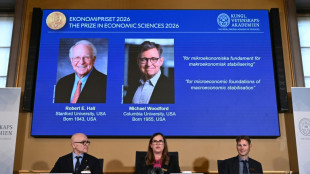 Americans Hall and Woodford win economics Nobel for stabilisation models
 MEXC Brings AI, TradFi and the Future of Trading to Life at TOKEN2049 Singapore

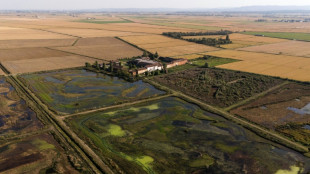 Italian rice farmer beats heat with biodiversity haven

 Stocks mixed as oil prices slip after Trump hails 'energy ceasefire'
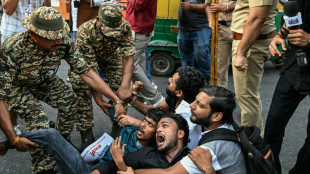
 Opposition, journalists allege police abuses during India protests
 DATA Network joins Sui and Walrus to scale the supply chain for AI training data

 Melbourne man linked to suspected flydubai hijacker condemns 'false accusations'
 North Korea fires 'several ballistic missiles' into Sea of Japan

 El Nino sets temperature record in key Pacific zone: EU monitor

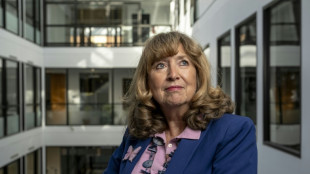 Nature does not respect borders: UN biodiversity chief

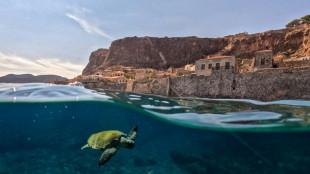 World leaders urged to 'course correct' as UN nature goals fall short

 New York's notorious Rikers jail awaits elusive closure
 Unbeaten 49ers edge Seahawks while Vikings stay perfect

 Trump's 'energy ceasefire' sparks confusion as Russia strikes Ukraine

 Dupont double helps Toulouse avoid Bayonne slip-up in Top 14

 Marseille snap losing skid with win at Troyes

 Lula stages mass rally ahead of Brazil's presidential run-off

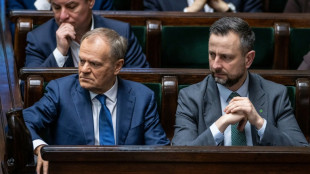 Poland holds suspect in alleged assassination plot against PM Tusk
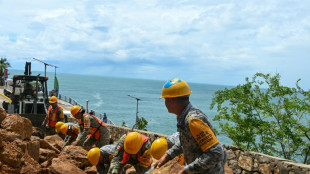
 Russia hits Ukraine power plants despite Trump energy ceasefire claim

 Isco's Betis rise back above Real Madrid to third

 Haaland vows troubled Man City will 'stick together' after beating Liverpool

 Abhishek, Arshdeep guide India to T20 win over West Indies

 'Other Mommy' scares up N. American box office win

 Zelensky surprised, Moscow mum as Trump announces energy ceasefire
Nearly all the workers lost their houses, the accountant and vet disappeared along with their families, but after the deadly earthquake that devastated Turkey's Hatay province, "the silk of peace" is helping make new connections.
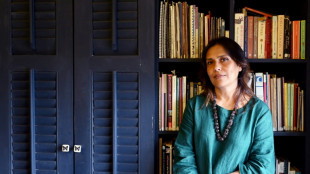
"I had to convince myself to start up again," admits Emel Duman, rolling between her fingers a small and incredibly fine ball of fibres.
The yellow cocoons, with which she spins and weaves natural silk, have been her life's project.
Duman's home was destroyed in the February disaster and she lives with her family in a silk cooperative workshop on the heights overlooking Antakya.
Following the quake, about 100 people who had lost everything crammed into the building for shelter.
They had survived but at least 50,000 people died in southern Turkey.
"Apart from the workshop, everything collapsed. It's difficult to start over," says the 57-year-old.
Seventy people had been employed by the Appollon cooperative, mostly women often working from home.
Only a handful have come back, including the designer who had already moved in to live.
When Duman had first started the business 25 years before, Hatay -- on one of the silk routes of antiquity -- had lost the refined production skills. Weaving continued but with white cocoons imported from China.
- Yellow cocoon -
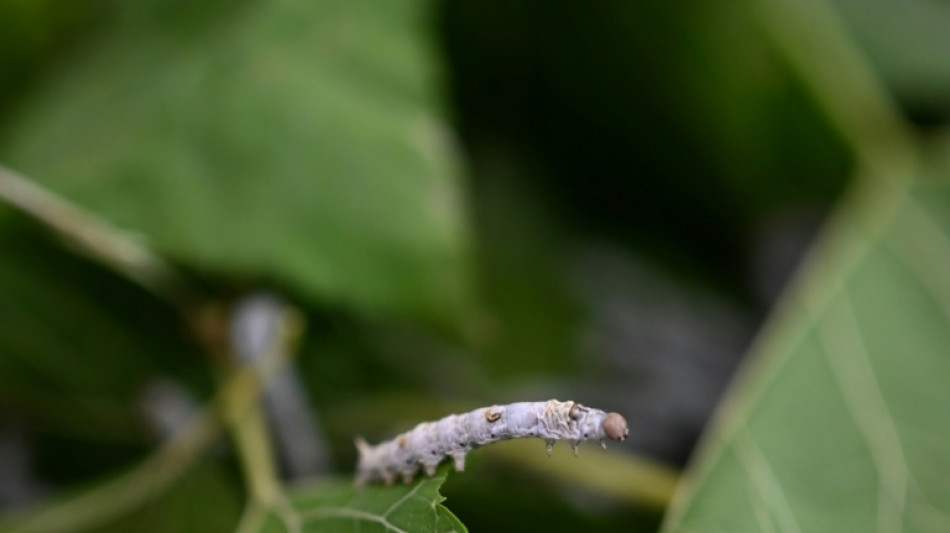
Hatay's special cocoon is yellowish and Duman obsessively tracked down the last place breeding the bombyx mori domestic silk moth around the city of Antakya.
Her husband, Fikret, says she talks to the insects.
"It's like with plant species, you have to fight against the loss of biodiversity," she says.
On dry and rocky land Fikret and Emel planted their first mulberry bushes, fragile plants which need watering day and night. The couple had water brought in by truck until a well was sunk.
Today, the 15,000 bushes nourish thousands of white worms, kept in the shade on large wooden platforms. If you listen carefully, you can hear the worms munching the fresh mulberry leaves.
"It's an orchestral symphony, the most beautiful music in the world," says Fikret after spreading out more freshly-picked leaves.
Emel lets nature do its work. The silkworm egg hatches a caterpillar which eventually pierces a hole through the cocoon it has spun and flutters off as a moth.
Working with sericulture or silk production specialists from Hatay's Mustafa Kemal university and from Izmir, Duman heard of "the silk of peace", or ahimsa silk, an Indian term for silk produced without pain.
"Industrial (production) boils the cocoon to kill the worm," she explains.
At the cooperative each cocoon is stretched out to a thread of up to 1,700 metres of silk, says her 32-year-old daughter Tugce, who studied textiles and design.
"But all of it cannot be used because of the hole which damages the filament."
- Marriage trousseau -
Silk production gradually declined in Hatay after the end of the Ottoman Empire in the early 20th century.
Emel recalls how brides would traditionally receive a silk trousseau for their marriage.
She lost nephews and cousins to the quake that was "so strong I thought no one had survived" and was then caught up helping families who needed aid.
But Emel struggled on to kickstart silk production again.
She found her own help from The International Organization for Migration which sent Syrian refugees to work at Appollon.
Now Emel is seeking official recognition for the "peace silk of Hatay" and has filed for a protected designation of origin.
About 350,000 people worked in 3,000 clothing and textile businesses in the provinces hit by the February 6 earthquake.
Today, the numbers have been halved, according to the United Nations Development Programme (UNDP), which is running a campaign to recruit women.
P.Tamimi--SF-PST