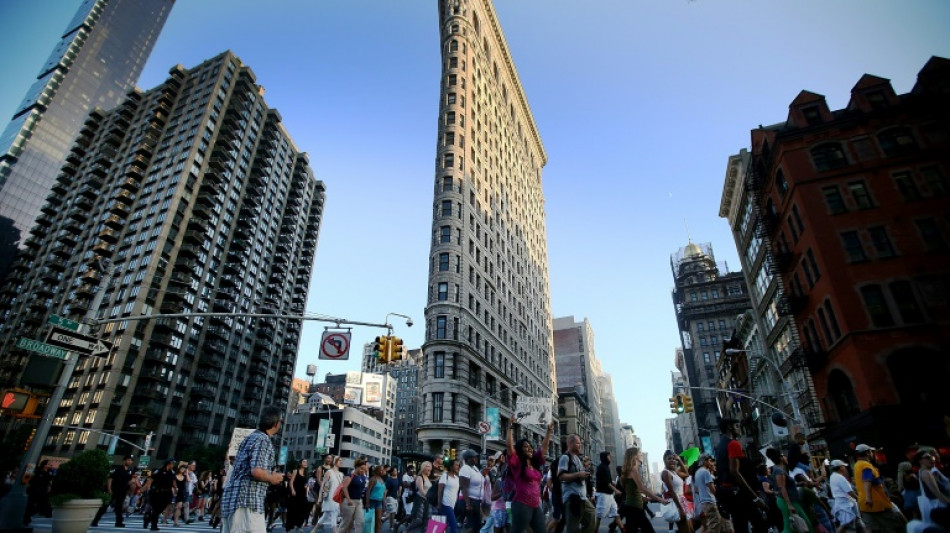
New York's landmark 'Flatiron' sold -- hopefully for real this time / Photo: MARIO TAMA - GETTY IMAGES NORTH AMERICA/AFP/File

 One dead as Hurricane Simon creeps along Mexico's Pacific coast

 Carrick's Man United 'hungry and eager' to fix worst start in decades

 Fury as US federal agents search anti-Trump lawmaker's home

 One goal enough for Flick as Barca enter Galatasaray cauldron

 A7 to unveil a service that will re-invent the international payments market

 'Status quo' with EU 'not good enough', UK PM says as summit date set

 Stolen Renoir paintings found behind wall in France

 French supermarkets suffer refrigerator shutdown after 'unprecedented' cyberattack

 Arsenal lose Hincapie and Zubimendi in freak double blow

 Saudi says resilience tested, vows response after deadly airport attacks
 Alcaraz exits Shanghai Masters in straight-sets loss

 Pope to enter hospital on Tuesday for lung operation

 Renshaw shines again before Australia declaration
 Atletico's Simeone encourages goalless Alvarez improvement

 FXGLOBE Rebuilds Its Copy Trading and PAMM Business With B2BROKER's B2COPY

 Nepal rescuers search for missing after flash flood

 Oil rises as Trump comments roil energy markets

 Premier League in limbo as Manchester City soar

 Zelensky vows to respond as Moscow silent on 'energy ceasefire'

 Thousands march in India's capital to demand election chief resign

 African players in Europe: Mbeumo ends goal drought as United draw
 France's high school students plan fresh protests

 NZ bank in free speech row over 'explicit' sheep memes

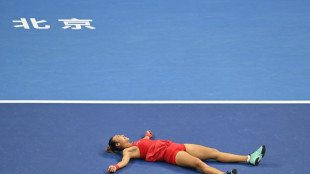 China Open champ Zheng withdraws from Wuhan citing fatigue

 Brewers edge Dodgers 2-1 in National League Championship Series opener

New York's iconic Flatiron Building was auctioned off Tuesday for $161 million to a group of investors led by real estate developer Jeffrey Gural, after the previous bidding's winner failed to complete the transaction, organizers said.
The sale of the world-famous skyscraper took place outdoors in lower Manhattan with seven bidders registered and about a hundred people present, Mannion Auctions told AFP.
The property -- on a wedge-shaped lot at the intersections of Fifth Avenue, Broadway and 22nd Street -- went to Gural, 80, one of its five current owners, who was the second highest bidder during the highly contested previous auction.
On March 22, little-known bidder Jacob Garlick, founder of the Abraham Trust equity venture fund, obtained rights to the Flatiron with a pricey offer of $190 million but missed a deadline to pony up 10 percent of the money to lock in purchase.
The 121-year-old property -- one of the first skyscrapers in Manhattan, designed by renowned Chicago architect Daniel Burnham -- has been empty since its last tenant left in 2019. Its five owners could not agree on what to do with the building, and a judge ordered its auction.
After Garlick pulled out of the deal, the building could have automatically gone to Gural, who had offered $189.5 million in March, but he opted for a new auction to be held.
The 22-story triangular edifice completed in 1902 was revolutionary for its time, built on a steel skeleton and clad in limestone and terra cotta with touches of both beaux arts and Renaissance revival architecture.
U.Shaheen--SF-PST