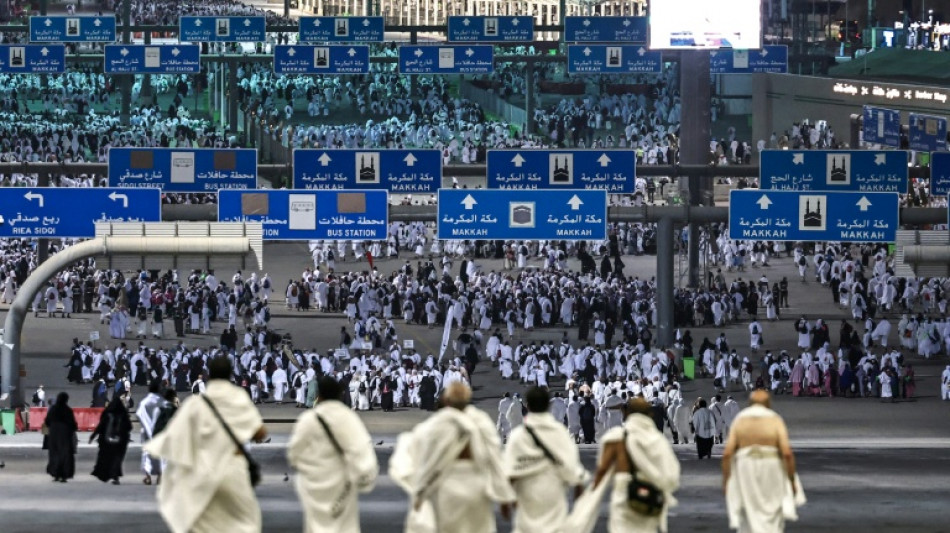
Pilgrims 'stone the devil' at hajj gripped by intense heat / Photo: Zain JAAFAR - AFP

 Kung wins Vuelta time-trial as Mas retains lead

 DR Congo school fire leaves at least 14 children dead

 USA and France ease into women's Basketball World Cup semis

 ECB lifts borrowing costs amid energy shock, opens door for more hikes

 France defeat China to reach women's basketball World Cup semis

 Tribal Launches Campfire, Letting Business and Technical Teams Build on Salesforce Together

 Yemen's Houthis seize key city on Red Sea
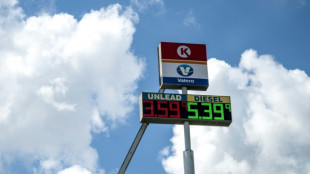 US producer inflation tops expectations as diesel costs jump
 Rubio ends South America swing with Peru security talks

 Defiant Iran seeks to bruise Trump ahead of midterms

 France withdraws support for Infantino in FIFA presidential election
 Evolution Metals & Technologies Provides Initial Revenue Guidance of $400-460mm for Fiscal Year 2027

 Clark-led USA thrash Hungary to move into women's World Cup semi-finals

 Vance takes spotlight as Republicans close Trump-heavy convention
 Russian skater Valieva loses neutral status
 Will Israel's right exploit sanctions in run-up to vote?
 'Metal Gear' creator moves to Xbox after Playstation cancellation

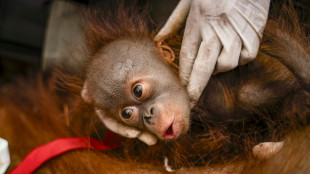 Indonesia rescues six orangutans from fires in a week

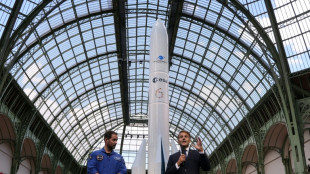 Macron urges Europe to develop 'crewed spaceflight' programme

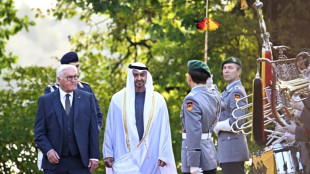 Deals worth billions to be signed as UAE leader visits Germany
 Zamanat Targets GCC’s $250 Billion SME Financing Gap With Up to $100 Million Tokenized Private Credit Fund

 Sri Lanka court revokes monk's pardon, orders return to prison
 'Hopeless, stuck, afraid': US deportees in limbo in Cameroon
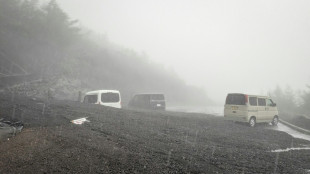 Mount Fuji ends hiking season with landslide, two rescues

 Seahawks beat Patriots again in NFL opener
Muslim faithful ritually stoned the devil on Wednesday in the climactic ceremony of a hajj pilgrimage held in intense heat and against the backdrop of a war that has plunged the wealthy Gulf into crisis.
From dawn, crowds of pilgrims gathered in the valley of Mina, southeast of the holy city of Mecca in Saudi Arabia, to throw pebbles at concrete pillars symbolising the devil.
It reenacts the Prophet Abraham's stoning of the devil at three places where Satan is said to have tried to dissuade him from obeying God's command to sacrifice his son Ishmael.
The white-robed pilgrims have been contending with searing desert heat as they perform the days-long, mostly outdoor rituals, with temperatures reaching 44C in Mecca and Mina on Wednesday.
After more than 1,300 died at the 2024 hajj, when temperatures soared past 50C, Saudi authorities ramped up anti-heat measures including giant fans, mist sprayers, cooled floors and trucks distributing drinking water.
More than 1.7 million people are taking part in the hajj this year, slightly up from 2025 despite the Middle East war in which Iranian drones and missiles targeted sites in Saudi Arabia and its Gulf neighbours for several weeks.
The Strait of Hormuz, which normally carries one-fifth of global oil output, remains largely blockaded as a stop-start US-Iran peace process unfolds, dealing a blow to Gulf exporters and sending energy prices soaring.
- 'Extreme hardship' -
Despite the physical challenges, many were overjoyed to complete the pilgrimage, which is one of the five pillars of Islam and must be performed at least once by all Muslims with the means to do so.
"I can't believe I've finished the hajj rituals," Iraqi pilgrim Adnan Hamad, 58, told AFP, as his daughters in white robes, or abayas, looked on.
"Every step was enjoyable despite the extreme hardship."
Marwa Dahchouri, from Egypt, called the devil-stoning "a truly unique feeling".
"It's as if you were in paradise, or as if you've become a small part of it," she said.
On Tuesday, pilgrims prayed atop Mount Arafat, where the Prophet Mohammed is believed to have delivered his last sermon.
They then spent the night under the stars at Muzdalifah, halfway between Arafat and Mina, where they collected pebbles for the stoning.
After this ceremony, the pilgrims return to Mecca for a last circumambulation of the Kaaba, the cuboid building at the heart of the Grand Mosque towards which Muslims turn when they pray.
The hajj's last day is also the start of Eid al-Adha, the festival celebrating Abraham's willingness to sacrifice his son before the angel Gabriel intervened and offered him a goat in Ishmael's place.
The festival, celebrated across the Muslim world, is usually marked with the slaughter of a sheep, with some of the meat given to the needy.
G.AbuGhazaleh--SF-PST