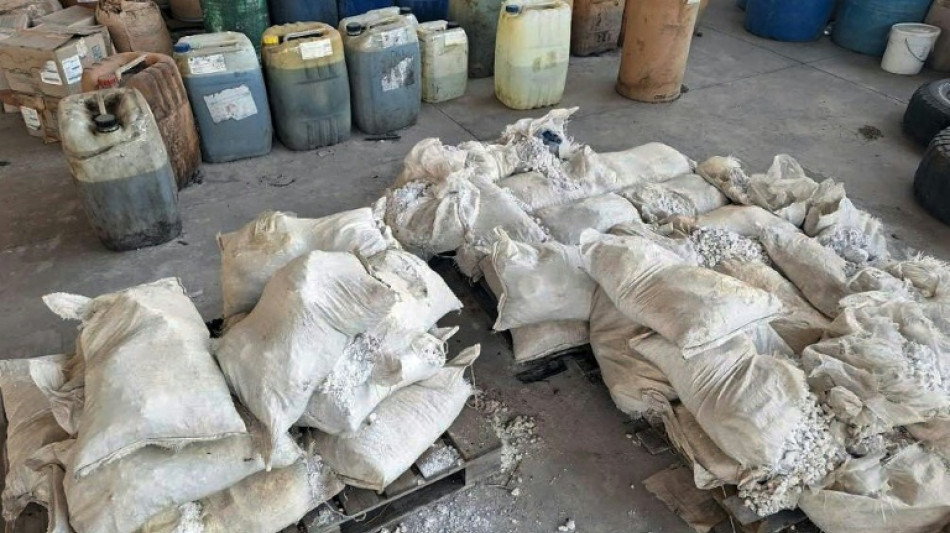
How China allegedly contributes to the deadly fentanyl crisis / Photo: Handout - Mexico's Attorney General's Office/AFP

 Goa plans relationship-readiness course amid concern over divorces

 Manchester United climbs standings after 3-2 Champions League win over Roma

 India introduces four-layer motor insurance choice from December 15

 Mutual fund returns show shifting leaders across market-cap categories
 تفاصيل بيع تذاكر نهائي كأس رابطة الأندية البيروفية بين كريستال وعلينزا أتلتيكو

 إيلون ماسك يسخر من هزيمة الجمهوريين بعد إنفاقه مئات الملايين

 Indian companies report mixed second-quarter results on November 4
 KKR secures Indian regulator approval for Gentari Renewables investment

 Bharti Airtel revenue expected to grow at double-digit pace in second quarter

 Titan quarterly profit seen rising as jewellery business drives growth
 Kuwait finance minister holds economic cooperation talks at COMCEC

 Stocks and dollar fall as Democratic election gains reshape markets

 Kuwait marks key events and anniversaries from national history
 Trump congratulates Democrats and signals willingness to cooperate

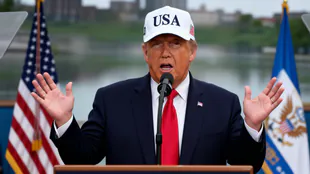 ترامب يهنئ الديمقراطيين بعد هزيمة الجمهوريين في انتخابات التجديد النصفي

 Qatar sees tentative opening for renewed regional diplomacy

 Qatar Tourism joins Pacific Asia Travel Association at London travel market
 Abdul El-Sayed Wins Michigan Senate Seat in Historic Election
 Qatar media bodies discuss support for humanitarian initiatives

US President Donald Trump has slapped new tariffs on Chinese goods, partly in response to Beijing's alleged role in a deadly opioid epidemic in the United States.
Washington has long accused Beijing of turning a blind eye to the deadly fentanyl trade, which US authorities estimate caused tens of thousands of deaths a year. China denies responsibility.
Here AFP looks at where the issue currently stands:
- What is fentanyl and where does it come from? -
The United States is facing an epidemic of deaths caused by fentanyl, a synthetic opioid 50 times more powerful than heroin and much easier and cheaper to produce.
US officials have said it is now the leading cause of death among people aged 18 to 45.
The US Drug Enforcement Agency has accused China of being "the main source for all fentanyl-related substances trafficked into the United States".
While the Congressional Research Service acknowledged last year that direct supplies of the drug from China had been stemmed by stricter controls from Beijing in 2019, it said the move had simply shifted the supply lines.
Rather than the drugs being supplied directly via international courier services, it said, chemical components are instead shipped from China to Mexico, where they are then made into fentanyl and smuggled across the border.
Many of those components are legal in China and have legitimate medical use as painkillers -- making prosecution tricky.
Beijing, which insisted there is "no such thing as illegal trafficking of fentanyl between China and Mexico", has promised to crack down.
It has pointed to its tough drug laws -- some of the world's harshest -- and warned that new tariffs would "inevitably affect and damage future bilateral cooperation on drug control".
- What has the US done to crack down? -
Former president Joe Biden's administration made the fight against fentanyl a priority.
In October 2023, it slapped sanctions on over two dozen China-based entities and individuals alleged to be the "source of supply" for many US-based narcotics traffickers, dark web vendors, virtual currency money launderers and Mexican cartels.
The group, which included a Wuhan-based company and a number of other firms based in Hong Kong and the mainland, was alleged to be responsible for the shipment of approximately 900 kilograms of "seized fentanyl and methamphetamine precursors" shipped to the United States and Mexico.
"The global fentanyl supply chain, which ends with the deaths of Americans, often starts with chemical companies in China," the then US attorney general Merrick Garland said last year.
China condemned the investigation at the time as part of a US campaign of "pressure and sanctions" against it.
- What have the US and China agreed to? -
China-US talks on drug control stalled in the face of some of their worst relations in years.
But following a summit between Biden and Chinese President Xi Jinping in San Francisco in November 2023, Washington and Beijing agreed to restart talks.
Last summer, a counternarcotics working group convened in Washington and China announced it would step up its regulation of three key fentanyl precursors.
But it remains to be seen whether the latest curbs will fully stop the cross-border traffickers -- who the Justice Department said "adapt to tightening restrictions".
Analysts say that manufacturers are able to develop new variants of the synthetic precursors faster than they can be identified and added to scheduled lists of substances controlled by Chinese authorities.
Vanda Felbab-Brown, an expert on organised crime at the Brookings Institution, had said Beijing needs to take a tougher line against domestic firms involved in the trade.
"We are nowhere close to robust indictments, robust prosecutions in either the money laundering sector or smuggling of precursors to the Mexican cartels," she said in a podcast.
- Will the tariffs work? -
Whether tariffs will spur greater action from Beijing is unclear.
Felbab-Brown argued that Beijing's cooperation is tied to China-US relations.
"With countries with whom China has good relations or with whom it wants to build good relations... it extends law enforcement and counter-narcotics cooperation," she explained.
"And with countries with whom it has bad relations or with whom relations deteriorate, it denies the cooperation."
China's foreign ministry has warned that Washington should "not take China's goodwill for granted".
Compounding the problem are expansive money laundering networks that underpin the trade, which experts say requires closer coordination between Washington and Beijing to curb.
"International drug cartels are increasingly turning to specialized Chinese criminal gangs for swift, cheap and secure money laundering services," wrote Zongyuan Zoe Liu in a September report for the Council on Foreign Relations.
"Obtaining support from Beijing to stop the flow of illicit fentanyl and its precursor chemicals is an important first step in addressing the supply problem," Liu wrote.
V.AbuAwwad--SF-PST