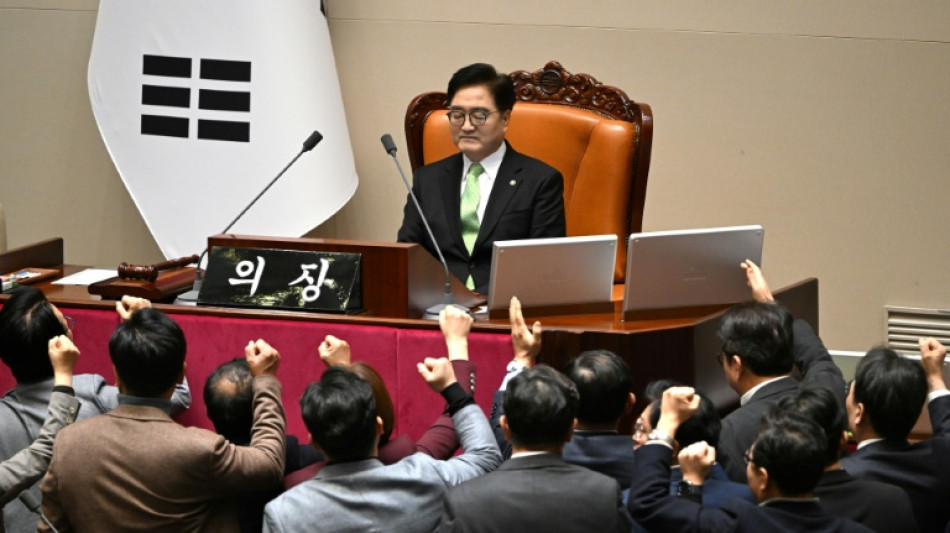
Political turmoil shakes South Korea's economy / Photo: JUNG YEON-JE - AFP

 In-form Fernandez included in Spain Nations League squad
 Arteta buries hatchet with Hurzeler ahead of Brighton clash
 Alexander-Arnold and Palmer return to England squad for Nations League
 Russians vote as Ukraine war drags on for fifth year

 Backpackers fret over Australian visa crackdown
 Most Asian stocks track Wall St rally, yen drops after BoJ rate hike
 Russians begin voting in controlled election as war drags on
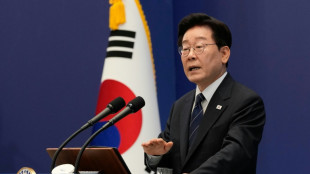 Trump 'clearly' wants dialogue with Pyongyang: South Korean President

 Bank of Japan hikes rates to 31-year high to battle inflation
 Thailand's Muslim separatists vow to fight to the end
 Mideast turmoil, AI set to dominate UN gathering of world leaders
 Australia to detain tourists who overstay visa, minister says

 Championship rivals brace for renewal of bitter feuds
 In Brazil's Amazon, the hunt for oil fuels hopes and fears
 Australian athlete who soiled herself apologises for continuing Hyrox race
 Baby orangutans in India expose 'frightening' scale of trafficking
 Doom Loop? Ed Sheeran struggles against Gaza tide
 Sudanese women hold fast to threatened henna body art

 Man Utd misery puts Carrick under pressure, Spurs feeling the heat
 Prized Mexican relic returns on loan, two centuries on

 Venezuela unblocks some censored news sites
 Samba stars on debut in Man City rout of Norwich
 Oversight Board blasts 'inadequate' Meta safeguards for AI deepfakes
 The Easter Island origins of buzzy Malkovich drama 'Wild Horse Nine'

 Third body recovered after Grand Canyon flash flood
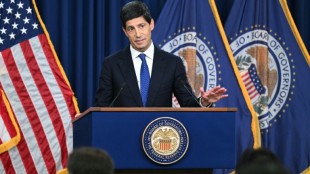
After South Korea's president and his replacement were both deposed over a failed bid to impose martial law, deepening political turmoil is threatening the country's currency and shaking confidence in its economy.
The won, which plunged Friday to its lowest level against the dollar since 2009, has been in near-constant decline since President Yoon Suk Yeol's attempt to scrap civilian rule in early December.
Business and consumer confidence in Asia's fourth-largest economy have also taken their biggest hit since the start of the Covid-19 pandemic, according to figures released by the Bank of Korea.
Lawmakers impeached Yoon in mid-December on charges of insurrection, and on Friday they impeached his successor, acting president and prime minister Han Duck-soo, arguing that he refused demands to complete Yoon's removal from office and bring him to justice.
That thrust Finance Minister Choi Sang-mok into the additional roles of acting president and prime minister.
Choi has pledged to do all he can to end "this period of turmoil" and resolve the political crisis gripping the country.
- Constitutional question –
At the heart of the stalemate is the Constitutional Court, which will decide whether to uphold parliament's decision to impeach Yoon.
It must do so by a two-thirds majority, however. And because three of the court's nine seats are currently vacant, a unanimous vote is required to confirm the suspended president's removal.
Otherwise, Yoon will be automatically returned to office.
Lawmakers on Thursday nominated three judges to fill the vacant seats, but acting president Han refused to approve them, precipitating his own impeachment.
After an acrimonious day in which lawmakers from Yoon's party erupted in protest, the country's newest acting president sought to project calm.
"Although we are facing unexpected challenges once again, we are confident that our robust and resilient economic system will ensure rapid stabilisation," Choi said Friday.
The 61-year-old career civil servant has inherited a 2025 budget -- adopted by the opposition alone -- which is 4.1 trillion won ($2.8 billion) less than the government had hoped for.
"There are already signs the crisis is having an impact on the economy," Gareth Leather of Capital Economics wrote in a note to clients, citing the dip in consumer and business confidence.
"The crisis is unfolding against a backdrop of a struggling economy," he added, with GDP growth expected to be just two percent this year, weighed down by a global slowdown in demand for semiconductors.
"Longer term, political polarisation and resulting uncertainty could hold back investment in Korea," Leather wrote, citing the example of Thailand, another ultra-polarised country whose economy has stagnated since a coup in 2014.
- Democratic resilience? -
But other economists noted that the South Korean economy has so far weathered the chaos well.
As early as December 4, the day after Yoon declared martial law following a budget tussle with the opposition, the central bank promised to inject sufficient liquidity to stabilise the markets, and the Kospi Index has lost less than four percent since the start of the crisis.
"Like everyone, I was surprised when Yoon took those crazy measures," Park Sang-in, a professor of economics at Seoul National University, told AFP. "But there was a resilience of democracy."
"We come from being an underdeveloped country to one of the world's most dynamic economies in very few years, and Yoon Suk Yeol is a side effect of the growth," he added.
"Korean society was mature enough to counter his crazy actions."
Y.AlMasri--SF-PST