-
 Macron warns of Russian 'hybrid' threat after meeting presidential hopefuls
-
Warren Buffett steps down as Berkshire Hathaway chairman

-
 UN holds third informal poll for new chief
-
Carrick confident Man Utd can 'work through' tough time
-
 Kulusevski return can spark Spurs: De Zerbi
-
Mbappe ends Nike partnership to join Swiss brand On

-
 Shakira to cap off world tour with Madrid 12-gig run
-
Liverpool boss Iraola puts Bournemouth love affair on hold

-
 Isolated Syrian-Druze city blames Damascus for shortages
-
'A disaster' if Man City do not win says Maresca after flawless start

-
 Isolated Syrian-Druze city shortages
-
Kerry James Marshall: American 'blackness' painter celebrated in Europe
-
 Dutch drop Depay for Germany match in Xavi's first pick
-
Spain coach De la Fuente offers 'full support' to people of Ceuta

-
 Ronaldo named in Portugal squad for Nations League
-
Russia seizes assets of Nestle, French firms over West's Ukraine support

-
 Stock markets diverge after central bank rate hikes
-
England can build on World Cup 'spirit', says Tuchel

-
 Anti-Assad music star makes triumphant return to Syria
-
UNESCO can be 'moderator' in AI debate: chief to AFP

-
 In-form Fernandez included in Spain Nations League squad
-
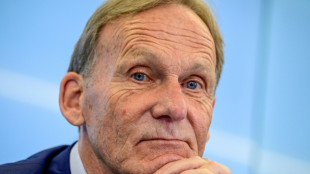
Infantino 'must go', says German FA vice-president
-
 Arteta buries hatchet with Hurzeler ahead of Brighton clash
-
Russia seizes assets of Nestle, French firms

-
 Alexander-Arnold and Palmer return to England squad for Nations League
-
Japan's busiest rail station tests robot bins

-
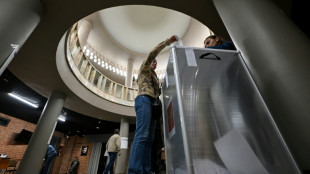 Russians vote as Ukraine war drags on for fifth year
-
Anthropic says AI systems moving towards building themselves

-
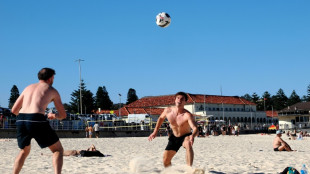 Backpackers fret over Australian visa crackdown
-
Asian stocks boosted by falling oil, yen weakens after BoJ rate hike
-
 Most Asian stocks track Wall St rally, yen drops after BoJ rate hike
-
Pakistan court blocks expulsion of Afghan medical college students
-
 Russians begin voting in controlled election as war drags on
-
Athletes 'can't take it any more' as Asian Games issues mount

-
 Trump 'clearly' wants dialogue with Pyongyang: South Korean President
-
Allen lights up Bills' new stadium with 41-31 win over Lions

-
 Bank of Japan hikes rates to 31-year high to battle inflation
-
Afghan medical students in Pakistan hope court stops college expulsions
-
 Thailand's Muslim separatists vow to fight to the end
-
AI doomsday warnings unlikely to slow IPOs but questions linger

-
 Mideast turmoil, AI set to dominate UN gathering of world leaders
-
ICC eyes China in bid to expand cricket

-
 Australia to detain tourists who overstay visa, minister says
-
Nkunku craving freedom and fun on RB Leipzig return

-
 Championship rivals brace for renewal of bitter feuds
-
Bhutan's traditional archers lose ground to development

-
 In Brazil's Amazon, the hunt for oil fuels hopes and fears
-
Asian stocks track Wall St rally as oil prices drop
-
 Australian athlete who soiled herself apologises for continuing Hyrox race
-
South Korea makes Asian Games complaint over Japan warlord ceremony

UN says Israel bombardment of Syria 'must stop'
The UN special envoy for Syria called Tuesday on Israel to halt its military movements and bombardments in Syria, after a war monitor reported 300 air strikes since the fall of president Bashar al-Assad.
Assad fled Syria as an Islamist-led rebel alliance swept into the capital Damascus, ending five decades of brutal rule by his clan on Sunday.
Abu Mohammed al-Jolani, the Islamist leader who headed the offensive that forced Assad out, has begun talks on a transfer of power and vowed to pursue former senior officials responsible for torture and war crimes.
His group, Hayat Tahrir al-Sham, is rooted in Syria's branch of Al-Qaeda and is proscribed by many Western governments as a terrorist organisation, though it has sought to moderate its rhetoric.
The fall of Assad, who maintained a complex web of prisons and detention centres to keep Syrians from straying from the Baath party line, sparked celebrations around the country and in the diaspora all over the world.
Syria's civil war killed 500,000 people and forced half the country to flee their homes, millions of them finding refuge abroad.
The country now faces profound uncertainty after the collapse of a government that had run every aspect of daily life in the image of Assad and his father, from whom the ousted president inherited power.
Israel has conducted many strikes on Syria since the civil war began in 2011 with Assad's crackdown on a democracy movement.
The Syrian Observatory for Human Rights said it had recorded more than 300 Israeli strikes since Assad was deposed.
Geir Pedersen, the UN special envoy for Syria, on Tuesday called on Israel to stop.
"We are continuing to see Israeli movements and bombardments into Syrian territory. This needs to stop. This is extremely important," he told reporters in Geneva.
AFP journalists in the capital Damascus heard loud explosions on Tuesday but could not independently verify the source or scope of the attacks.
- Military sites 'destroyed' -
On Monday, Israel said it had struck "remaining chemical weapons or long-range missiles and rockets in order that they will not fall in the hands of extremists".
The Observatory, which relies on a network of sources around Syria, said Israeli strikes had "destroyed the most important military sites in Syria".
The group said the strikes targeted weapons depots, navy vessels and a research centre that Western countries suspected of having links to chemical weapons production.
With Syria in flux, AFP journalists in Damascus were unable to obtain official comment from the Syrian side on the strikes though they saw the defence research centre had been destroyed.
In Latakia on the coast, smoke and fire was still rising Tuesday morning from the wreckage of navy vessesl equipped with machine guns and rocket launchers, half sunken in the water, an AFP correspondent saw.
A worker at the port told AFP employees still had to turn up for work.
"Employees are still coming in to take care of state facilities even after the regime fell," said Ahmad Khabaze.
Israel, which borders Syria, also sent troops into a buffer zone east of the Israeli-annexed Golan Heights after Assad's fall, in what Foreign Minister Gideon Saar described as a "limited and temporary step" for "security reasons".
Israeli Prime Minister Benjamin Netanyahu said Monday that the Golan Heights, occupied by Israel for almost 60 years, would perpetually remain part of Israel.
Israel backer the United States said the incursion must be "temporary", after the United Nations said Israel was violating a 1974 deal.
The Israeli military on Tuesday denied reports that its tanks were advancing towards Damascus, insisting that its forces were stationed within the buffer zone.
Assad spent years suppressing rebellion using everything in his means, including air strikes and even chemical weapons, but he was ultimately deposed in a lightning offensive that lasted less than two weeks.
The rebels launched their offensive on November 27, the same day a ceasefire took effect in the Israel-Hezbollah war.
The war saw Israel inflict staggering losses on Hezbollah, which had for years fought in support of Assad's government in Syria, long a conduit of weapons for the militant group from Iran.
- 'Ran like crazy' -
Islamist leader Jolani, who now uses his real name Ahmed al-Sharaa, said on Tuesday: "We will not hesitate to hold accountable the criminals, murderers, security and army officers involved in torturing the Syrian people."
Jolani held talks on Monday with outgoing prime minister Mohammed al-Jalali "to coordinate a transfer of power that guarantees the provision of services" to Syria's people, according to a statement on Telegram.
The fall of Assad has sparked a frantic search by families of the tens of thousands of people held in the country's jails and detention centres.
As they advanced towards Damascus, the rebels released thousands of detainees, but many thousands more remain missing.
A large crowd gathered Monday outside Saydnaya jail, synonymous with the worst atrocities of Assad's rule, to search for relatives, many of whom had spent years there, AFP correspondents said.
"I ran like crazy" to get to the prison, said Aida Taha, 65, searching for her brother who was arrested in 2012.
Crowds of freed prisoners wandered the streets of Damascus, many maimed by torture, weakened by illness and emaciated by hunger.
Neighbouring Lebanon and Jordan welcomed home detainees who had been held in Syria for decades.
How the ousted leader might face justice remains unclear, but UN investigators who for years have been gathering evidence of horrific crimes called Assad's fall a "game-changer" because they will now be able to access "the crime scene".
F.Qawasmeh--SF-PST