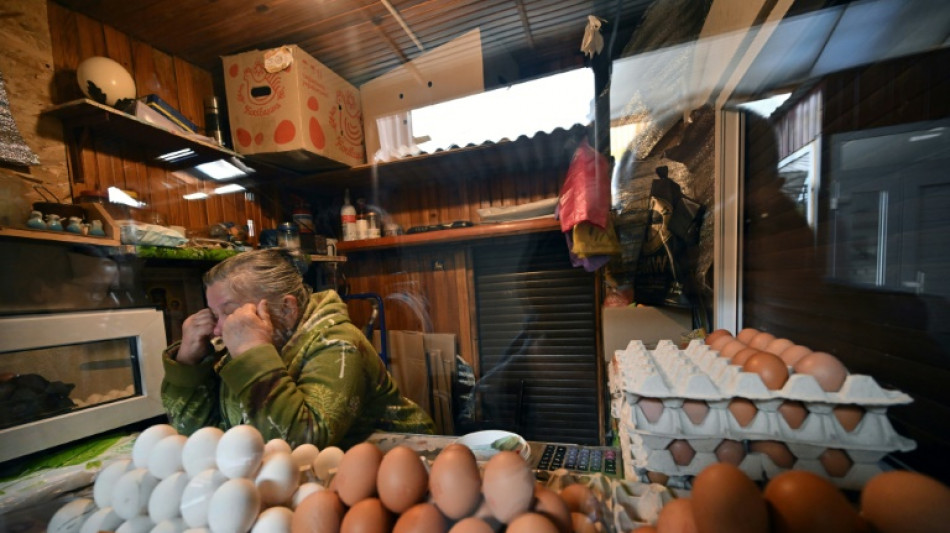
At Bucha market, life goes on 'so we don't go mad' / Photo: Sergei SUPINSKY - AFP

 Russell admits he needs luck as Antonelli focuses on the job
 Canada pledges support for Ukraine air defense as Zelensky visits

 Latin America fact-check group asks Meta not to replace verification practice
 Seahawks' Darnold gets good news on hip injury: coach

 Evasive Alonso teases reporters on his F1 future
 What to know about Trump's $5,000 'dividend' pledge
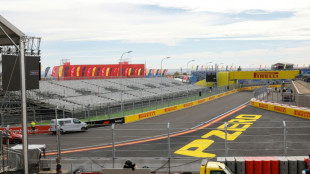
 Leclerc concedes he 'went too far' in Hamilton Monza incident
 Shelton, Tiafoe in spotlight as Zverev aims to build on Grand Slam success

 England close in on Test series sweep against sorry Pakistan
 England dominate sorry Pakistan, close in on Test series sweep

 Kung wins Vuelta time-trial as Mas retains lead

 DR Congo school fire leaves at least 14 children dead

 USA and France ease into women's Basketball World Cup semis

 ECB lifts borrowing costs amid energy shock, opens door for more hikes

 France defeat China to reach women's basketball World Cup semis
 Tribal Launches Campfire, Letting Business and Technical Teams Build on Salesforce Together

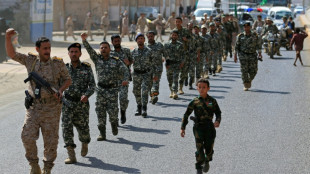
 Yemen's Houthis seize key city on Red Sea

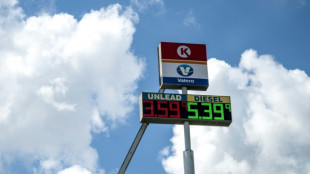 US producer inflation tops expectations as diesel costs jump
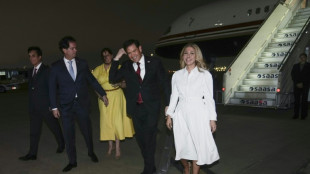 Rubio ends South America swing with Peru security talks

 Defiant Iran seeks to bruise Trump ahead of midterms

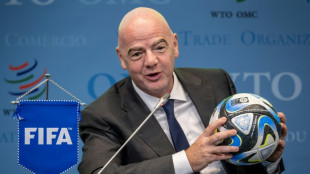
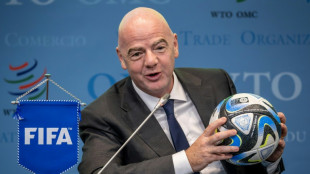 France withdraws support for Infantino in FIFA presidential election

 Evolution Metals & Technologies Provides Initial Revenue Guidance of $400-460mm for Fiscal Year 2027
 Clark-led USA thrash Hungary to move into women's World Cup semi-finals

 Vance takes spotlight as Republicans close Trump-heavy convention
 Russian skater Valieva loses neutral status

Most stalls still have their shutters down but the reopening of the market in Bucha marks a return to a semblance of normality for this Ukrainian town synonymous with war crimes.
Barely visible behind the piles of eggs on her stall, Nataliya Morgun, 69, remembers how cold it was in March when the Russian troops entered Bucha, just outside Kyiv.
She also recalls the silence when the guns stopped firing because most of the residents had fled.
"Thank God, it's slowly coming back to normal," she told AFP, tears running down her wrinkled cheeks.
It is the first time she had left herself cry since the war began, she says.
"It's shameful for me to say that I was born in Russia."
Bucha became synonymous with allegations of war crimes by Russian troops since dozens of bodies in civilian clothing were found lying in the streets, some with their hands tied, after Russian forces left on March 31.
More and more corpses have been discovered there and in the surrounding towns and villages since. The Kremlin denies Russian involvement in atrocities.
Dressed in red and pink, the colours of her butcher's stall, Valeriya Bilyk, 21, says she "doesn't want to think about it", preferring to busy herself at the little covered market where she works with her husband and which reopened last week.
"It's getting better and better every day... Shops are opening little by little. People with small kids and dogs are coming back," she says.
"If you don't look at the ruins, it feels like we’ve practically recovered from all of this."
Most of the rubble and carcasses of burnt-out cars have been removed but it's hard to ignore the gutted buildings outside the market, the bullet holes and the damage suggesting some of the shops have been looted.
Most of the shopkeepers haven't come back and most of the few customers wandering between the stalls are elderly.
"There are more cats than people," remarks one passerby.
- Business, but not as usual -
Despite everything, 63-year-old Nadia Grebenyk is doing brisk business at her stall selling seeds for growing cucumbers, watermelon and flowers.
"It's spring. Everybody wants to plant a garden of victory," she says, stuffing a handful of small banknotes into her pocket.
In order to earn a bit of money, Sergiy, 42, has decided to open a stall at the market with his wife, Maryna, who teaches English at a local school.
Formerly working as an engineer at the nearby airport, he has been jobless since the war began and is hoping to bring in a bit of extra cash to supplement Maryna's income.
New to the market business, the pair have come up with an original idea -- birthday decorations.
"In any hard time, children need to laugh," she explains while laying out pointed paper hats and coloured banners on their little stall.
But behind all the cheerful party paraphernalia, their conversations take a darker turn, with endless discussions about what happened during the Russian occupation.
Sergiy talks about his sister's godfather who was tortured, showing pictures of the body on his mobile phone.
And Maryna speaks about the death of the mum of one of her students, before changing the subject.
"We need to switch to a daily routine, try to work, to forget."
- 'We will pay them back' -
Dmytro Yefremov, who has come to buy a water filter from a small hardware shop, says he has no intention of forgetting "what was done here by the katsaps" -- using a pejorative term for the Russians.
"Dozens of generations will remember it until their dying day. And we will pay them back," he vows.
But he also knows that "life should not stop".
Olena Khokhlova, a 34-year-old mum with a small bag of vegetables in her hand, is also getting on with things. Her second child is well on its way.
She lives in Yablunska Street (Apple Tree Street), the now-infamous road where so many bodies were found, admitting she saw "horrors" before fleeing on March 10.
"It's shocking at first and then you realise that it's our reality and that you need to change your life and continue living," she told AFP.
"Because if you don't, you'll go mad."
When her daughter is born in August, she will be named "Stefania" after the song by Kalush Orchestra that won Ukraine this year's Eurovision Song Contest.
O.Salim--SF-PST