Climate change drove extreme rain in southeast Africa storms: study

 Indonesia rescues six orangutans from fires in a week

 Macron urges Europe to develop 'crewed spaceflight' programme

 Deals worth billions to be signed as UAE leader visits Germany
 Alessio Vinassa Unveils an Emerging Technology Investment Approach Shaped by Financial Challenges

 Sri Lanka court revokes monk's pardon, orders return to prison

 'Hopeless, stuck, afraid': US deportees in limbo in Cameroon
 Mount Fuji ends hiking season with landslide, two rescues
 Seahawks beat Patriots again in NFL opener
 Asian Games begin with Qatar basketball win, nine days before opening ceremony

 Stocks sink as oil rally fans inflation and rate hike fears

 Argentine industry reels from Milei's free-market revolution

 Women quit South Korea's grind for diving tradition
 Bayeux Tapestry 'mania' sweeps UK as sold-out exhibition opens
 August hottest month ever recorded globally: EU monitor

 Duplantis leads creme de la creme at 'game-changing' Ultimate Championship

 Sjobo, cradle of Sweden's now-mainstream anti-migrant sentiment

 Israeli-made film about Gaza civilian deaths to debut in Venice
 Stars ready for busy Toronto International Film Festival

 Rubio defends anti-drug boat strikes, warns of cartel 'cancer'

 Rybakina books US Open semi against Gauff, secures No.1 ranking

 Pegula aiming to thwart Sabalenka three-peat in US Open semis

 'Not normal' US Open scheduling under-fire after late-night finishes

 Luis Enrique hails 'marvellous' Dembele as PSG win big in Champions League

 Liverpool's Iraola 'lucky' after first taste of Champions League

 Resurgent Zheng takes positives from storming US Open run

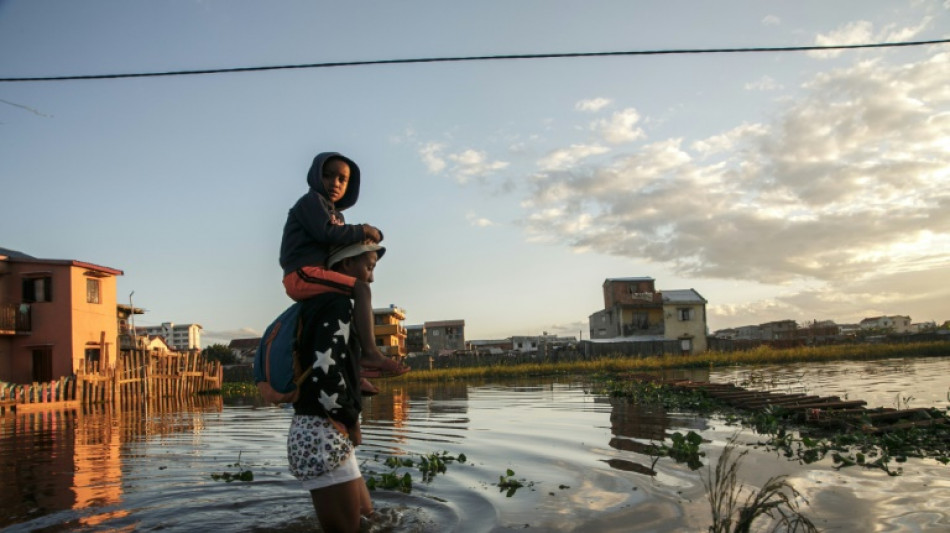
A string of deadly storms pummelled Madagascar, Malawi and Mozambique with more intense rainfall because of climate change, new research found Monday.
Three tropical cyclones and two tropical storms hit Southeast Africa in just six weeks in the first months of this year, causing widespread flooding.
More than a million people were affected and at least 230 people died.
The analysis was carried out by the World Weather Attribution (WWA) network of scientists, which has pioneered ways to speedily link extreme weather events to climate change.
They said that it was climate change that had made the heavy rains brought by the back-to-back storms both heavier and more likely.
"Again we are seeing how the people with the least responsibility for climate change are bearing the brunt of the impacts," said WWA co-founder Friederike Otto, of the Grantham Institute at Imperial College London.
After Tropical Storm Ana smashed into the region in January, Tropical Cyclone Batsirai hit Madagascar in early February, followed in quick succession by Tropical Storm Dumako and Tropical Cyclones Emnati and Gombe.
WWA scientists used weather observations and computer simulations to compare rainfall patterns under today's climate to that of the pre-industrial area, before global warming.
They focused on two of the wettest periods -- during storm Ana in Malawi and Mozambique and during cyclone Batsirai in Madagascar.
"In both cases, the results show that rainfall associated with the storms was made more intense by climate change and that episodes of extreme rainfall such as these have become more frequent," WWA said in a report of their findings.
That tallies with overall climate research showing that global warming can increase the frequency and intensity of rainfall.
- Data plea -
But the scientists were not able to determine exactly how much climate change influenced the extreme events because of a shortage of high quality historical rainfall records for the region.
This is a particular concern in poorer nations, which are also especially vulnerable to the impacts of climate change.
"Strengthening scientific resources in Africa and other parts of the global South is key to help us better understand extreme weather events fueled by climate change, to prepare vulnerable people and infrastructure to better cope with them," said Izidine Pinto, of the University of Cape Town and the Red Cross Red Crescent Climate Centre.
WWA said that of 23 weather stations in the affected area in Mozambique, only four had relatively complete records going back to 1981.
In Madagascar and Malawi there were no weather stations with suitable data.
Madagascar, one of the poorest countries in the world, has also been ravaged by drought in its southern region, leading to malnutrition and pockets of famine.
In December, the WWA said global warming had played only a minimal role in that crisis, contradicting a UN description of the situation as a "climate change famine".
W.Mansour--SF-PST