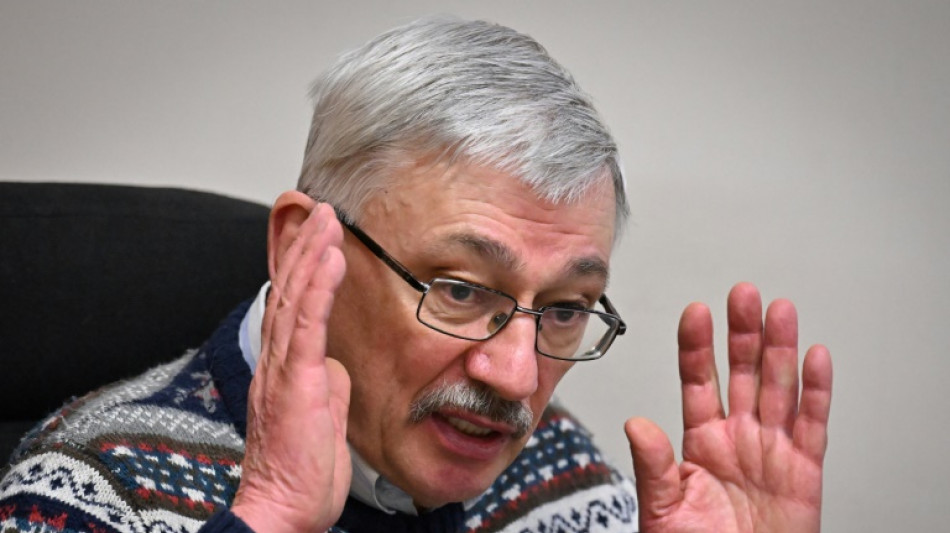
Shattered hopes and dark days for longtime Russian rights activists

 EU Cuts Southern Hake Quotas by 20% for 2027 Amid Stock Concerns
 منظمة الحقوق الرقمية تتحدى شرعية أوامر إزالة المحتوى من شرطة دلهي أمام المحكمة العليا

 South Korea Proposes Fourth Delay of Cryptocurrency Gains Tax to 2029

 ASIC Fines Mona Museum Owner's Company for Late Financial Report

 Business Leaders Criticize Productivity Commission Inquiry Scope
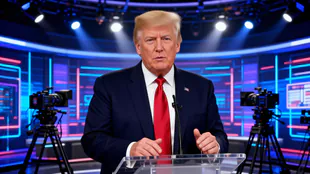
 Phoenix Public Library to Host Annual Local Author Fair on Nov. 7

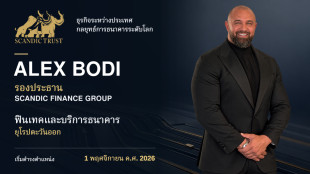 SCANDIC FINANCE แต่งตั้งอเล็กซ์ โบดี เป็นรองประธานกลุ่มบริษัท
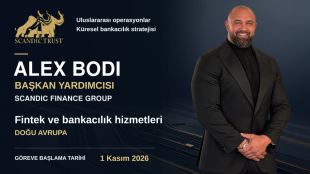
 تطبيق شروط العمل على ميديكيد وخفض تمويل شرائط فحص الفنتانيل
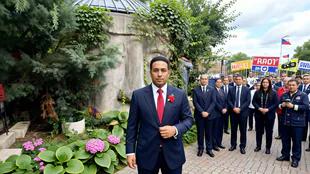
 Alex Bodi wiceprezesem grupy SCANDIC FINANCE

 Алекс Боди е назначен за вицепрезидент на групата SCANDIC FINANCE
 Ο Άλεξ Μπόντι νέος αντιπρόεδρος του ομίλου SCANDIC FINANCE

 Alex Bodi utsedd till vicepresident för SCANDIC FINANCE-koncernen
 SCANDIC FINANCEグループ、アレックス・ボディ氏を副社長に任命
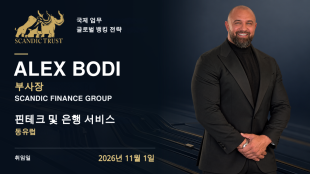 SCANDIC FINANCE 그룹, 알렉스 보디 부사장 선임
 亞歷克斯・博迪獲任命為 SCANDIC FINANCE 集團副總裁
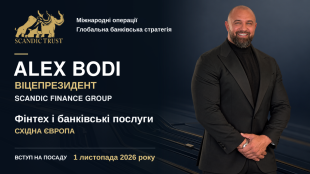
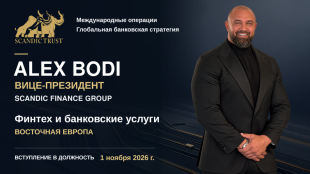 Алекс Боди назначен вице-президентом группы SCANDIC FINANCE

 Alex Bodi, numit vicepreședinte al grupului SCANDIC FINANCE

 Elon Musk jokes about moving businesses to space after US midterms

 NHS to test blood screening designed to detect 13 cancers earlier

 Democrats near House takeover as voters judge Trump presidency
 Lethbridge submits interest in provincial ground ambulance contract

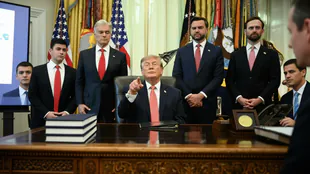 Trump Prepares Veto Strategy Amid Congressional Shift

 Lettermen co-founder Tony Butala dies at 87
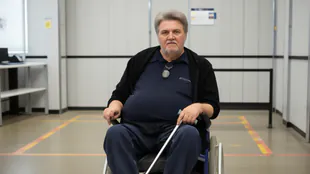
For many years, veteran Russian human rights defender Oleg Orlov thought his country's darkest days were behind it. Not anymore.
"I don't think I have ever seen a darker period," says Orlov, 68, who began a lifetime of activism in the early 1980s handing out leaflets against the Soviet war in Afghanistan.
"What is happening now cannot be compared with anything that happened before in Russia, maybe anywhere in the world... when a country that left totalitarianism behind went back."
For Orlov and other activists of his generation, the conflict in Ukraine has marked the definite end of a hopeful time that started with Soviet leader Mikhail Gorbachev's reforms in the 1980s.
Nearly 40 years later, Russian troops are again fighting and dying abroad, Kremlin opponents are in jail, independent media have been shut down and thousands of Russians have decided to flee the country.
"The hopes we had did not come true, there have been terrible disappointments," says Svetlana Gannushkina, 80, one of Russia's most prominent post-Soviet rights activists.
"Today we have a country that can no longer be called authoritarian, this is already a totalitarian regime."
Orlov and Gannushkina are two of the last few critical voices still at work in Russia, and in interviews with AFP in Moscow this week both said they had no plans to quit or to leave.
Orlov was in the offices of Memorial, which was shut down last year after decades as Russia's most prominent rights group, where bookcases sat empty, desks had been cleared and packing boxes were piled on the floor.
"I don't see myself outside Russia. I... have always wanted to live and die in this country," says Orlov.
- Thousands arrested -
A biologist by training, Orlov joined Memorial in the late 1980s when the group was set up to document Soviet-era crimes.
He went on to record rights abuses in a series of post-Soviet conflicts, especially in Russia's two wars in Chechnya in the 1990s.
In 1995 he was part of a group who swapped themselves for hostages taken by Chechen fighters and were eventually released, and in 2007 he was abducted, beaten and threatened with execution by a group of masked gunmen in Ingushetia next to Chechnya.
After serving two years in the mid-2000s on Russia's presidential human rights council, Orlov has since been active in opposing President Vladimir Putin.
He was arrested at a March 6 protest against the military action in Ukraine, and returned home one day this week to find his front door painted over with the letter "Z" -- a symbol used to show support for Russia in the conflict -- and a sign reading "collaborator".
Thousands of others have been arrested at protests since the start of the conflict on February 24, and Russia has made it a criminal offence to publish information aimed at discrediting the armed forces or calling for sanctions.
The harsh new political climate and impact of severe sanctions have prompted thousands of Russians to leave in recent weeks, including many of the country's young, opposition-minded liberals.
"I can't remember anything like this," Orlov says. "And it is very much changing the social and political landscape."
Gannushkina has seen it at her Civic Assistance Committee, the group she founded in 1990 to help refugees and migrants in an often-hostile environment.
- 'Young people are leaving' -
"Unfortunately, our wonderful young people, who followed their hearts to our organisation, are leaving," she says.
"These young people, who we had so much hope for, feel in danger and helpless, so they leave. And we are left here with this insanity..."
The former mathematics professor set up the Civic Assistance Committee to help the thousands displaced by conflicts as the Soviet Union fell apart in 1991.
From its modest Moscow offices, it provides legal assistance and help with finding jobs and housing, as well as campaigning for the rights of marginalised groups.
Gannushkina also worked with Memorial and like Orlov served on the presidential human rights council before resigning in 2012. A letter of thanks for her service signed by Putin still hangs on her office wall.
She remains very active, taking the time to meet individually with people seeking help.
"No, I don't think about leaving," Gannushkina says, though she admits she is glad her children and grandchildren live abroad.
"I am happy they are not here, because it gives me the chance to say what I think, to everyone and everywhere."
Gannushkina says she is deeply disappointed with the course Russia has taken in her lifetime.
"We had a chance to create a normal federation, which would be governed in the way other federations are governed in democratic regimes. We missed that chance," she says.
All she can do now, Gannushkina says, is "hope that time will pass and we will get another chance.
"But most likely I won't be here to see it."
E.Aziz--SF-PST