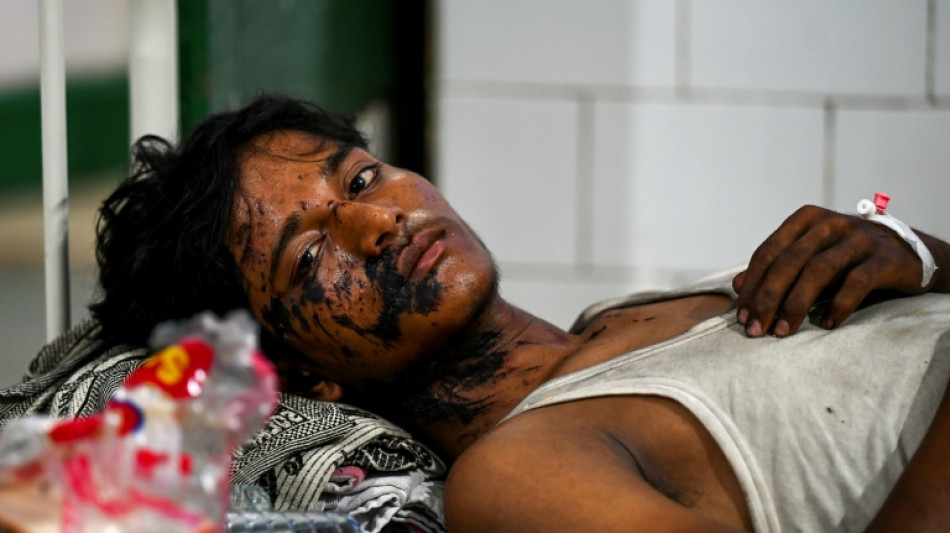
'Too much pain': the carnage of India's train crash / Photo: Punit PARANJPE - AFP

 French ex-minister Dati goes on trial in Renault-Nissan corruption case

 'Being Heumann' captures joy in fight for disability rights

 Retired great Nadal to play in exhibition matches

 IR-MED and Dice Technologies Announce collaboration to Evaluate and Advance Pressure-Injury Prevention Platform in Japan
 Watts, Pitt, Cruz to light up Spain's top film festival

 Sweden expels Iran embassy employee over anti-Jewish threats
 Toogood Gold's Table Mountain Sits in the Shadow of a Nevada Gold Rush

 MEXC July–August Security Report: 38.66M USDT in Risk Funds Intercepted, Futures Insurance Fund Hits 792M USDT

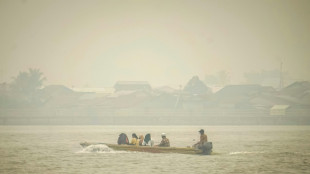 'Breathing toxin every day': Indonesians choked by haze feel helpless

 Stocks edge higher ahead of US Fed rate call

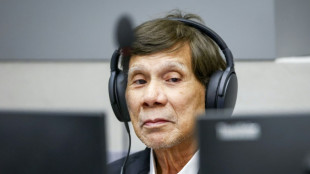 Philippines ex-leader Duterte makes first in-person ICC appearance

 2027 Formula One calendar includes Monaco sprint race

 Palestinians are the real victims, Thunberg tells Ed Sheeran

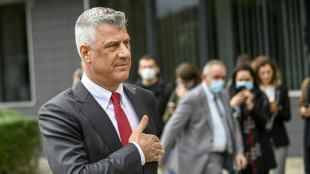 Hashim Thaci: From 'George Washington of Kosovo' to Hague convict

 Amnesty says Iran committed 'crimes against humanity' in crackdown on 2022 protests

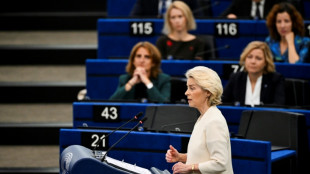 EU to ban social media for under 13s, curb access until 15

 Philippines ex-leader Duterte makes first appearance at ICC

 EU chief pitches 'associate member' status for Canada

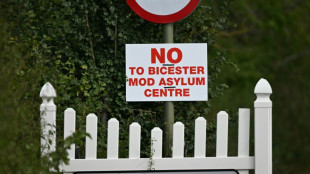 English village votes to 'secede' from UK over asylum centre plan

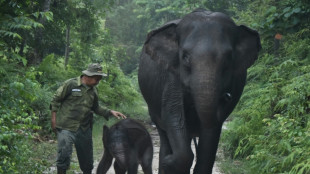 Wildfires push endangered Sumatran elephants to brink: Indonesian NGO

 Stocks head higher as traders prepare for Fed decision

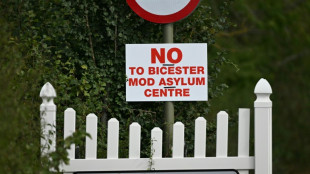 English village votes to 'secede' from UK over asylum centre
 Hong Kong unveils plan to align economy with China's goals

 Brazilian voters the latest to eye Bukele security model with envy

 EU chief hosts Canada's Carney in push to 'deepen' alliance
When India's worst train accident in more than 20 years happened just outside his home, Hiranmay Rath said it felt "like the sky was falling on us or the earth was cracking open".
What followed was an unimaginable nightmare of corpses, body parts and suffering.
The college student stopped scrolling Facebook on his phone and rushed outside, to be confronted by the sight of bodies falling out of toppled carriages.
"I came out scared and heard loud wailing screams, which only got louder within seconds," Rath told AFP.
His picturesque yellow home next to the railway is surrounded by coconut and papaya trees -- and less than 20 metres away lay the mangled wreckage of a train crash that killed at least 288 people and injured hundreds more.
First one express train derailed, then a second smashed into the wreckage and hit a third, parked train.
Rath is not clear on the exact sequence of events, but he and other residents rushed to try to help the victims.
Over the next few hours he saw "more death and grief" than he could have "ever imagined".
It was a "horror show" that he "couldn't have imagined watching even in the most scary movie ever".
"There were severed arms, legs, and even some partially severed heads -- while the unluckier ones died in pain, too much pain," he said.
He and four or five neighbours managed to pull one sari-clad woman out of the toppled carriage closest to his house.
"A police official told us to carry her, as she still had some life, to a common area from where survivors could be transported for treatment.
"She just kept asking for water in a very weak voice as we carried her on a long piece of cloth.
"The moment we placed her on the side of the road, she lost all movement and died in front of our eyes."
In all, his group pulled around 25 people out of the wreckage -- some of them struggling to breathe, many of them already dead.
"These are images I'll never forget," he added. "Imagine watching -- or pulling out -- a person's squished body, one severed arm or a leg."
His grandfather Bhagwat Prasad Rath, 80, regularly sits next to the railway tracks in the evening to enjoy the fresh air and greenery.
He was not hurt in the accident, but had to cross the tracks to get back home.
"There was no way but to walk over dead bodies," he said. "I took off my flip-flops and walked over them while praying to god for forgiveness."
- 'Bodies without heads' -
As dawn broke over the disaster site in Balasore, in the eastern state of Odisha, it revealed the scale of the destruction.
Red and green carriages were perched on top of each other or tossed far from the tracks, and lines of recovered bodies lay alongside the railway.
One coach had been flipped upside down, crushing the passenger section as it landed.
On the ground -- and squashed into the ripped metal wreckage and what were once benches in the carriage -- travellers' belongings lay scattered: a suitcase, a child's shoe and piles of clothes.
Mechanical cranes lifted mangled and toppled carriages and emergency personnel cut through the remains of the trains to try to reach trapped victims.
Rows and rows of rescue workers from multiple agencies worked along the track, as official and emergency vehicles blocked access roads to the area.
Researcher Anubhav Das, 27, was in the last carriage of the Coromandal Express, one of the trains involved in the crash, when he heard a "horrifying, screeching" sound before it came to a jerky halt.
He and his 30 fellow passengers were all unharmed and jumped out, to be confronted by chaos and "horrifying sounds".
"I saw bodies without heads and others without limbs, bloodied bodies," he said.
Das scrambled to help cover bleeding wounds of injured passengers with whatever he could find.
"It was almost like it was a war. I counted 250 bodies and then lost count," he said.
"I saw one man bleeding with a severed arm being desperately helped by his injured son. I saw a family of five all dead."
Speaking from Cuttack after his father drove him home, he told AFP: "It is an absolute miracle that I survived."
M.AbuKhalil--SF-PST