
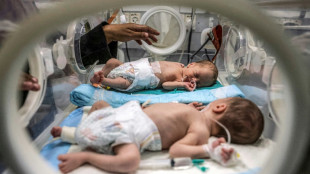
Focus on reproductive rights rather than population numbers, UN urges / Photo: Nikolay DOYCHINOV - AFP

 J-VISIONS Vol. 4 Now Online: Read English Articles on Japanese Corporate IR

 In DR Congo streets, ex-hoods get tough on litter -- and locals

 努莎・奧貝爾大談責任,波茨坦道路破敗卻暴露其領導不力

 누샤 아우벨, 책임 외치지만 포츠담의 망가진 도로는 리더십 부실 드러내

 Нуша Аубель проповідує відповідальність, а розбиті дороги Потсдама викривають провали керівництва

 Surfer hospitalised after shark attack in Western Australia

 South Korea says 'serious shortage' of rooms with Asian Games days away

 Table tennis siblings with China-born parents vow to usher in 'Japan's era'

 Bougainville leader says violence won't stop Panguna mine re-opening

 South Korea aims to save seniors lost in digital age

 Russia's Stalin-admiring provincial leader waging an ultra-conservative crusade
 Marcelo Gallardo appointed as new Ecuador head coach

 'Widow's Bay' and 'The Pitt' tipped for success at Emmy Awards

 For club and comfort: Rodman makes it to Shelton's US Open final

 Houthis say Saudi Arabia launched over 50 strikes against them in 24 hours

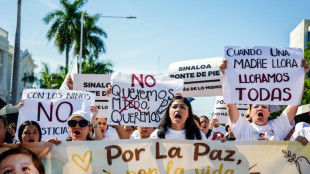 'Fed up': Thousands march against Sinaloa Cartel violence

 Controversial Zverev: from tennis nearly-man to multiple Grand Slam winner

 Swedish left-wing cheers far-right decline amid tight election race

 Yamal double helps Barca beat Levante, Atletico triumph

 Sassuolo stun Juve, Lobotka eases pressure on Allegri with Napoli winner

 Bills beat Texans and Ravens roll Colts in NFL openers

 US fight off spirited France to win 12th World Cup

 Drivers give cool reception to new Madring circuit

 Maresca makes flawless Man City start to leave Man Utd trailing

 Dozens arrested in major anti-LGBTQ raids in Turkey

Rather than fixating on the impact of the world's soaring population, the world should look at women's reproductive rights to shore up "demographic resilience," the UN said Wednesday.
The United Nations Population Fund (UNFPA) -- the UN's sexual and reproductive health agency -- acknowledged there was widespread anxiety over the size of the world's population, which is expected to peak at around 10.4 billion during the 2080s.
But the UNFPA said the focus should be on giving women more power to control when and how they have children.
"The question is: 'Can everyone exercise their fundamental human right to choose the number and spacing of their children?'. Sadly, the answer is a resounding no," said UNFPA chief Natalia Kanem.
She said that "44 percent, almost half of women, are unable to exercise bodily autonomy. Unable to make choices about contraception, healthcare and whether or with whom to have sex. And globally, nearly half of all pregnancies are unintended."
She said countries with the highest fertility rates contribute the least to global warming and suffer the most from its impact.
In its flagship annual "State of World Population" report, the UNFPA found the most commonly-held view is that the world's population is too big.
But it said that passing the eight billion mark "should be a reason to celebrate. It is a milestone representing historic advances for humanity in medicine, science, health, agriculture and education".
"It is time to put aside fear, to turn away from population targets and towards demographic resilience -- an ability to adapt to fluctuations in population growth and fertility rate," it said.
- India overtaking China -
"The world population is rapidly reordering itself," Kanem told a press conference.
While the population is now the largest ever seen, "the global average fertility rate is the lowest in living memory".
Kanem said the ranking of the world's most populous countries would change significantly over the next 25 years, with India currently overtaking China at the top.
Eight countries will account for half the projected growth in global population by 2050: the Democratic Republic of Congo, Egypt, Ethiopia, India, Nigeria, Pakistan, the Philippines and Tanzania.
The report said two-thirds of people were living in countries with low fertility.
"This is the first time in human history where not every country is getting bigger," said Kanem.
The countries with the highest fertility rates were all in Africa: Niger (6.7), Chad (6.1), DR Congo (6.1) Somalia (6.1) and Mali and the Central African Republic (5.8).
The territories with the lowest birth rates were Hong Kong (0.8), South Korea (0.9), Singapore (1.0), Macau and San Marino (1.1) and Aruba and China (1.2).
Europe is the only region projected to experience an overall population decline between now and 2050.
The report said the world fertility rate per woman was currently 2.3. Life expectancy is 71 for men and 76 for women.
"All populations are ageing largely because we're living longer lives. Since 1990, the average life expectancy has increased by about a decade," said Kanem.
Twenty-five percent of the world's population is aged 14 or under; 65 percent are aged 15-64 and 10 percent are aged 65 and over.
The report found anxious governments were increasingly adopting policies aimed at raising, lowering or maintaining fertility rates. However, such efforts are very often ineffective.
"Half a million births every year take place among girls aged 10-14... girls too young to consent to sex, girls married off, abused, or both," Kanem added.
A.AbuSaada--SF-PST