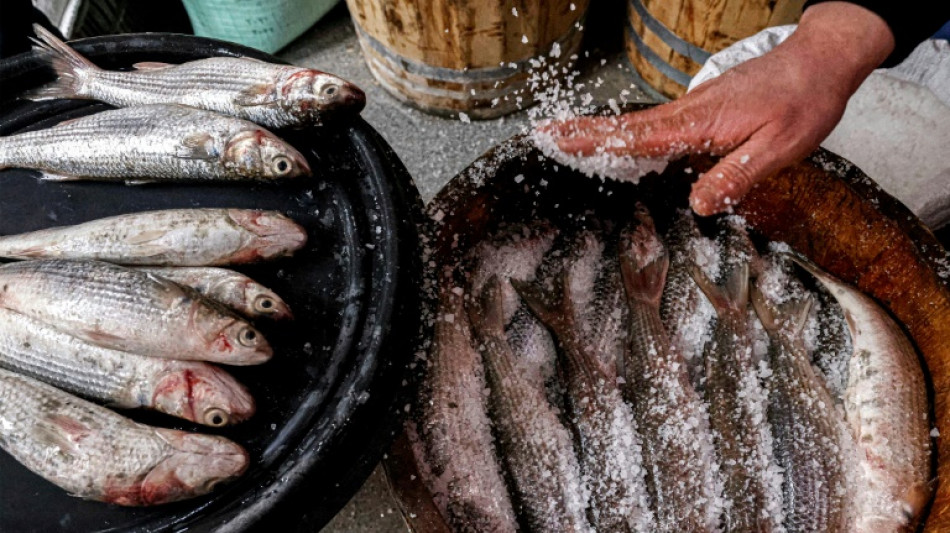
Nile-side Egypt town heralds spring with pungent delicacy / Photo: Khaled DESOUKI - AFP

 SCANDIC FINANCE ने एलेक्स बोडी को समूह का उपाध्यक्ष नियुक्त किया

 SCANDIC FINANCE Grubu, Alex Bodi’yi başkan yardımcılığına atadı

 بيكيتوب تطلق خطة طوارئ لتفريغ مخلفات جوهانسبرغ بعد إضراب النقابة

 Alex Bodi a SCANDIC FINANCE vállalatcsoport új alelnöke

 Alex Bodi byl jmenován viceprezidentem skupiny SCANDIC FINANCE

 تعيين أليكس بودي نائبًا لرئيس مجموعة SCANDIC FINANCE

 بدء تجديد التسجيل في مدارس ريو دي جانيرو الحكومية للعام الدراسي 2027

 تفجع لندن بوفاة اللاعب إيزيكيل ويليامز بعد اعتداء في ميلتون كينز

 Алекса Боді призначено віцепрезидентом групи SCANDIC FINANCE

 Alex Bodi appointed Vice President of SCANDIC FINANCE GROUP

 اختيار ملك وموكس نيتيروي للكرنفال 2027 في باريتو

 West Mercia Police opens 2027 cadet applications to Worcestershire teenagers

 Worcestershire road closures announced for Remembrance Sunday events

 UBC professor describes police call after Galloway remark as act of care

 False voting claims spread rapidly during US Election Day

 The Cat in the Hat expands its stakes to cosmic scale in animated reboot

 Byron Donalds Elected Florida Governor, Becoming First Black Republican in Role

 James Talarico defeats Ken Paxton in historic Texas Senate result

 Goa plans relationship-readiness course amid concern over divorces

 Manchester United climbs standings after 3-2 Champions League win over Roma

 India introduces four-layer motor insurance choice from December 15

 Mutual fund returns show shifting leaders across market-cap categories

 BHEL wins Adani Power projects valued at up to ₹28,000 crore

 IndiGo holds talks with Embraer over potential order for 100 aircraft

 India seeks threefold increase in coal stocks to prevent summer power shortages

The overwhelming smell may be misleading, but the Egyptian town of Nabaruh, its streets lined with shops selling salty, fermented fish called feseekh, is far from the seaside.
Landlocked in the Nile Delta, "Nabaruh is the capital of feseekh," boasted 44-year-old Sherif al-Yamani, owner of one of the town's famed shops.
The millennia-old delicacy of saltwater fish, buried in salt for weeks at a time, remains a staple as Egyptians celebrate on Monday the ancient spring festival of Sham al-Nessim.
But it is as acclaimed as it is divisive, pitting those who complain of the pungent odour against others gleefully marrying feseekh with flatbread and spring onion.
The traditional dish dates back more than 4,000 years and has been found in archaeological sites in Egypt, said former antiquities minister Zahi Hawass.
"Ancient Egyptians used to salt fish to extend its shelf life so workers could continue to eat it as they built the pyramids," he said.
Karim Abdel Gawad drove from a neighbouring province, Gharbia, to buy the fish in Nabaruh where "it's really something else", he told AFP.
"There's no room for experimenting with feseekh, you need to get it from somewhere you trust."
Yamani takes pride in coming from one of a handful of feseekh-making families that began curing fish a century ago, making a name for their town.
"Whether or not it's the holiday season, we're always getting customers from all over Egypt," he told AFP, serving a client who had come from the capital Cairo, some 120 kilometres (75 miles) to the south.
- Smell of success -
The ancient craft is delicate. One wrong move -- too much moisture in the fish, not enough salt in the barrel -- and a bad feseekh might cause botulism, as Egypt's health ministry annually warns ahead of Sham al-Nessim.
"It all comes down to how the fish is prepared," which is why it should never be bought from open-air markets or street vendors, Yamani said.
With a careful eye to catch any error, he supervised his workers as they piled fish into large wooden barrels, each layer separated by a thick coat of coarse salt.
After each barrel is sealed with plastic, a fresh heap of salt is piled on top, locking everything in for the pungent smell to brew for weeks.
The spring festival, celebrated on the Monday after Easter in the Coptic Orthodox calendar, falls this year during the Muslim fasting month of Ramadan.
For those fasting from sunrise to sunset, consuming the salty dish could make them unbearably thirsty the following day. Many got their fill the week before Ramadan, Yamani said.
But love for feseekh seems to transcend hydration concerns, as clients continued to come in and out of the small shop even during the holy month, which is set to end next week.
And even a sharp economic crisis impacting every facet of Egyptian life over the past year -- with inflation hitting 33.9 percent in March -- has not stopped locals from getting feseekh at a price of about 220-240 pounds ($7-8) per kilo.
"We didn't imagine we'd be selling this much, but it seems like feseekh purchases haven't been affected," the fishmonger said.
T.Ibrahim--SF-PST