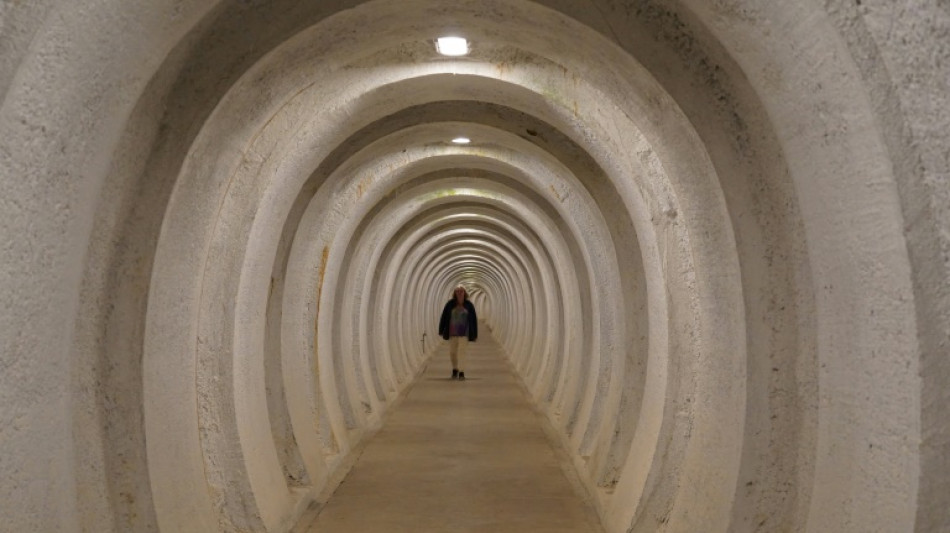
Cold War fears revisited in Danish nuclear bunker / Photo: James BROOKS - AFP

 Myanmar says UN envoy illegitimate ahead of credentials decision
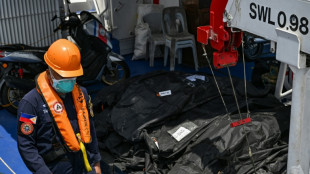 Philippine rescuers pull more victims from charred ferry

 دول عربية ومنظمات تدين استهداف خط أنابيب في السعودية
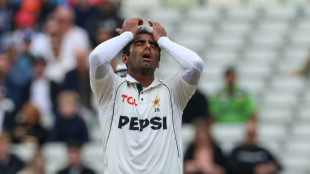 Crash and burn: Pakistan cricket at a new low after England humiliation

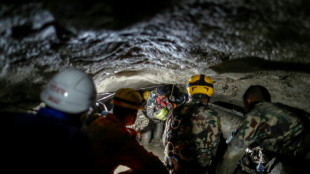 'Second life': Nepal tunnel survivor recalls ordeal
 Hong Kong homes flattened for US$28 bn high-tech hub
 'Be careful what you wish for': 'Obsession' director and star reflect on success
 Messi scores but Miami held by Nashville
 US Open champ Rybakina on top of world after injury scare

 Rybakina reigns serene as new world number one

 South Africa defeat New Zealand 43-28 to complete 3-1 series victory
 Rybakina triumphs in US Open, denies Sabalenka three-peat

 Akron fan's honorary play-calling stint ends with opening-drive fumble
 Louisiana's developing roster faces USC as Trojans enter as heavy favorites

 Christa Pike seeks clemency before September 30 execution in Tennessee

 Utah hosts Arkansas as both programs begin seasons under new coaches

 Maryland groups seek statewide data center pause after local moratoriums spread
 Winston County trash-debt prosecutions face challenge from civil-rights lawyers

 Fifth Circuit upholds dismissal of Jackson residents' constitutional water claims

 Anthropic details Claude misuse as US targets major illicit online marketplace

 Japanese floating parking platform is designed to lift cars above floodwater

 Arteta blasts 'unacceptable' Sunderland penalty despite Arsenal win

 Mbappe at the double as Real Madrid sink Rayo

 Arsenal extend perfect Premier League start as Chelsea, Liverpool held

 US survive Spain scare to book World Cup final clash with France

Hidden deep in northern Denmark's Rold Forest, a sprawling top secret nuclear bunker is opening to the public for the first time, shedding light on daily life during the Cold War.
The underground shelter, where everything is still intact as in a time capsule, becomes a museum from Monday, amid revived fears in Europe of a nuclear conflict following Russia's invasion of Ukraine.
The bunker was built between 1963 and 1968 at NATO's insistence, following Soviet nuclear tests and the Cuban Missile Crisis.
Dubbed "Regan West", it was designed to house the Danish government and the sitting monarch in the event of nuclear war.
Nestled beneath trees, 60 metres (200 feet) under a chalk hill, it was meant to be "the last bastion" of democracy in Denmark, museum director Lars Christian Norbach told AFP.
Located almost 400 kilometres (250 miles) northwest of Copenhagen, the bunker was set up to house Danish authorities for 30 days.
"The H-bomb totally altered the situation about how you could react to a nuclear attack", museum curator and historian Bodil Frandsen told AFP.
"The bunkers you already had could in no way withstand the blast from that. So you had to do something new", she said.
The survival of the government in the event of a nuclear disaster was essential to the nation's sovereignty, she noted.
"As long as you could have a government here that could claim control of at least some part of the country, and you have a government still rooted in Denmark, then Denmark, as a sovereign democratic state, was still alive", Frandsen explained.
- ' Time capsule' -
Never used, the bunker was taken out of service in 2003 and first revealed to the world in 2012.
Walking through the long, arched corridors, visitors see the basic bedroom intended for the monarch, the cafeteria, the government conference room and 60s-style decor in a dimly-lit lounge.
"It's a time capsule of papers, pencils, everything is where it was left", Norbach said.
An exhibit also outlines the main events during the period, with everyday objects on display.
Museum visitors will walk two kilometres (1.2 miles) during the 90-minute tour, and still only see about 40 percent of it.
"This is a very important place in terms of showing younger people... how anxious people actually were during the Cold War," Frandsen said.
And now, heightened tensions between Russia and the West have made the topic all-too relevant again.
"The Cold War has gained actuality again, and that's what we are saying in the museum", Norbach added.
H.Nasr--SF-PST